Foster2Forever

  • Home
  • Shop
  • Fostering & Adoption
    • Foster Care
      • Being a Foster Home
      • Birthfamilies
      • Case Workers
      • Concerns
      • Court Hearings
    • Adoption
      • Parenting Tips for After Adoption
      • Benefits
      • Costs
      • Infertility
      • Parental Rights
  • Parenting
    • 31 Tips for Parenting After Adoption
    • Behavior Issues
    • Children’s Activities
    • Family Time
    • Motherhood
  • Our Home Life
    • Cancer & Health
    • Recipes
    • Marriage
    • Family Travel
    • Videos
  • Join Our Community
  • Our Family
  • Contact
  • Privacy Policy

10:15 am by Penelope

When Kids Bathtime is a Nightmare

Is kids bathtime a total nightmare in  your home?  Do your children make you feel like taking a bath is some form of punishment for them? Could some sort of trauma be triggered at bathtime?

Check out these tips for kids bathtime for spd and trauma

10 Tips for Kids Bathtime:

  • TRY A SPONGE BATH for while.  Start with just a bucket of water in an empty bathtub and  let her play in the bucket of water.  Then try adding 1/2 inch of water in the bathtub and over time continue to add more water as they get more and more comfortable in the bathtub.
  • USE  BATH CRAYONS! They work WONDERS!  Coloring and painting will take your kids’ mind off of the bath and might turn crying time into laughing and play time.
  •  USE A BUBBLE MACHINE.  A bubble machine will keep kids busy and while they are busy making and popping bubbles, you can be busy bathing their bodies.
  • ADD BATH TOYS into the bathtub, then make a game of having your child get into the bathtub to retrieve them. These bath ABCs and numbers stick on the wall and help kids learn the alphabet.
  • HAVE YOUR CHILD SIT IN THE TUB WITH NO WATER for a while, and then slowly fill the bathtub and bathe them while the water is running. By the time the bathtub is filled, bathtime will be over.
  •  USE A BABY BATHTUB with your frightened toddler. Sometimes a confined space helps. My kids absolutely LOVED this quacking duck inflatable tub.
  • PLAY MUSIC or just sing to your child during bathtime.  Sesame Street’s Rubber Duckie is a classic!
  • COOL THE BATH WATER.  You can use this  turtle bath thermometer that registers the water temp.
  • Put on your bathing suit and hop in. Wash your arms and then wash wash their arms, continue alternating until you have washed their entire body.   Slowly  spend less and less time in the tub with them until you are not having to get into the tub at all.
  • Consider that your child may have sensory processing disorder.

So whether your child is experiencing real trauma or is just stubborn, the key is to make “bathtime” “fun time”  — so the next problem you will have is how to get your child out of the bathtub!

You may want to check out these top toys for active boys (& girls). 

11:06 am by Penelope

A Skeptic’s Honest Review after Using Essential Oils

Could using essential oils actually help my child’s behavior?

I have read tons of testimonials of people who swear that using essential oils changes the lives of their children and families. After using essential oils, they claim their children are calmer, sleep better, are more attentive, etc.

I’m a biologist by trade so I was skeptical about all the hoopla I’d been hearing about using essential oils — I needed some sort of scientific proof.  Could all the testimonies of people that were also selling essential oil products be reliable?

Could using essential oils really work? Read this skeptics experience.
How can the scent from using essential oils change a child’s behavior?  Can a scent change brain chemistry that can affect a child’s behavior? Did my behavior change and I become more calm after spa massages using essential oils?  I researched and found this report on Aromatherapy and Essential Oils from the Federal government’s National Cancer Institute at the National Institutes of Health (which is under the Department of Health & Human Services):

A large body of literature has been published on the effects of odors on the human brain and emotions. Some studies have tested the effects of essential oils on mood, alertness, and mental stress in healthy subjects…Such studies have consistently shown that odors can produce specific effects on human neuropsychological and autonomic function and that odors can influence mood, perceived health, and arousal. These studies suggest that odors may have therapeutic applications in the context of stressful and adverse psychological conditions.

How could this be true? I asked the question on my Foster2Forever Facebook page about using essential oils and if they really work.  And I read personal testimonies with rave reviews.  And then I thought if inhaling marijuana can change a person’s mood, then maybe essential oils could improve a child’s mood too? We were struggling with our children’s behavior, especially after my cancer, so we decided try using essential oils. What did we have to lose? If it didn’t work, we were out a little bit of money, but it was worth a try to us. After researching a number of companies, I decided to order from Spark Naturals, an aromatherapy company, that allows me to order with no membership, no contract, no required monthly subscriptions, and no personal volume requirements. Many of the Spark Naturals single essential oils have a price point of less than $10 for a 5ml bottle — significantly lower than the other brands I researched.  The Spark Naturals diffusers cost between $52 to $62 with free shipping for all order over $55. After diffusing Spark Naturals “Bliss Calming Blend“ essential oil (5 ml for $13) in our home for a couple of months, we have experienced a significantly calmer home. This is not to say our home is perfectly calm all the time. It isn’t!!! My son is strong-willed, so we still have our “War of Wills” many days BUT they are mostly minor.  We experience fewer meltdowns that last shorter, and they don’t occur every single day like they had just a couple of months before. Could it be that using essential oils is what is improving my child’s behavior? I don’t know! But what I do know is that we will continue to use essential oils because it isn’t worth the gamble not to.

Have you tried using essential oils?

Disclaimer: This is my true story and experience with using essential oils. The links to Spark Naturals are affiliate links that pay me a small commission if you purchase; however, you can get a 10% discount on your order by using the coupon code: penny10

using-essential-oils-spark-naturals-coupon-code

3:09 pm by Penelope

When Your Child Is Throwing a Tantrum

If your child is like mine, when things don’t go their way,  they may haul off and throw a king-size “temper tantrum.”  When this happens there are a few things that you should remember that will help de-escalate the situation quicker when your child is throwing a tantrum.

throwing-a-tantrum

When your child is throwing a tantrum:

1.  Remain calm and listen

When you remain calm and listen to your child, you are more likely to find out the “real” reason for the temper tantrum.  Often the trigger that set off the temper tantrum is not the real reason for the emotions your child is feeling.  Maybe they are hungry, tired, or just frustrated from something that happened to them at school or daycare.  Listen to what they are saying, not the way they are saying it. Learn how to ask questions to learn more about what’s going on.

2.  Remove any onlookers if you can

Sometimes even well-meaning people can make things worse when your child is throwing a tantrum.  Siblings, relatives, or even friends can often say things that will escalate the child’s temper tantrum and cause the tantrum to last longer and possibly become more violent.  Try to remove everyone but you and the child from the room.  If that is not possible, try to remove the child having the temper tantrum from their audience.  Ask them if they want to go outside, maybe go for a walk, or go get a snack.  It us important that you find a way to be alone with your child in order to remove all distractions and focus on them.

3.  Don’t make threats or give ultimatums

When a child is in the middle of throwing a tantrum, the part of their brain that responds to reasoning is completely shut off.  In other words, they can’t hear anything you say.  Making threats or telling the child that some punishment will happen if they don’t stop will do no good.  Wait for the tantrum to run its course, then discuss consequences later when the child is calm and can listen.

4.  Validate your child’s feelings

Telling your child that you know how they feel and letting them know you understand why they are upset will go a long way in helping to de-escalate the temper tantrum.  After your child is calm, you can then talk to them about more appropriate ways to handle their emotions. (A great way is to role-play)  But they do need to hear, that it is “normal” to get mad.

Read more in this series on parenting techniques.


10:08 am by Penelope

My Struggle to Get My Son to Take Medicine

Earlier this week, my kindergartner woke up with a HORRIBLE hacking dry cough and no voice. I was surprised since the temperature outside is still in the 90s here in Texas.

“Cold season” generally runs from September to April!

I didn’t realize that colds begin this early in the school year, but, of course, those are the months the kids are in school spreading their germs with all the other kids.

Although my kindergartner will eat just about anything – if you say the word “medicine” – he will start whining, crying, begging, and hiding. Isn’t that weird? Giving this child medicine can become an incredible struggle! Many times, before it’s over, we’ve had to resort to putting the medicine in a syringe, holding him down, and slowly squirting it in his mouth, just to get the medicine in him!!! And then he will just spit it out if we don’t watch…. How many of you can relate to this scenario???

In a new national survey of U.S. parents of school-aged children (ages 4-13), 40% say that they find it isn’t always easy to give their children over-the-counter liquid cough and cold medicine.

Dr. Cocoa™ for Children had sent me their products to try so I thought we’d try the Dr. Cocoa™ products that are made with 10% real cocoa — maybe my son might be more willing to take this medicine if it was flavored with “CHOC-WAT” (my son’s cute way of saying “chocolate“).

Dr. Cocoa™ Long-Acting Cough Relief is so chocolate-y that my son licked it up! (because it’s that thick) He even said “Yummy!” That’s the first time that’s happened!

To be honest, I was skeptical about chocolate-flavored cough medicine, but since trying it, I have been telling my family and friends about the Dr. Cocoa™ products that really is chocolate-flavored. Now I want Dr. Cocoa™ to make a children’s pain reliever! How about it, Dr. Cocoa™?

Like the Dr. Cocoa™ Facebook page to win a Dr. Cocoa™ hand puppet.

Here is a $2.00 off coupon so you can try Dr. Cocoa™ for Children yourself. You can buy Dr. Cocoa™ for Children at these locations.

Disclaimer: This is a product-provided, sponsored conversation that contains affiliate links. But this is my true experience with Dr. Cocoa™ for Children products.

Visit www.drcocoa.com for a $2-off coupon offer.

8:05 pm by Penelope

How Eye Contact Can Create a Strong Bond with Your Child

One of the best ways to connect with our children (or anyone, in fact) is by making eye contact a habit. Eye contact shows that you value your child. Direct eye contact is beneficial to the child and can help increase the child’s focus and ability to connect with people.

Many times, as a parent, I found myself busy doing something – wrangling babies, cooking dinner, picking up, on the computer, etc. – and my son would say “Mom, you’re not listening to me.”  Since realizing my bad habit and how detrimental that can be to our relationship, I make a concerted effort to STOP and look directly at my son when he is talking to me.

One-on-one full attention with your child cements a parent-child connection that every child needs and deserves.

At-risk children may be uncomfortable with direct eye contact, especially in the beginning. An abused child may even be fearful of eye contact due to previous traumas.  Don’t rush a fearful child into direct eye contact, instead practice for short bits to help the child overcome his fears and earn your trust.  (Also, keep in mind that in many Asian, African, and Latin American cultures, extended eye contact may be viewed as an affront or a challenge of authority.)

  • Move your head so that the child can see your face
  • Stop speaking for a moment to get the child’s attention
  • Use the phrase “Let me see your eyes“

“Never use eye contact as an excuse to give your child a mean or angry stare; instead use your eyes to communicate in a loving and nurturing way.” from The Connected Child: Bring Hope and Healing to Your Adoptive Family (affiliate link)

Great advice on bonding with your child! #adoption

6:30 pm by Penelope

4 Attachment Types To Know Before Becoming a Parent

Attachment can be defined in a number of ways, but can be simply defined as the connection that is developed between a child and caregiver. There are 4 patterns of attachment that a child can develop while being parented, but first…

How is attachment developed?

Attachment is developed through repeated and consistent interactions between a child and caregiver. If this cycle is repeatedly met (doesn’t have to be perfectly met, thank goodness), a child will develop a secure attachment.

 When is attachment formed?

Attachment patterns are developed during the first 12 months of life!

Attachment patterns are usually stable over a person’s lifetime! (The attachment style a person develops as an infant will remain their attachment style as an adult UNLESS the person DELIBERATELY attempts to change that attachment style)

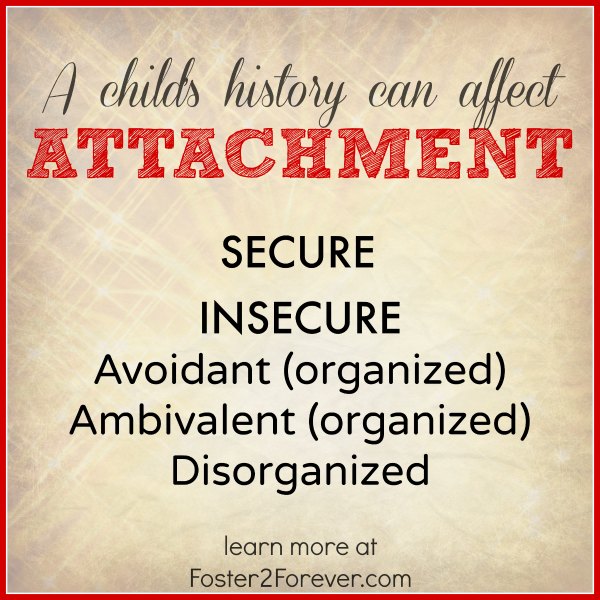
4 ATTACHMENT PARENTING TYPES

  1. Secure
  2. Insecure – Avoidant (Organized)
  3. Insecure – Ambivalent (Organized)
  4. Insecure – Disorganized

A child's behavior can be linked to attachment issues as an infant! #fostercare #adoption

1. SECURE ATTACHMENT TYPE

How is Secure Attachment Developed?

  • Touch, closeness, eye contact – Think of how you hold an infant and look into his face
  • Emotional attunement – Tuning into the internal state of another
  • Secure environment – Feeling safe and cared for
  • Shared pleasure, play, and FUN!

Characteristics of Secure Attachment Type

  • Seeks out caregiver when in need of physical or emotional support or comfort
  • Ability to talk about a wide range of feelings, both positive and negative
  • Feels comfortable exploring new environments while continuing to use their caregiver as a “secure base”
  • Enjoys and is comfortable with physical and emotional closeness
  • Positive beliefs about themselves, others, and the world
  • Emotionally stable (emotional regulation)

2. INSECURE-AVOIDANT ATTACHMENT TYPE

How is Insecure-Avoidant Attachment Developed?

  • The infant is repeatedly NOT soothed
  • The attachment cycle is broken, and the distressed infant stops asking for help
  • The infant is left unattended, in neglectful families or orphanages
  • Sadly, the infant still produces stress hormones, yet doesn’t act stressed
  • The infant learns not to depend on anyone to soothe or meet his needs

Characteristics of Insecure-Avoidant Attachment Type

  • Emotionally distant and aloof
  • Limited tolerance for feelings
  • Inflated self-reliance to minimize need for connection
  • Independent or inappropriately mature
  • Lacks empathy
  • The child’s solution is limited dependence on relationships. Take care of self. Deny or avoid feelings or emotions.

3. INSECURE-AMBIVALENT ATTACHMENT TYPE

How is Insecure-Ambivalent Attachment Developed?

  • The distressed infant sometimes has his needs met
  • The caregiver is inconsistent (due to their own unresolved attachment histories, or could be due to substance abuse or mental illness)
  • Disruptions is care due to inconsistent or chaotic caregiving (also displacements via foster care)

Characteristics of Insecure-Ambivalent Attachment Type

  • Crave attachment yet pushes away (push/pull behaviors)
  • Clinginess (bottomless pit)
  • Unable to self-soothe (as they get older) and need all soothing from an outside source
  • Fear of abandonment
  • The child’s solution is to keep caregivers in constant proximity

4. DISORGANIZED ATTACHMENT TYPE

How is Disorganized Attachment Developed?

  • Caregiver is frightening, dangerous, or causes terror
  • Child needs the caregiver for survival but is terrified of the caregiver
  • Child cannot find a solution which results in disorganized attachment

Characteristics of Disorganized Attachment Type

  • Significant difficulty with behavior, emotions, attention, and relationships
  • Attempts to control their caregiver in order to make them more predictable
  • Prone to dissociation
  • 80% of abused children have disorganized attachment (Siegel)

To learn more about attachment and how your parenting can affect your child’s attachment, you can read Parenting from the Inside Out: How a Deeper Self-Understanding Can Help You Raise Children Who Thrive by Dan Siegel (Amazon affiliate link).
7:00 am by Penelope

How to Make a Wonder Woman Costume + 88 Other DIY Costumes

If you’ve followed me for a while, you may realize that I just love Halloween costumes and dressing up. (Is that weird for a Christian?) Each year, our family has a theme for our Halloween costumes. Check out how our family has dressed through the years for Halloween costume idea for families or groups.

Last year, we dressed in Halloween costumes as a family of superheroes! Dad was Green Lantern, one son was Batman, the other Superman, and I dressed in an EASY DIY WONDER WOMAN COSTUME I put together!

wonder-woman-costume-ideas-running-superhero

How do I look?

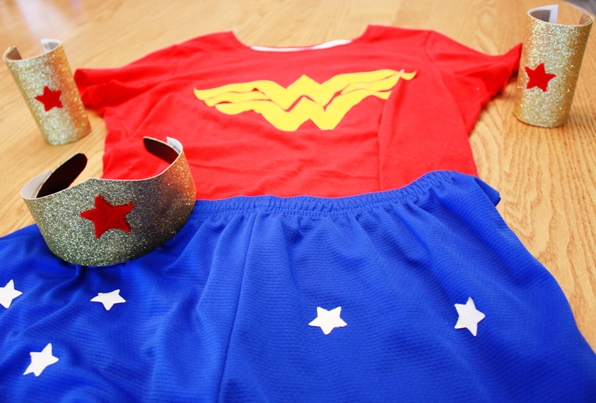
How to Make a Wonder Woman Costume

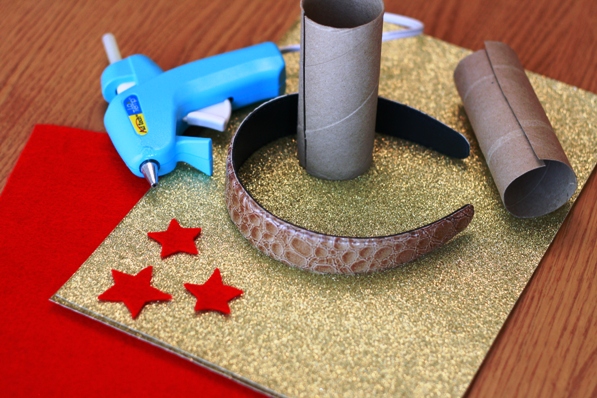
SUPPLIES: HEADBAND & CUFFS for Wonder Woman Costume

diy-wonder-woman-costume-supplies


I made the cuffs out of toilet paper rolls.

  • toilet paper rolls
  • sparkle craft paper in gold
  • red felt
  • scissors
  • hot glue gun

I simply cut the toilet paper roll lengthwise and traced a pattern onto the sparkle paper. I then cut the sparkle paper and hot glued the paper onto the toilet paper roll.  I then cut a small star out of red felt and hot glued it on.

For the Wonder Woman headband, I used an old large soft but solid headband.  I used this pattern for Wonder Woman costume headband and cut out the sparkle paper. I hot-glued the sparkle paper onto the headband. I cut the red felt into a star and hot glued it onto the front of the Wonder Woman headband.

how-to-make-wonder-woman-headband

 SUPPLIES for Wonder Woman Costume

  • Red shirt
  • Blue shorts
  • Red softball socks
  • Red shoes
  • Yellow and white Duck Tape sheets
  • Fiskars x-large star punch
  • White masking tape

I traced the Wonder Woman logo onto the yellow Duct Tape sheet using this Wonder Woman costume logo pattern. I placed on the front of the red shirt.

how-to-make-wonder-woman-costume-logo-pattern

For the shorts, I cut the stars out of the white Duct Tape sheet using the star punch. Because of the stickiness of the glue, cut out a few stars with folded foil to keep the punch from sticking. Place randomly on the blue shorts.

how-to-make-wonder-woman-costume-running

 How to Make Boots for Wonder Woman Costume

Wear red baseball socks with red shoes, then put masking tape from the toes of the red shoes to the top of the socks. Then place masking tape around the top of the socks.  Official (kind of) Wonder Woman boots! 

how-to-make-wonder-woman-costume-boots

Check out our Halloween costumes for a family of superheroes!

Check out this family of superheroes! Great Halloween costume idea for family or group!

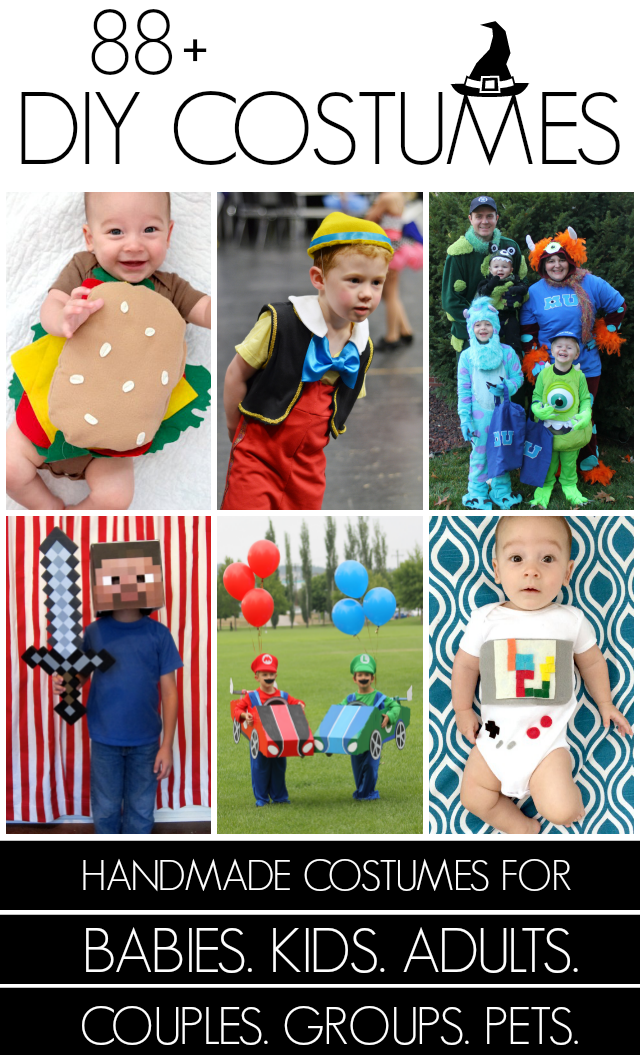
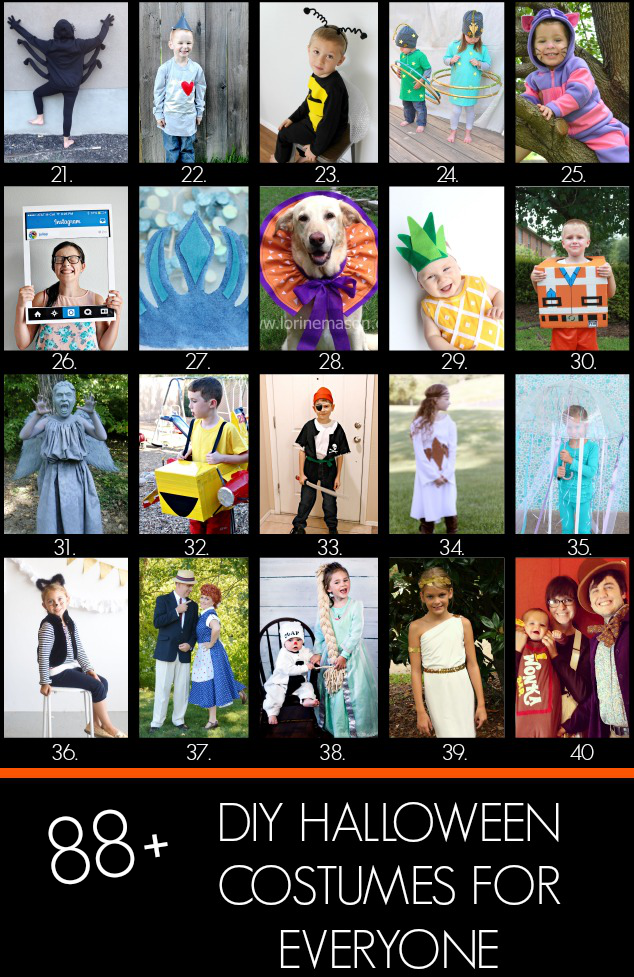
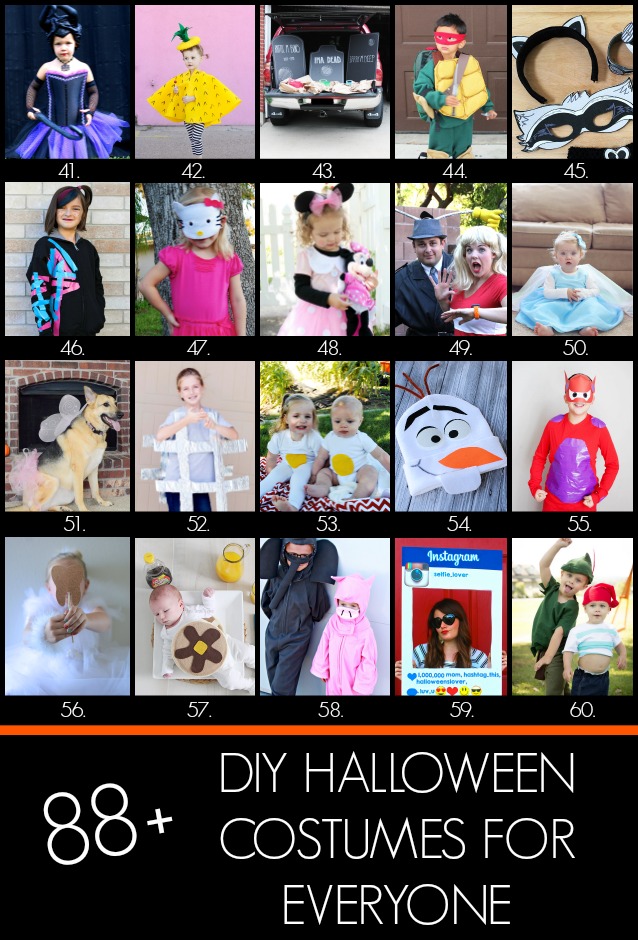
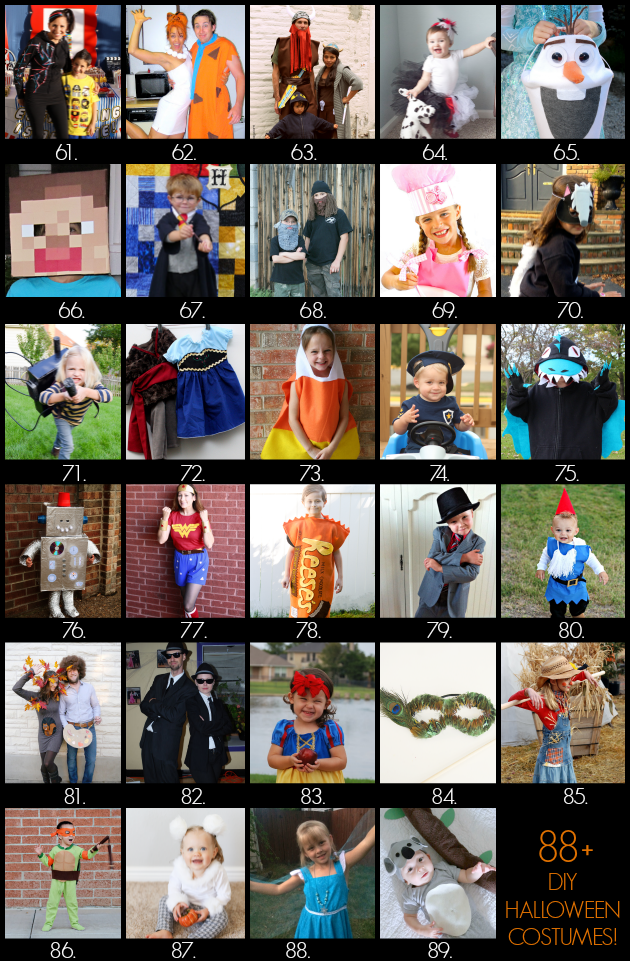
Along with how to make a Wonder Woman costume, I’m sharing 88+ more really awesome handmade costume ideas from talented bloggers everywhere!  Here are 80+ DIY Halloween costumes, including my WONDER WOMAN COSTUME!

Check out this handmade Halloween costume site, Really Awesome Costumes that has tons of easy ideas to craft up DIY Halloween costumes for everyone including your pets, family costumes, and even trunk or treat ideas!


101+ Handmade Halloween costumes at Creating Really Awesome Free Things

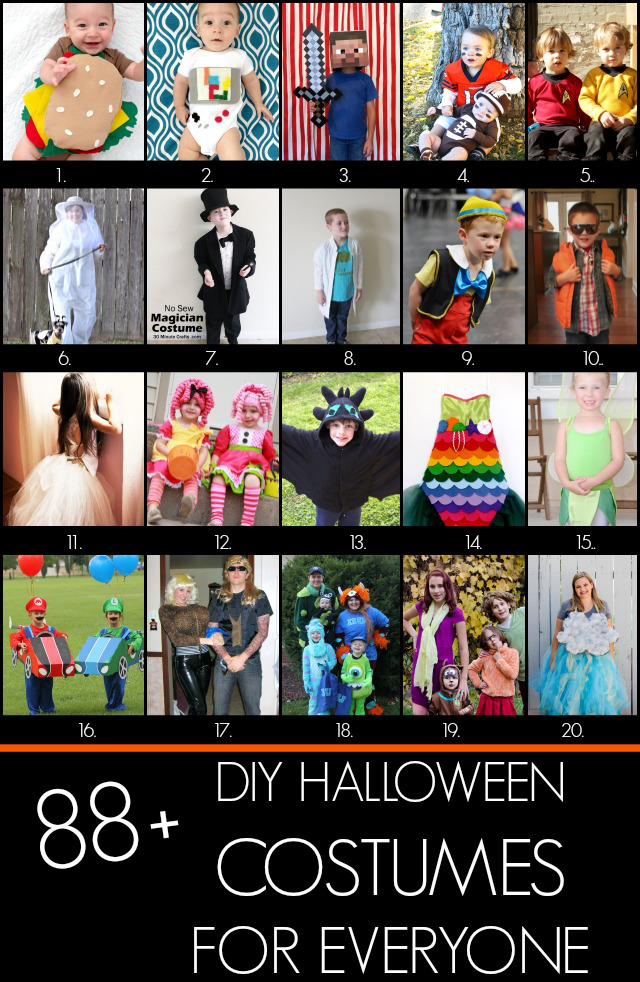
And now it’s time for tons more DIY Halloween costume inspiration! You can join in on the BLOG HOP! Click on the links below each collage to get the detailed instructions about how to make the costume pictured, just like mine above. Don’t forget to follow the Handmade Halloween Costumes Pinterest Board for even more DIY costume greatness!

88+ Handmade Halloween costumes at Creating Really Awesome Free Things

1. Handmade Baby Hamburger Costume

2. DIY Baby Game Boy Costume

3. DIY Minecraft Steve Costume

4. Football Brothers Halloween Costumes with DIY Pads and Onesie

5. Star Trek Halloween Costume for Kids

6. A Bee and Her Keeper

7. No Sew Magician Costume

8. Flint Lockwood Costume

9. Pinocchio

10. Marty McFly

11. Princess Wedding Dress Costume

12. Handmade Lalaloopsy Doll Costume

13. Homemade Toothless Costume

14. DIY Mermaid For Less Than $20 (No-Sew Option)

15. Easy Tinker Bell Costume

16. Mario and Luigi Go Kart Costumes

17. Dog The Bounty Hunter and Beth

18. Family Monsters University Costumes

19. Scooby Doo family costumes

20. DIY Storm Cloud Costume


88+ Handmade Halloween costumes at Creating Really Awesome Free Things

21. Cheap and Easy DIY Spider Costume

22. Easy Tin Man Costume

23. No Sew Bee Costume

24. Planet Halloween Costumes

25. DIY Cheshire Cat Costume

26. DIY Instagram Board

27. Elsa crown

28. Dog Collar Ruffles

29. DIY Pineapple Baby Costume

30. DIY Lego Movie Costume

31. Weeping Angel Costume

32. Disney Planes Costume: Dipper

33. Easy Pirate Costume

34. Easy Costume Idea – Renaissance Girl

35. 10 Minute Homemade Jellyfish Costume

36. DIY Cat Costume

37. Lucy And Ricky Costumes

38. Easy Frozen Costumes (Carrisa!!)

39. Easy Greek Goddess Costume

40. DIY Family Willy Wonka Costumes

101+ Handmade Halloween costumes at Creating Really Awesome Free Things


41. DIY No Sew Maleficent Costume

42. No Sew Pineapple Halloween Costume

43. Graveyard Bean Bag Toss: Trunk or Treat Car Costume

44. DIY Teenage Mutant Ninja Turtles Costumes

45. DIY Raccoon Costume with Printable Mask

46. Easy WildStyle Lego Movie Costume

47. Simple Hello Kitty Costume

48. No Sew Minnie Mouse Costume

49. DIY Inspector Gadget and Penny Costumes

50. DIY Frozen Elsa Dress Baby Edition

51. Fairy Princess Dog Costume

52. DIY Hashtag Halloween Costume

53. Toddler or Baby Egg Costume

54. Easy No Sew Olaf Costume

55. DIY Baymax Costume

56. DIY Tooth Fairy Costume

57. Baby Short Stack Pancake Costume

58. Elephant and Piggie Halloween Costumes

59. Instagram Halloween Costume

60. Peter Pan & Mr. Smee Halloween Costume

88+ Handmade Halloween costumes at ReallyAwesomeCostumes.com

61. Wildstyle Costume from the Lego Movie

62. Fred and Wilma Couples Costume

63. Viking Family Costumes

64. DIY Cruella de Vil Costume for a child

65. Disney Frozen Olaf Halloween Treat Bucket

66. How to Make a Minecraft Steve Head

67. DIY Harry Potter Costume

68. DIY Duck Dynasty Costumes

69. No Sew Cupcake Baker Halloween Costume

70. DIY Skunk Mask

71. Ghostbusters Proton Pack DIY

72. Frozen Anna Costume Tutorial

73. Candy Corn Costume

74. Paw Patrol Halloween Costume

75. No Sew Toothless Dragon Costume

76. DIY Robot Costume

77. Wonder Woman Costume

78. Reese’s Peanut Butter Cup Costume

79. Thrifted Gentleman Spy DIY Halloween Costume

80. DIY Boy Garden Gnome Costume

81. Group Costume: Bob Ross, Happy Tree, & Squirrel

82. DIY Blues Brothers Costumes

83. Snow White Costume

84. Peacock Princess Costume

85. Scarecrow Costume

86. Easy Teenage Mutant Ninja Turtle Costume

87. Handmade Teddy Bear Costume

88. Princess Elsa and the Spy Kid

89. DIY Baby Koala costume

What handmade costume ideas did you love the most?! Be sure to click over to get the costume instructions, pin the costume, and let them know you love it!

10:36 am by Penelope

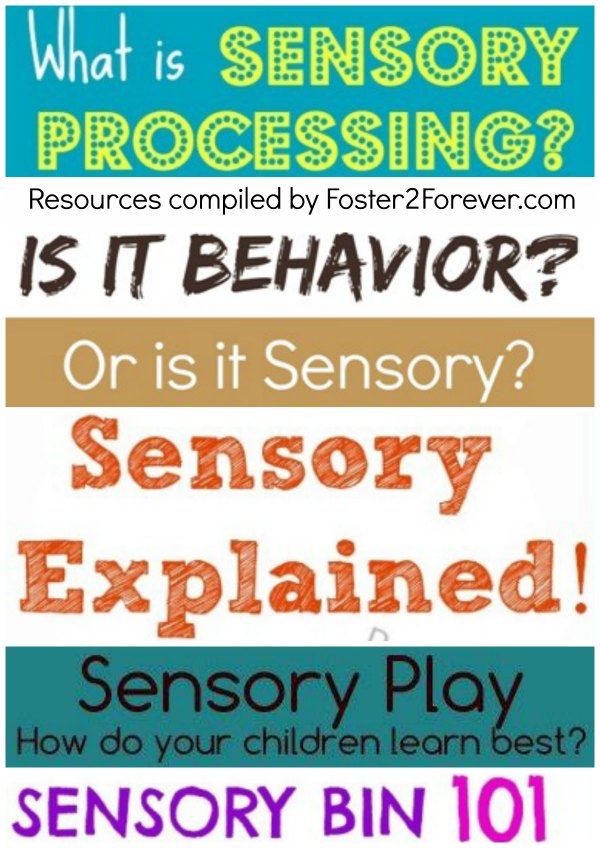
Could Your Child’s Behavior Actually Be Sensory Processing Disorder?

sensory-processing-disorder-integration-bins

What does Sensory Processing Disorder (SPD) look like?

As a parent, I have seen a child who can be so fun and so smart turn into someone I don’t know or understand at the blink of an eye. I have watched as he cries because his socks “don’t like his feet”. I have endured yelling, screaming and fits all because something didn’t go as planned.

Click to read more 1-What-is-Sensory-Processing-lla

Could your child’s behavior issues actually be sensory processing disorder (SPD)?

Have you ever wondered if your child’s behavior is truly a behavior issue or could it really be something else? Many times it is hard to tell if a behavior is truly a behavior or if your child is reacting to sensory problems in their body!

So is your child’s behavior a behavior issue or sensory?  If sensory relates to the sensation or physical senses and a definition of behavior is the way in which a person acts in response to a particular “stimulus” (or sensation), then YES, behaviors can happen because of sensory problems.

Click to read more 2-Behavior-Or-Sensory-Occupational-Therapy-Viewpoint-grb

What is Sensory Integration?

Sensory integration is “the central nervous system translating information into action”. Basically, it means that the behavior we exhibit is linked to neurological processes in our brain.
    • In layman’s terms: Everything we feel or experience, from wind on our face to driving a car is processed in our brain. If a child has an unusual response, then their brain isn’t processing what they feel or experience accurately.
Through meaningful sensory activities and a child’s inherent motivation, the child is able to make adaptive responses. This allows them to have more organized behaviors.
    • In layman’s terms: When a kid wants to participate in sensory play (to them it is just play), they adjust how they are playing based on what they are experiencing/feeling.

Click to read more 3-What-is-Sensory-Integration-ykt

How Can You Have Sensory Integration as Sensory Play?

Whether children are hypersensitive (over sensitive), hyposensitive, or neurotypical children with no sensory issues – sensory play is beneficial to every child to help them to understand the world around them.

Sensory play is often thought of just as messy play, and although lots of sensory play ideas can be messy – it is not just all about messy play but any play involving the senses.

  • Touch which can be exploring textures
  • Taste
  • Sight which could be exploring colors and light
  • Sound
  • Smell

It helps with creativity, problem solving, and supports their brain development!

Click to read more 4-what-is-sensory-play-itp

What Are Sensory Play Activities?

Go on a Sound Walk

Play in the Dirt

Play in the Mud

Create Sensory Bins

Sensory bins are a great way for children to learn using all 5 senses at once. Child development theorist Jean Piaget described the way children learn by calling them “little scientists“. Through sensory play and sensory bins children are using the scientific method and are also building pre-math skills, fine motor skills, language skills, imaginative play, and much much more. Not only that but sensory bins are so visually appealing and fun!

Most sensory bins have a base which is usually made with rice or another sensory material. Next you add other items including scooping materials such as spoons, measuring cups, etc for scooping and pouring. Add other items.

Click to read more
sensory-bins-101-lpal

If you are interested in learning more about sensory processing disorder, I highly recommend reading The Out-of-Sync Child and The Out-of-Sync Child Has Fun: Activities for Kids with Sensory Processing Disorder.

8:00 am by Penelope

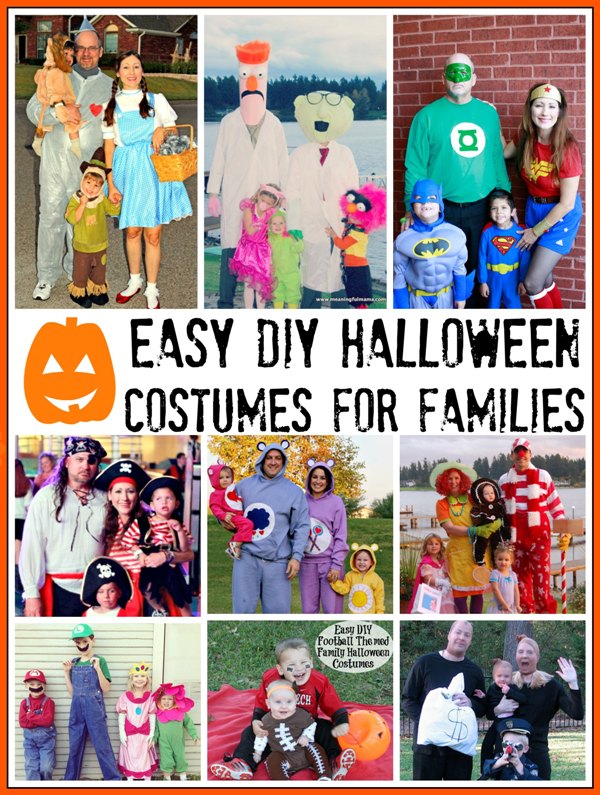
10 DIY Halloween Costumes for Families

Are you searching for easy DIY Halloween costumes for your family? Here are some cute Halloween costume ideas for groups!

best-easy-diy-halloween-costumes-ideas-family-group

Wizard of Oz Halloween costumes for family

Muppets Halloween costumes for family

Family of Superhero Halloween costumes

DIY Pirate Halloween Costume Ideas for Family

Easy DIY Care Bears Family Costumes for Halloween

DIY Family CandyLand Halloween Costumes for Family

Easy DIY Mario Cart Family Halloween Costumes

Football Themed Family Halloween costumes

Easy DIY Cops and Robbers Halloween Costumes for Family

Batman, Robin, Joker & Catwoman Halloween Costumes for Family

Check out all this other Halloween fun!

  • « Previous Page
  • 1
  • …
  • 4
  • 5
  • 6
  • 7
  • 8
  • …
  • 18
  • Next Page »

Looking for something?

Facebook

Foster2Forever

Archives

Why Every Foster Parent Needs Sexual Abuse Training

foster care visitation rules guidelines online

10 Tips for Foster Care Visitation Online

foster-income-taxable

Is Foster Income Taxable? What Foster Parents Should Know About Income Tax

Why Every Foster Parent Needs Sexual Abuse Training

I’m Clever

Sway

Pretty Chic Theme By: Pretty Darn Cute Design