Foster2Forever

  • Home
  • Shop
  • Fostering & Adoption
    • Foster Care
      • Being a Foster Home
      • Birthfamilies
      • Case Workers
      • Concerns
      • Court Hearings
    • Adoption
      • Parenting Tips for After Adoption
      • Benefits
      • Costs
      • Infertility
      • Parental Rights
  • Parenting
    • 31 Tips for Parenting After Adoption
    • Behavior Issues
    • Children’s Activities
    • Family Time
    • Motherhood
  • Our Home Life
    • Cancer & Health
    • Recipes
    • Marriage
    • Family Travel
    • Videos
  • Join Our Community
  • Our Family
  • Contact
  • Privacy Policy

10:46 am by Penelope

Best Books for Teaching Children about Touch

Last year, I wrote on tips for prevention of sexual child abuse.  The statistics on sexual abuse of children is alarming — Experts estimate that 1 in 4 girls and 1 in 6 boys are sexually abused before their 18th birthdays! (from Darkness to Light)

One of the best things we can do as parents is to allow our children to discuss the uncomfortable topic of touch.

  • Teach your children about their bodies, about what abuse is, and, when age-appropriate, about sex.
  • Teach children that it is “against the rules” for adults to act in a sexual way with them and use examples.
  • Teach them what parts of their bodies others should not touch.

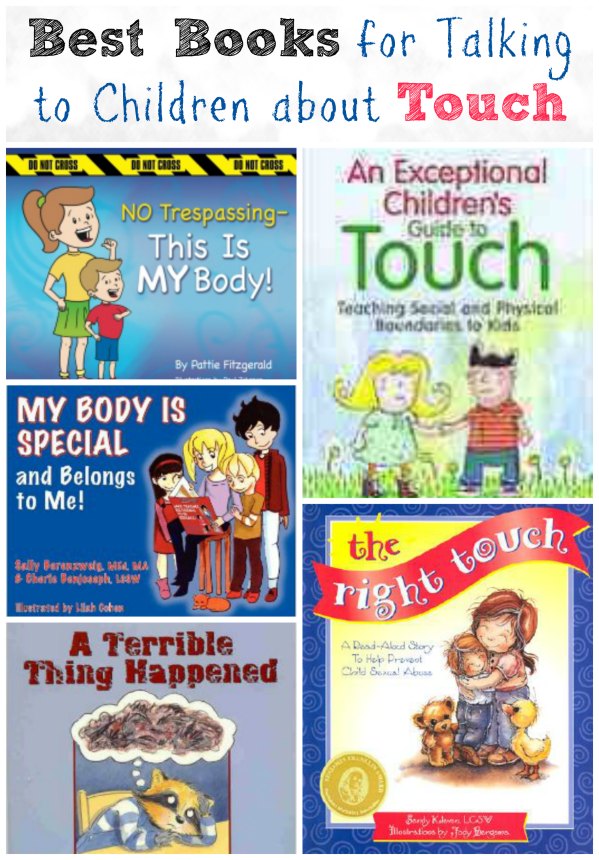
Here are some of the best books for teaching children about their bodies and appropriate touch. {affiliate links}books-sexual-child-abuse-prevention

Be sure and read these tips for prevention of child sexual abuse.

4:21 pm by Penelope

Don’t Let Your Children Drown (as these foster parents did)

A tragic story unfolded last year when two young siblings drown in a local lake here in Texas.  What makes the story even more tragic is that the 6-year-old girl and her 4-year-old brother were in foster care, and according to this news story were clearly not being closely supervised.

 “There was nobody. There was nobody for the first five or ten minutes they were doing CPR on the girl. Everybody was looking around asking where her parents were.”

These foster parents certainly weren’t abiding by these water safety rules for foster homes.

water-safety-tips-children-drowning

The water safety rules state that at least one ADULT supervising swimming activities “must be able to swim, carry out a water rescue, and be prepared to do so in an emergency.”  There were reports that a 12-year-old was supervising the children.  A 12-YEAR-OLD???  I certainly wouldn’t run the risk of a 12-year-old getting distracted while supervising young children in an open body of water.

The water safety rules require foster homes with swimming pools that “caregivers must be able to see all parts of the swimming area when supervising activity.”  The caregivers obviously weren’t supervising at all because they didn’t even notice their foster daughter was having CPR performed on her for at least 10 minutes!

The water safety rules specifically state that a child must wear a life jacket when “the child is in more than two feet of water and does not know how to swim.”  The children obviously weren’t wearing life jackets.  Why not?  Life jackets were easily accessible at the lake for free.

I guess some people just don’t realize how easily a child can drown and how closely a child must be supervised while swimming.

This summer, I was overjoyed to watch my boys swim a short distance after a week of lessons. (see my 7-year-old son swim on Instagram)  This weekend, at our aunt’s pool, we worked on swimming skills, and I realized that my 4-year-old Lil Bit really doesn’t have the ability to swim any distance at all. (He’s just not kicking quickly enough)  As I was working with my now 7-year-old, my aunt gasped and pointed. My 4-year-old Lil Bit, had stepped off the pool step and was struggling to swim to the edge of the pool! I was standing right next to him! Swimming can be such a dangerous activity! A child can drown so easily!

The drowning deaths of these two foster children infuriates me! Their drownings were preventable! If only had the foster parents simply followed the water safety rules and adequately supervised swimming!

Do your children know how to swim? What additional water safety rules do you follow?

10:19 am by Penelope

You Must Be Crazy to Be a Foster Parent: 7 Tips to Keep Your Sanity

Foster parenting is not for the faint of heart!  The goal in foster care is ALWAYS reunification with birthfamily, if at all possible.

And sometimes it isn’t easy. Supporting reunification can be difficult, especially given some situations of dysfunctional, unstable families on the brink of collapse.

But what if your home is much more stable? Can a foster parent support reunification if they feel they can provide a much more stable environment for a child? How can a foster parent support reunification knowing that a foster child will be going back to a dysfunctional home? As a foster parent, how do you keep your feelings in check?foster-parenting-emotions-tips

7 Tips for Foster Parent Emotional Health

  1. Remind yourself constantly that reunification with birthfamily is #1 priority (even if your heart you is telling you that you’d be a better parent).
  2. Take it one day at a time and love your foster children (and their birth family) unselfishly.
  3. Show love to the birthfamily during the process. Remember Mother’s Day, birthdays, Christmas, etc.  Our birthmother received her very first Mother’s Day card ever (with her third child) from our 10-month-old foster baby.  She bragged and bragged in court about her Mother’s Day gift.
  4. Treat your foster children as your forever children, then when they leave, go ahead and grieve.
  5. Realize that you will feel all sorts of emotions during the process – grief, guilt, selfishness, etc. – it’s okay to have emotional attachments to the children you raise.
  6. Realize that some foster children will be with you only for a while, but there will eventually be a child that needs a forever home.
  7. Pray!  Pray for yourself, your foster children, their birthfamilies constantly throughout the process. Give it all up to the One who knows all and can take your emotional burdens so you don’t have to.  He already knows the plan for you and your child’s future!

Foster parents just have to find their own way through the emotional roller coaster of parenting these children from hard places. God has a little one already planned for you… it may be this child, or it may be another one.  But someday you will have the forever child that has been waiting for you all along!

What are your tips to keep a foster parent’s emotions in check?

10:27 am by Penelope

When It’s Time to Say Goodbye

As foster parents, our first goal is to always support reunification with birthfamilies. But sometimes, reunification just isn’t safe for a child, especially given situations of abuse and violence.

Foster Ducklings explains the Foster Parent’s Dilemma:

I believe in reunification. I believe in keeping families together. We started fostering because we understand that sometimes life just jumps up and kicks you in the teeth. We feel called to be able to say to bio parents, “Hey, sometimes life is too much. You worry about you and get yourself straightened out. We’ve got the baby. He’s safe and happy and loved.” We love the idea of mentoring these parents to help them learn to be the best possible parents for their child. Because we believe that the vast majority of the time, the best possible parents for a child are the ones who created her.
But… sometimes… reunification isn’t what’s best…

When parental rights are on the brink of being terminated, some birthparents just give up and disappear. {Drug addictions that just can’t be broken} Sadly, the birthparents of our two boys and another foster daughter saw their children just a few times before disappearing out of their lives.  However, some birthparents have a chance for a last visit to say goodbye to their children.

foster-child-goodbye-birthmother-adoption

Foster mom, Ashley, of Fostering Love at Home, wrote in her post A Time to Say Goodbye to What Used to Be:

Today my kids will be saying goodbye, officially, to their past life. Their former life connections have been terminated. They are no longer tied to where they came from. The legal process of this change occurred earlier this month, and today is when my children will be given a chance to say goodbye.

There are a lot of feelings surrounding this event. The children are anxious and worried and wanting to express anger while also crying because of the grief of the situation. Yet, they are also excited that this means adoption is getting closer. Can you imagine the conflicting feelings? Great sadness, yet great joy. Great anger, yet great happiness.

Jess of Good & Hardy expressed the intense sorry of the Goodbyes when their foster son saw his birthmom for the last time:
I felt awful….that this {birthmother} has to live with the last image of her little boy forever – him running out of a room with her in it, calling someone else mommy. It makes my stomach hurt to think about the kind of pain that must bring.

The Lark’s Nest shares in her post, the day they said goodbye:

today was the kids’ final visit with their birth mother.
it was horribly heartbreaking.
she was devastated but she tried to be strong for the kids.
she was able to have a few minutes alone with each child, individually.
she told them how much she loved them.
she told them it was okay to love their new family.
today we start the healing.
it will be a rough few weeks… months….
who knows how long it takes to be okay after losing someone you love so much.
their hearts will still ache years from now when they think about her.

The foster care system is full of brokenness. Broken homes, broken families, broken lives, broken hearts, and broken spirits.

Our role as foster parents is tough. Gut-wrenchingly tough to console grief-stricken children on situations they might not understand.

Although an emotional nightmare, a goodbye visit with birthfamily, is a means of closure. Our foster daughter intensely struggled with unresolved grief from her abandonment. Her mother chose to relinquish her parental rights just before her daughter’s ninth birthday and did not want to see her daughter again. Although, a goodbye visit would have been tough on both mother and daughter, this poor, little girl needed to see her mom one last time to say goodbye.

Children need to know they are loved and wanted.  As difficult as it can be sometimes, we just have to love them through the tough times to help them heal from the brokenness.

8:54 am by Penelope

Racism in Kids and the Cheerios Commercial Controversy

Racial tensions have exploded this month with Paula Deen’s racist remarks, the Travon Martin verdict, and this Cheerios commercial featuring an interracial couple that caused General Mills to disable the comments due to the inflammatory racial remarks made.

This is what Michael Twitty of Afroculinaria has to say about the Cheerios commercial controversy:

“Take for example the completely un-Christian and inhuman rage at Cheerios for their simple and very American ad showing a beautiful biracial girl talking to her white mother and pouring cereal on the chest of her Black father.  That Cheerio’s had to shut down the comments section says that the idea of inter-human relationships outside of one’s color bracket is for many hiding behind a computer screen—a sign of the apocalypse.  So just like those old spaghetti sauce ads, yes, America, racism—“it’s in there” even when we were prefer it not be.”

Check out what kids had to say about the Cheerios commercial controversy.

In this video, I didn’t catch what friend and fellow blogger, Martha Wood of Momsoap, pointed out in her post about the Cheerios commercial controversy:

It’s mostly white kids doing all the talking. There are eight white children. Two black children. One Asian child. And one child who looks biracial. The main child of color who talks is the Asian kid.

Are you telling me that you couldn’t find more black children for this video?

Talk about white privilege! I didn’t catch that this video was mostly white children talking about racism until Martha pointed it out.

What are your thoughts on the kids reaction to the Cheerios commercial?

9:47 am by Penelope

6 Tips for Children With Parents In Prison

One in 28 children in the United States has a parent that is currently incarcerated (1).

Sadly, a number of these children wind up in foster care.  A quarter of the foster children that have been in my care had a parent that was incarcerated at the time of placement.  To some children, going to jail is a regular event that just means you need to go bail them out. And other children feel shame and even guilt when a parent goes to prison.
SONY DSC

6 tips for when a child has a parent in prison:

1. Help the child feel secure in his surroundings with reliable people and activities.

Surround the child with people and places that he knows.  Don’t overwhelm the child with new places and people at first.

2. Have a predictable schedule and let him know what will happen during the day.

Children do best when they know what to expect.  “Dad will be taking you to school, then I will pick you up from school for a doctor appointment. After that we will stop by the grocery store before going home for dinner.”

3. Encourage your child to talk about his feelings.

Ask “How are you feeling?” I love this touching Sesame Street video when Muppet Murray talks to child Nylo about his mom’s incarceration. Grab a Kleenex…

4. Let the child know that it’s okay to have big feelings.

I had a family member with an incarcerated parent, and when this child got in trouble, the words were heartbreaking: “I’m bad, just like my dad!”

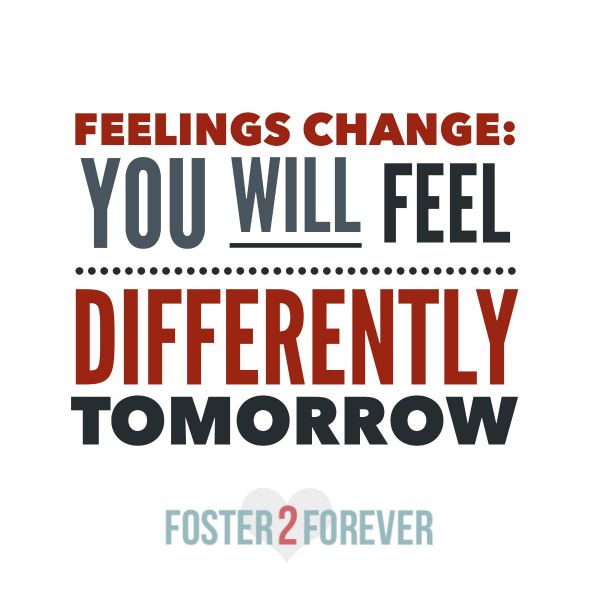
Shame, guilt, sadness, and anger are such big emotions for a child to handle. Let them know that it’s okay to feel that way, but that feelings change:  “I know that you’re having some really big feelings right now, and that’s okay…feelings never last forever.  They always change.  So even though right now, your big, big feelings are making you {sad}, they won’t last forever.  I promise.” (2)

Kids-emotions-quote

5. Talk honestly with the child about his parent’s incarceration.

Honesty builds trust which is what a child needs during this time. “Daddy is in jail because he broke a grown-up rule called a law.”

6. Let the child know that the incarceration is not his fault.

Some children from hard places take the world on their shoulders and are full of worry and guilt about things they have no control.  Let them know that it’s not their fault that their parent was the one that made a bad choice.

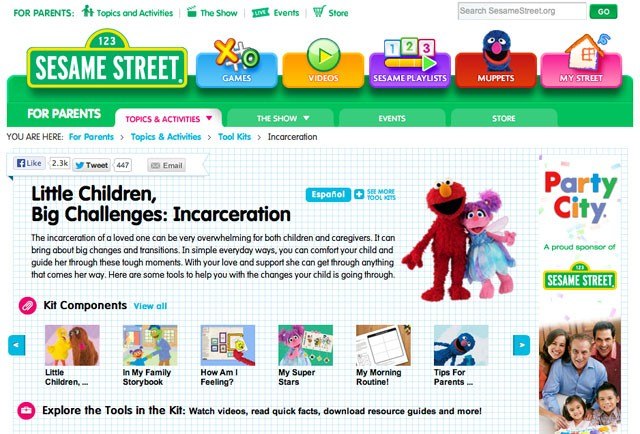
Sesame Street has released a new initiative  for children with parents in prison.  For more tips, activities and videos, check out Sesame Street’s Little Children, Big Challenges: Incarceration.

sesame-street-incarceration-website

What has been your experience with children whose parents are incarcerated?

9:00 am by Penelope

Video: My Challenge of Being a Foster Parent

I’ve now joined the world of YouTube & vlogging (video-blogging)!

In this video, I open my heart and share with you my challenge of being a foster parent.

To view on YouTube

The feelings I share in this video is why I have been so committed to this blog and this online community of foster parents for the last 3+ years.

Every comment here on the blog makes me feel less alone in my journey through the foster care system. You understand! You get it!  The connection I feel with you and your unique struggles is real.

I do have a few real life friends that are foster parents, but live far away, so online is the way to stay connected in today’s world. I’ve even met one Foster2Forever reader in real life! We became instant IRL friends, and because of blogging, we knew each other’s stories.

Connection is the key! Connect with me and other foster parents via:

GOOGLE PLUS – Last September, I hosted a Google Hangout (video chat like Skype) with 4 other foster parents. What a great way to connect! (plus they got to meet our insomniac LilBit)

FACEBOOK PAGE

TWITTER

FACEBOOK GROUP (closed discussion on anything foster care – you must request to join)

Oh, and you can also subscribe to my new YOUTUBE channel.

My desire with all these online accounts to give an easy way for foster parents to share their unique journeys with each other to not feel so alone in their foster care journey.

Where do you find support as a foster parent?

8:00 am by Penelope

Why Race Matters

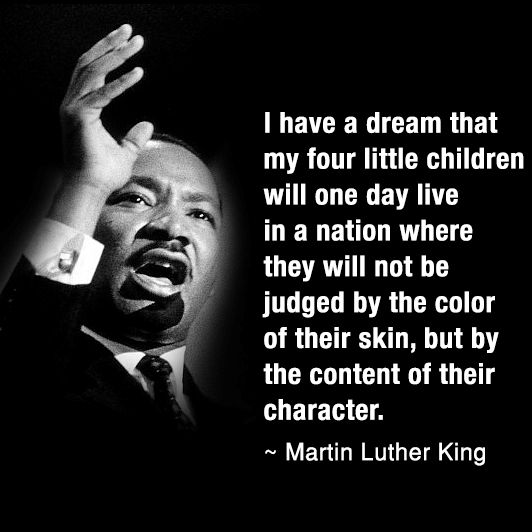
Dr. Martin Luther King had a dream. Transracial adoption is truly his dream realized – full integration.  Whites adopting black children to become forever members of their families.  As divided as our nation was at the time, could transracial adoption been fathomed in his dream?

This weekend, we attended a foster parent training entitled “Healthy Racial & Ethnic Identity.”  Race, as our instructor told us, is the white elephant in the room. Her words to us were: “Race matters.”

As an African-American mother of a gifted & talented African-American son, our presenter spoke openly about the reality of how race matters to our children, even today.

Teen filmmaker, Kiri Davis, explores the message that society gives African-American children in her video – A Girl Like Me.

Halfway into the 7 minute film, she shows African-American preschoolers 2 baby dolls, identical except for skin color.  Watch what happens when she asks: “Which is the bad doll?”

I can’t help but tear up when she asks the little girl why. “Because she’s black.”
Julian Abagond writes more about the Brown vs. Board of Education doll experiment.

Another heartbreaking point in the film is the African-American teen who began wearing her hair natural, then her own mother tells her that her hair looks too African. What?

Another good film about the importance of race and ethnicity, produced by the Casey Family Services, is Knowing Who You Are, where former foster children and birthfamilies openly discuss integration.

Skin color may not mean anything to you. You may truly be “color-blind;” however, at some point in our children’s lives, someone will point out their differences to them, as they try to fit in.  Skin color is just one of those external factors. We can’t ignore it.

Honestly, can your African-American son safely go for a walk in your neighborhood at night?  Or could he end up as Trayvon Martin, the African-American teenager shot in Florida last February by a neighborhood watch coordinator?

Our speaker even asked a friend that is an officer with the Austin Police Department about what route her African-American 16-year-old son should drive to school.  His words to her: “Take the interstate – your son will get stopped by the police if he drives through the neighborhood!”

The takeaway of the training was that race matters in society and as parents you have to be aware of that.

  • Realize that, at some point, your child will probably be stereotyped according to their race;
  • Give your child proactive and protective messages about their individual abilities and identity;
  • Help your child identify themselves as something other than race (“I am a girl who enjoys reading vampire novels”)

What issues or controversies have you encountered with transracial adoption?


9:00 am by Penelope

What Do Foster Parents Say About the Sandy Hook Shooting

Rebecca Hawkes of Love is Not a Pie in Helping Our Children Cope With the Sandy Hook Tragedy:

If you are parenting a child, as I am, who came to you by way of the foster care system, your child may be needing extra support around recent events, but really all children are likely to need some parental guidance as they attempt to make sense of something that is beyond comprehension, even for most grownups.

Kelly of Monkey Soup in Buzzers and Cameras wrote:

There are people who do bad things sometimes.  They may be sick, they may be mad  or upset about something.  They may hurt people.  Momma, Daddy and the grown-ups that are around you will do everything in our power to keep anything from happening to you, and to keep you safe.

Denise of Fostering a Blessing in Hits Home wrote:

Before foster care I NEVER knew this world of childhood mental illness existed.  Let’s talk about it.  Let’s help these kids.  Locking them up…NOT THE ANSWER.

Momma of Called to Foster in Mental Illness: Conversation – Resources – Guidance wrote:

As a child raised by a mentally ill mother, you would think I would fully understand the depths of that reality but I suppose I’m still drifting around somewhere not fully grasping the truth of it all.  Hoping that it would never become my reality again.

Cherub Mamma in Mr. Mini Wonky???? wrote:

I guess I put this out there to show what it looks like in OUR house. We don’t have to make trips to psychiatric hospitals. We don’t have three hour violent rages that involve restraints. But it isn’t easy all the time. There’s a lot of anger and frustration. There’s a lot of hurt. There’s a lot of ugly that most folks wouldn’t understand.


  • « Previous Page
  • 1
  • 2
  • 3
  • 4
  • 5
  • …
  • 10
  • Next Page »

Looking for something?

Facebook

Foster2Forever

Archives

Why Every Foster Parent Needs Sexual Abuse Training

foster care visitation rules guidelines online

10 Tips for Foster Care Visitation Online

foster-income-taxable

Is Foster Income Taxable? What Foster Parents Should Know About Income Tax

Why Every Foster Parent Needs Sexual Abuse Training

I’m Clever

Sway

Pretty Chic Theme By: Pretty Darn Cute Design