Foster2Forever

  • Home
  • Shop
  • Fostering & Adoption
    • Foster Care
      • Being a Foster Home
      • Birthfamilies
      • Case Workers
      • Concerns
      • Court Hearings
    • Adoption
      • Parenting Tips for After Adoption
      • Benefits
      • Costs
      • Infertility
      • Parental Rights
  • Parenting
    • 31 Tips for Parenting After Adoption
    • Behavior Issues
    • Children’s Activities
    • Family Time
    • Motherhood
  • Our Home Life
    • Cancer & Health
    • Recipes
    • Marriage
    • Family Travel
    • Videos
  • Join Our Community
  • Our Family
  • Contact
  • Privacy Policy

6:53 am by Penelope

3 Tips to Make Family Visits Easier for your Foster Child

Crying-Foster-Girl-Throwing-Tantrum-Family-VisitThe family visits your foster child has after removal from their birth family can stir up emotions that a child simply can’t understand or process. In 2009, our family had a bright and beautiful 2-year-old little girl join our family for 3 months. Her attachment issues were severe with extreme clinginess, incessant whining, night terrors, and an aversion to men. The weekly visits with her birth family caused her behaviors to intensify and disrupt our entire family. We found that by transitioning the child from her birth family to her foster family after each visit seemed to help calm her and help her feel more secure. Be sure to follow your agency’s foster care visitation rules. 

3 Tips for Family Visits

1.  Request family visit times that will allow your foster child to process feelings before going back into a daily routine, if possible.

For me, as a working foster mom of a toddler in daycare, Friday afternoon visits worked best. This allowed our family to spend the entire weekend together before she would experience the feelings of abandonment when being dropped off at day care. For school-age children, it could be a visit scheduled at a time when the foster parent can have some time alone to allow for processing emotions and re-bonding. Or even a trip to the local park or a bounce house could allow older children to physically “vent” their feelings before going back to school and daily routine around others.

2.  Pick up your foster child from the family visit.

Of course, this isn’t always possible; however, it allowed our foster child to be comforted by her foster “mommy” instead of a caseworker she rarely saw.

3.  Transition your foster child directly from the birth parent to the foster parent.

For our situation of having a young toddler with serious attachment issues, going directly from her birth mommy to her other “mommy” seemed to lower her stress levels and helped the visit end on a happy note.

These are some of the techniques that we used to help ease our little foster child from birth family visits back into our foster family routine. This is what worked for our situation and may or may not work for your situation. As you may know, each child and their situation are unique.
What tips do you have to make family visits easier on your foster child?

7:56 am by Penelope

My Struggle with Attachment Disorder

toddler-tantrum-foster-child-trauma-bonding-attachmentHe was out-of control – as if demons had taken over his soul. His screaming was unintelligible. His body was flailing about with his arms punching the air or anything in the way. His face was the color of a sun-ripened tomato. His kicking jerked as his body contorted into different directions.

This wasn’t just a tantrum.

My role as a mother is to raise my precious preschooler into a Godly man. But my doubts overwhelm me during these moments. Had Satan already taken hostage of my child through a disorder known as Reactive Attachment Disorder or RAD?

In these moments, I am broken. I fall to my knees crying out for God to release the demon from my beloved child.

Through the prayers, God is awakening me to devote myself to this child.

Whatever it takes, dear Lord!

My child has emotions from his neglected infanthood that he cannot understand or control. His desire is to have all his physical needs met and feel that unconditional love.

As his mother, I have to make sacrifices. I’ve taken him out of full-day school. I’ve taken family leave from work to demonstrate to him that Mommy loves him and wants to be with him.

I devote my life to my son.

A problem that isn’t too large for my Lord and Savior.

Have you liked Foster2Forever’s Facebook page?

7:51 am by Penelope

What Every Parent Should Know About “Bath Salts”

On Memorial Day weekend, a story broke on the national news that could have been from a B-grade horror flick.  A zombie man assaulted a homeless man, and in a cannibalistic attack — ate his face!  The attacker had been described as a zombie because he was high on “bath salts“.

What are “Bath Salts”?

Bath salts are referred to as drugs consisting of any of these synthetic stimulants:  Mephedrone, Methylone, or Methylenedioxypyrovalerone (MDPV). (1)  On the street, bath salts are also called “bath powder”, “herbal incense”, or “plant food.” (2)

How Do “Bath Salts” Work in the Body?

To understand what the drug does, think of “bath salts” as a cross between meth and acid. Like cocaine, meth, and speed, bath salts work by stimulating the central nervous system, kicking it into overdrive, if you will. But the drug is also seriously hallucinogenic, like LSD. (2)

How Does One Take “Bath Salts”?

Bath salts can be smoked, snorted, or injected. (2)

Why Would One Get High on “Bath Salts”?

The initial symptoms are positive, including relaxation, euphoria, and a sense of warmth and wellbeing similar to Ecstasy. (2)

What are the Side Effects of “Bath Salts”?

Agitation, paranoia, hallucinations, chest pain, suicidality. It’s a very scary stimulant that is out there. as severe agitated behavior, like an amphetamine overdose, has occurred. A second concern is the ongoing suicidality in these patients, even after the stimulatory effects of the drugs have worn off. (1)

Bath salts can trigger a full-blown psychotic episode with extreme delusions and are highly addictive. (2)

How Does One Find “Bath Salts”?

Bath salts are very easy to get hold of. They’re sold online, in “head shops” all over the country and even behind the counters in many convenience stores. Bath salts come in little packets with soothing names like “Blue Silk”, “Bliss,” “Vanilla Sky,” and “Ivory Wave,” and cost just $25-60 a packet. (2)

Are “Bath Salts” Illegal?

U.S. Drug Enforcement Administration (DEA) finally made the possession and sale of three of the chemicals commonly used to make bath salts illegal in October 2011. The ban is effective for at least a year. (1) However, with this latest high profile news story, the ban will probably become permanent.

Have you liked Foster2Forever’s Facebook page?

8:00 am by Penelope

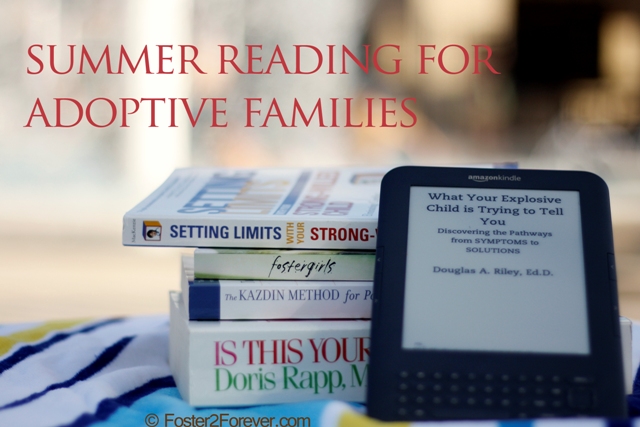
Summer Reading List for Adoptive Families


Books about Parenting and/or Discipline

Setting Limits with Your Strong-Willed Child : Eliminating Conflict by Establishing Clear, Firm, and Respectful Boundaries by Robert J. MacKenzie – This book is my absolute FAVORITE of any book I’ve read so far!  With a strong-willed child himself, Dr. MacKenzie really understands the challenges of raising a difficult child. Highly recommend this one!

Bringing Up Bebe: One American Mother Discovers the Wisdom of French Parenting by Pamela Druckerman – I actually listened to this book as a free download through Audible.com’s 30-day trial.  Try Audible Now and Get A Free Audiobook Download with a 30 Day Trial. I enjoyed hearing about the French parenting style of raising independent children, with topics such as sleeping through the night and independent play.  The chapter on teaching children to not be finicky eaters through serving courses at meals and persistence is FABULOUS. The book is worth it for that chapter alone; however, skip the chapter on discipline.

Parenting With Love And Logic (Updated and Expanded Edition) by Foster Cline – I haven’t actually read this book yet, although MANY parents have highly recommended it!

Books about Adoption

Adopted for Life: The Priority of Adoption for Christian Families & Churches by Russell Moore – I LOVED this book by Christian adoption advocate, Dr. Russell Moore. I actually listened to him narrate the book in his charming Southern drawl FREE through Audible.com’s trial membership. (They keep sending me free book credits.)  He discusses adoption through a Biblical view and covers in detail topics such as name changes, integrating culture into family, etc. I highly recommend.

Kisses from Katie: A Story of Relentless Love and Redemption by Katie Davis – This is another book I listened to FREE from Audible.com. A very inspiring book about an 18-year-old that postponed college to spend a year in Uganda. She ended up making Uganda her home, creating a ministry, and adopting 14 little girls.  Hers is a true heart for adoption.

Shield: A Framework of Self-Care for Foster and Adoptive Families by Sharla Kostelyk – Read my review of this book for foster and adoptive families about self-care and avoiding burnout.

The Connected Child: Bring hope and healing to your adoptive family by Karyn Purvis – So many have recommended this book, yet I’ve yet to read it.  This book is based on actual research on healing children from neglect. I WILL read this book next!

Lifebooks: Creating a Treasure for the Adopted Child Updated and Revisedby Beth O’Malley – Mama Lark of the Lark’s Nest highly recommends this book. “This book is seriously a LIFESAVER for an adoptive mom that wants to tell their child the correct story- THEIR OWN! I sat for weeks wondering how I could tell my daughter that she was born addicted to drugs…Beth O’Malley is a genius in this department!! She explains things so clearly and concise. Everything is told on the level that a child needs to hear it at that time.”

Adoption Is a Family Affair: What Relatives and Friends Must Know by Patricia Erwin Johnston – I have not read this book, but it was recommended to me: “It’s great because it’s written to the families of adoptive families and covers a lot of the emotions and struggles of adoptive families as well as ways that friends can help during the process. Unfortunately, it mostly talks about private infant adoption or international adoption. But, it’s a good read.”

Books about Foster Parenting

I haven’t read any of these books, but were recommended by other foster parents:

Success as a Foster Parent: Everything You Need to Know About Foster Care by the National Foster Parent Association

Another Mother: Co-Parenting with the Foster Care System by Sarah Gerstenzang

The Foster Parenting Toolbox by Kim Phagan-Hansel

A Guide to Foster Parenting: Everything But the Kids! by Mary Ann Goodearle

Another Place at the Table by Kathy Harrison

Invisible Kids: Marcus Fiesel’s Legacy by Holly Schlaack – I haven’t read this book, but it was recommended: “This book really helps you understand the system and how easily the kids get lost. It is based on a murder of a foster child in Cincinnati a few years ago. Warning: there are parts that are difficult to read.”

Books about Special Behaviors

What Your Explosive Child Is Trying to Tell You: Discovering the Pathway from Symptoms to Solutions by Douglas Riley – Just the first chapter helped me tremendously in realizing that expectations and transitioning from one activity to another may be causing some of my child’s explosions. Great book if you have an explosive child!

Is This Your Child? by Doris J. Rapp – This book explores child behavior associated with food allergies. Just by skimming this book, I noticed my Stinkpot had rosy cheeks after eating applesauce one day – indicative of a food allergy to apples! Wow!  I still haven’t done a full elimination diet of gluten and corn yet.  I recommend that you take a look at this book if your child has unexplained explosions.

The Boy Who Was Raised as a Dog: And Other Stories from a Child Psychiatrist’s Notebook–What Traumatized Children Can Teach Us About by Bruce Perry – This book was recommended by Stinkpot’s therapist. I read the free sample pages of this book, and I was mesmerized by this story of a psychiatrist and his journey to help a young child through a traumatic past of sexual abuse. Very well written!  Dr. Perry heads The Child Trauma Academy.

When Love Is Not Enough: A Guide to Parenting Children with RAD by Terena “Nancy” Thomas – I haven’t yet read this book, although it is highly recommended from parents of children that suffer from Reactive Attachment Disorder.

Books for Children in Foster Care

The Star: A Story to Help Young Children Understand Foster Care by Cynthia Miller Lovell

Maybe Days: A Book for Children in Foster Care by Jennifer Wilgocki

Fostergirls by Liane Shaw – This book would be perfect for a tween girl that is in the foster girl system and might have some learning disabilities.  This book was written from the girl’s perspective and at times, I laughed at loud at the dialog between her and her friends.  Good story about belonging, even if it isn’t with a biological family.
Disclosure: Affiliate Links

What books would you recommend? Any other books that I missed?

8:27 am by Penelope

The Heartbreak of When a Foster Child Moves

One afternoon when I was in high school, I was rushing out the door for an evening event. One of my foster sisters, who had recently left our home, was visiting us for the day. She was preparing to move to another home and when the caseworker heard she was visiting us, she decided to drop by and personally explain to my foster sister what she was about to happen in her little world.

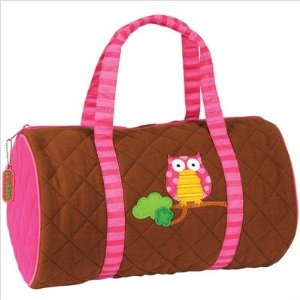
Stephen Joseph Owl Duffle Bag at Amazon (affiliate)

I listened from the other room as this caseworker handed my 4-year-old foster sister a scrapbook that her new family had prepared for her. She broke the news to her much like a mother tells her child she’s going to a birthday party: “You’re going to live with this family now and they are so nice. You will love it!” The idea was that this caseworker would spend 5 minutes with my foster sister explaining to her that she was, yet again, moving to a new family, and then life would continue on as normal.

As I headed out the door, I peeked into our office to give my foster sister a hug. She was sitting at the round glass table coloring on a piece of paper. Lying beside her was a book of pictures that only minutes previously had been given to her by her caseworker. As I walked into the room and sat down next to her at the table, I began flipping through the pictures; one after the other I turned through all of the pages. I looked at pictures of children with their parents, read words her new parents had written of affirmation, scanned over a letter expressing excitement, and silently read about each member of this new family. As my eyes studied the faces I saw on the page, I suddenly heard gut-wrenching words come out of my sweet foster sister’s mouth, words that took me from my shallow, high school world, and brought me to the deep, raw, pain that exists in this world.

Without looking at me, my beautiful girl pointed to the photograph in her new scrapbook and told me, “I am going to live at their house, but I am scared.” Those words caught me off guard. I could not bring myself to look into her big blue eyes, but in that short sentence, as she verbalized her pain, I felt a small part of her heart shattering. She wanted me to protect her.

I saw sitting before me a four-year old girl who had already been through too much pain. In that moment, the big sister instinct in me wanted to stop everything in her life; I wanted to put her life on pause and allow her to fully live the carefree, childhood that every little girl should experience. I wanted to keep her safe and I felt that it was my responsibility to protect her. I wanted to live up to the expectations she had of me, and give her reason to trust me. In that moment, however, I was completely powerless.

Instead, I wrapped my arms around her slender waist, and used every bit of strength in me to bite back the tears. I whispered into her ear that she would be safe. My mom told her that it was okay to be scared. We validated her feelings and then let her cry.

Foster care is full of hurt, and as a foster sister, I have always had a prominent instinct to protect my foster siblings. It is hard to be powerless while experiencing a love that is so deep.

In those moments when we are without control, we are still given an opportunity to love relentlessly and leave a print embedded on a child’s heart.

Sometimes love is what binds up all wounds. The love I have for my foster siblings is one of the greatest loves I have ever had the privilege of experiencing.

Learning to AbandonKylee is a 19-year-old college student who is passionately pursuing a degree in Social Work while simultaneously learning what it means to be a big sister to kids from “hard places”. Her parents jumped into the crazy world of foster care just days before her 8th birthday and cared for numerous infants and toddlers over a ten-year time span; four of those children became permanent family members through adoption. Kylee loves sharing about foster care and adoption and is passionate about advocating on behalf of vulnerable children.

8:00 am by Penelope

A Scary Picture of Foster Care and Other Good Reads

After writing about youth aging out of the foster care system earlier this week, I found the following infograph about foster youth in my Google Alerts.  This document was produced with more recent statistics by The Indiana Youth Institute.

Going through the foster care system can make life a struggle for youth. Frequent placement changes can lead to poor educational and financial outcomes, and foster youth are often unprepared for emancipation leading to high levels of homelessness, incarceration, and mental health problems in early adulthood.

foster-youth-infographic

Source: iyi.org via Penelope {Foster2Forever}


From the Declassified Adoptee  – A Letter to My Foster Mother:

I was the little baby born to the very young woman who was placed into foster care for a reason I may never really know.  I know you will probably never see this.  Somehow, I wish you could.  Thank you for taking care of me.  Thank you for slipping a hand-written note with a few details of my origins into my adoption file; I’m not sure you were even allowed to do that.

It’s nice to see that not all foster parents are hated.

From the Chronicles of Munchkin Land (a birthmother that relinquished her daughter into an open adoption) wrote about The Pervasive Belief That All Who Relinquish Were Going to Harm Their Child:

The truth is that all of that health stuff only further complicated my singleness and poked holes in my fear and anxiety that I wasn’t “enough” for my daughter. That’s how we came to this place, where I am here and she is there and we are separate. No one told me that “enough” is relative. No one told me that if I was strong enough to endure the agonizing pregnancy with the Munchkin that I was surely strong enough to parent her. No one told me that “stuff” doesn’t make a parent. That adoptive parents fail just as much as we do. That it would be okay. So my anxiety lead the way (to relinquish). And here we are.

motivation-quote

From Learning to Abandon, Kylee writes a touching post about loving her foster siblings, if just for a little while, in Including Your Child(ren) – Loving and Letting Go:

As a child, I lacked what was either life experience or mental maturity to protect myself from the amount of pain that comes with being a foster sister. I think that even if I had truly wanted to hold back part of my love for one of my 14 foster siblings, I would not have been able to do so. While I don’t necessarily think that it would have been right to try to shield myself from that pain, I do see now as an adult, that I have developed a sort of defense mechanism that pops up to protect me from pain and hurt. I believe that many children have an incredible way of accepting and loving those who are different, vulnerable, or hurting.

A Very Blessed Mommy discusses her Mother’s Day 2012:

That being said, I love my daughter and I am committed to her. I will NEVER give up on her. God placed her with our family for a reason. He has equipped us specifically to be able to meet her needs. Several people spoke this to me yesterday and I know it’s true. I’m having a rough time right now but that doesn’t change God’s promises. He has got this under control and I am praying for his direction and leadership. Nobody promised me that this road would be easy. In fact, we were told that it would be hard and we chose to do it anyway. The rewards far outweigh the sacrifices. Our family is blessed and we will make it through this. My daughter’s life is going to be an awesome testimony.

7:00 am by Penelope

Another Placement

If you “LIKE” Foster2Forever on Facebook, you saw a link to our new community forum about our new placement…

.

Bubba, my 20-year-old stepson, is back home – for a little while – at least until he is able to go out on his own again.  He didn’t want to move back home, and at first resisted, but given the situation of having to find a new place quickly, he is here.  Stinkpot and Lil Bit are excited to have their Bubba home.  We are all in the transition phase of an adult child moving back in.  [Bubba has a different schedule that the rest of us.:)]

However, this incident really made me think about the youth that have aged out of the foster care system. Bubba didn’t want to move back home, but he knew this:

We are his family and he could always come home!

I have read statistics that up to 33% of former foster kids that have aged out of the foster care system will become homeless within three years.[1]  Nearly as many (30%) will be arrested.  Here are some other disheartening statistics:

  • 50% will drop out of school;
  • At age 21, only 25% will still be enrolled in school;
    only 2% will have earned a 2-year-degree
  • 62% will be unemployed 12-18 months after aging out;
  • 50% will be unemployed at age 21; median yearly income will be $5,450
  • 60-70% will have babies by the age of 21

Courtney, M., Dworsky, A., Cusick, G., Perez, A., & Keller, T. (2007). Midwest Evaluation of the Adult Functioning of Former Foster Youth: Outcomes at Age 21. Chapin Hall Center for Children, Univ of Chicago.  Wertheimer, R., (2002) Youth Who “Age Out” of Foster Care: Troubled Lives, Troubling Prospects, Washington, D.C.: Child Trends.

These youth have endured dysfunction and trauma in their families of origin, and have sadly, come to the realization:

“I have nobody. I am alone.“

Nowhere to go when they’re down on their luck. Sad when you think about the nearly 30,000 youth that age out of the U.S. foster care system every year.

Our Bubba does have a place to go, and now we are transitioning with him assimilating back into our family. [He has a different schedule and is now a smoker.]

Have any of your foster kids aged out yet?  Have any of your adult children moved back home?  I’d love to hear your stories!

Come join us in our community on Thursday at 2pm CST for a LIVE CHAT!!!

5:00 am by Penelope

It’s a Fabulous Day!

Woo Hoo!  Not only is May National Foster Care Awareness Month, but today, I am the Featured Blogger on The SITS Girls!!! A fabulous group of women bloggers supporting one another through social media. In fact, I wrote an article for them in January about how to help children in foster care that was very well received.

Blogging tipsI’ve learned a lot about the art of blogging through their website. And two years ago, I attended the SITS Girls Bloggy Boot Camp in Austin.  I was so overwhelmed with all there is to learn and do in the wild world of blogging. Who knew?  I will be meeting up with the SITS Girls again at Bloggy Boot Camp Dallas in September!

If you are here from SITS, HOWDY!!!

I’m Penelope, a foster mom that beat infertility by adopting two gorgeous baby boys from foster care. On this blog, I share my rollercoaster adventures of foster care and parenting once-neglected children.

Parenting is a challenge in of itself; however, add to that early neglect and trauma, and parenting can sometimes become overwhelming!

I’ve shared about my struggle to parent a difficult child, and tried a number of parenting techniques and strategies, such as:

  • Taking Family Leave from work after my son got kicked out of his third day care
  • Giving my kid a Time-In instead of a Time-Out (with fabulous results)
  • 5 Things I did to Turn my Kid’s Bad Day into a Good one
  • Dealing with Night Terrors
  • Our heartbreaking decision to medicate our explosive child
  • How play therapy showed us what’s really bothering our explosive child
  • Using play to get my defiant child to mind

But as much as a struggle parenting can be at times, I am overjoyed with my children! I am so proud to call my strong-willed Stinkpot my son.  When he out-of-the-blue says “I love you” or “kissy kissy my mommy“, I can hardly contain my joy. Those are the small moments that take my breath away.

And we are extremely blessed to call our illegal immigrant, Lil Bit, our son.  Sign up to receive our ebook that tells our unbelievable true story of his quasi-international adoption through foster care. God performed many miracles, including this one, to keep him home with us!

In celebration of National Foster Care Awareness Month, I am adding a community for Forever Families right here on my blog!  Also, feel free to contact me on Twitter (@Foster2Forever) and on Facebook.

Come introduce yourself in my community below!

.

7:20 am by Penelope

My Struggle with Parenting a Difficult Child

Last month, I discovered attachment parenting.  I wrote about the benefits of babywearing for attachment, which is especially beneficial for our neglected and traumatized children.  After my research, I felt like I missed the boat with my Stinkpot, brought to us at 8-months-old and severely neglected. I regret not “wearing” him or taking leave from work, as I am doing now.  (Other aspects of attachment parenting, such as breastfeeding and co-sleeping, aren’t viable options for foster parents.)

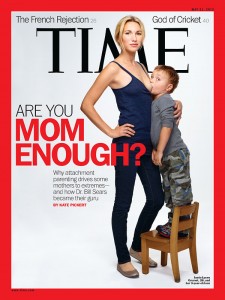
However, this week, Time Magazine highlighted the extreme of attachment parenting with a controversial cover photo showing a mother breastfeeding her large 3-year-old son as they both glared at the camera defiantly.

I have to agree with adoption advocate, Kristen of Rage Against the Minivan, when she wrote about Mommy Wars and the Motherless Child:

I don’t much care if you breastfed your kid until they started kindergarten, or if you fed them formula from day one. I don’t really care if you turned your infant car-seat forward-facing prior to age 2, or if you homeschool, or if you send your kids to daycare while you go to work. Do you cosleep? Did you circumcise your son? I DON’T CARE.  Do you babywear? Push your kid around in a stroller? Use a leash for your kid at Disneyland?  Whatever.  Good for you.

As long as it isn’t abusive or neglectful, how someone chooses to parent their child is really none of my business.  To each his own!

However, after watching this interview on the Today Show, I began to think about our future generation, and my own struggles to parent a difficult child. Is attachment parenting really that great for our kids?

Did you notice in the interview that the mom stopped during the nationally-televised live broadcast to address her son’s whining?  Whoa!  Is that how we should parent our children? Stopping our world to deal with our children’s demands whenever they wish?

I struggle with parenting a difficult, demanding 4-year-old child. He interrupts and throws fits.  He demands that I watch him play and even go to the potty. I want him to overcome his issues with abandonment through attachment, yet I do want my child to become a self-reliant adult.

My biggest problem with the concept of attachment parenting (excluding the babywearing which I regret not doing) is that a child may learn that the world revolves around him.  And this is difficult for me since my little one didn’t have his very basic needs met as an infant.  My poor baby would cry out to the world in pain from a wet diaper that would hurt his bottom covered with sores from a diaper rash – and nobody came to comfort or change him. (My heart aches as I write this.)

I want my Stinkpot to know that he will get his needs met. He will have something to eat when he is hungry, but he has to learn that it won’t be cheesy chips or honey buns. Throwing a fit won’t change that.

As parents, we have to teach our children to soothe themselves and delay their immediate gratification if they are going to become self-sufficient adults.  Lessons such as learning to not spend money as soon as they get it and save for a car, etc.  Due to his ADHD, my Stinkpot struggles with impulsiveness.  I want to teach him about delaying his immediate gratification for something bigger. And it’s a tough lesson to teach to any child, much less one with a disability.

As my Stinkpot begins school, he is learning that he has to be a part of a class which more than himself.  A tough lesson for him.

Parenting is tough. And there is no one right way to do it. As parents, we have to just do the best we can and learn as we go along.  That’s why it’s called the journey of motherhood.

How do you balance all the different parenting advice to find your own unique style that fits your family?

  • « Previous Page
  • 1
  • …
  • 26
  • 27
  • 28
  • 29
  • 30
  • …
  • 45
  • Next Page »

Looking for something?

Facebook

Foster2Forever

Archives

Why Every Foster Parent Needs Sexual Abuse Training

foster care visitation rules guidelines online

10 Tips for Foster Care Visitation Online

foster-income-taxable

Is Foster Income Taxable? What Foster Parents Should Know About Income Tax

Why Every Foster Parent Needs Sexual Abuse Training

I’m Clever

Sway

Pretty Chic Theme By: Pretty Darn Cute Design