Foster2Forever

  • Home
  • Shop
  • Fostering & Adoption
    • Foster Care
      • Being a Foster Home
      • Birthfamilies
      • Case Workers
      • Concerns
      • Court Hearings
    • Adoption
      • Parenting Tips for After Adoption
      • Benefits
      • Costs
      • Infertility
      • Parental Rights
  • Parenting
    • 31 Tips for Parenting After Adoption
    • Behavior Issues
    • Children’s Activities
    • Family Time
    • Motherhood
  • Our Home Life
    • Cancer & Health
    • Recipes
    • Marriage
    • Family Travel
    • Videos
  • Join Our Community
  • Our Family
  • Contact
  • Privacy Policy

9:57 am by Penelope

The Alphabet Soup of Foster Care Acronyms

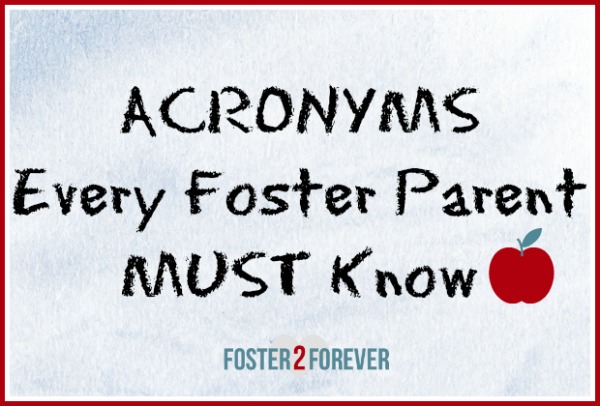
When you first become a foster parent and become involved in the foster care industry, there are a number of acronyms you need to know to keep from getting confused by the alphabet soup. If you are part of my private Facebook group for foster parents, you will be seeing many of these acronyms in posts in the community.
foster-care-acronyms-2


THE MOST IMPORTANT FOSTER CARE ACRONYMS TO KNOW:

AD – Adopted Daughter – (used in forums and my private Facebook group for foster parents) – Can also have a number behind it to designate the child’s age.

ADD – Attention Deficit Disorder – This is what ADD looks like in the classroom through the eyes of a child.

ADHD – Attention Deficit Hyperactivity Disorder – Here are some ideas for toys to get your active child.

AS – Adopted Son (used in forums and my private Facebook group for foster parents) – Can also have a number behind it to designate the child’s age.

BD – Birth Dad or Bio-Dad – (used in forums and my private Facebook group for foster parents)

BF – Birth Family or Bio-Family – (used in forums and my private Facebook group for foster parents)

BM – Birth Mother or Bio-Mom – (used in forums and my private Facebook group for foster parents)

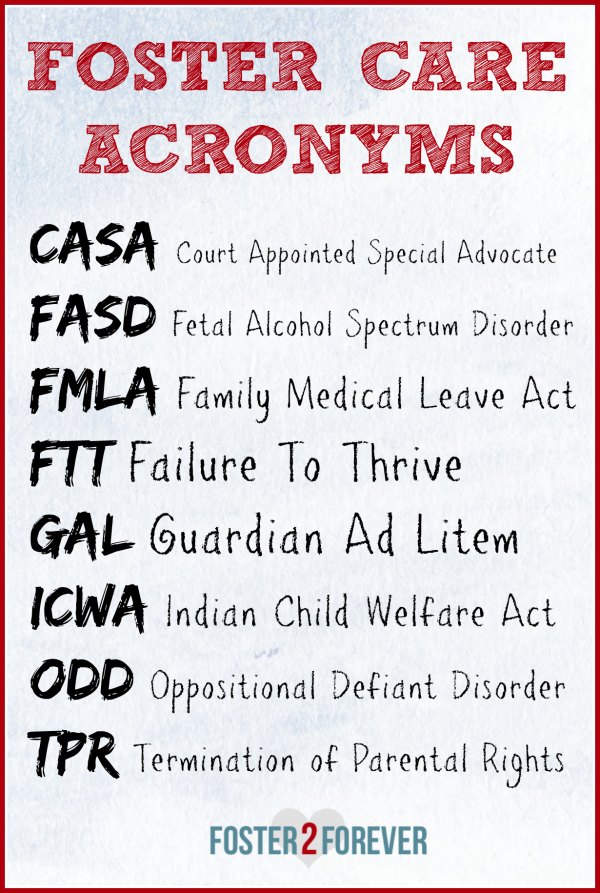
CASA – Court Appointed Special Advocate – a person appointed by the court to advocate for abused or neglected children. Read more about the CASA volunteer organization.

CPS – Child Protective Services – a governmental agency in many US states responsible for investigating reports of abuse and neglect of children.

CW – Case Worker

DSS – Department of Social Services – state agency that is in charge of social programs, including those for children in foster care.

ED – Emotionally Disturbed – term defined in US Federal law used for children with such severe emotional problems that adversely affects their ability to learn in an educational setting.

FAS – Fetal Alcohol Syndrome – the most severe type of FASD in which affected children exhibit certain facial features such as small eye openings, a thin upper lip, and a smooth philtrum (the groove between nose and upper lip).
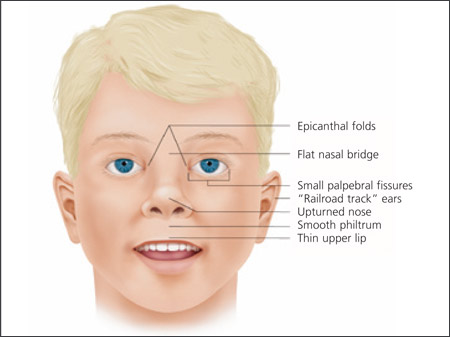
Photo courtesy AAFP

Photo courtesy AAFP

FASD – Fetal Alcohol Spectrum Disorder – the physical, neurological and mental birth defects caused by a woman’s consumption of alcohol during pregnancy.

FD – Foster Daughter – (used in forums and my private Facebook group for foster parents) – Can also have a number behind it to designate the child’s age.

FMLA – Family Medical Leave Act – United States federal law requiring larger employers to provide employees unpaid leave for serious health conditions, to care for a sick family member, or to care for a newborn or adopted or foster child.

fmla-family-leave-foster-care-adoption

FS – Foster Son – (used in forums and my private Facebook group for foster parents) – Can also have a number behind it to designate the child’s age.

FTT – Failure to Thrive – Underdevelopment and lack of growth in a child. Symptoms include: Height, weight, and head circumference below standard growth charts. Weight is lower than 3rd percentile of standard growth charts.

GAL – Guardian Ad Litem – a person appointed by the court to represent the “best interest of the child”

HIPAA – Health Insurance Portability and Accountability Act – Federal law that make it easier for people to keep health insurance, protect the confidentiality and security of healthcare information

ICAMA – Interstate Compact on Adoption and Medical Assistance – an agreement between state that ensures continued provision of all of the benefits of an adoption subsidy agreement, including Medicaid services, regardless of the state of residence of the child,

ICPC – Interstate Compact on the Placement of Children – a statutory agreement between all 50 states that governs the placement of children from one state into another state. It sets forth the requirements that must be met before a child can be placed out of state,

ICWA – Indian Child Welfare Act – Federal law that regulates custody and placement of Native American children not only in foster care, but also in adoption proceedings. The law gives preference to a child’s extended family or to a member of the child’s tribe over a non-Native American adoptive parent.

IDEA – Individuals with Disabilities Education Act – US Federal law that requires schools to provide students with a disability an education that is tailored to their individual special needs.

IEP – Individualized Educational Plan – an individualized document that is required for a child who receives special education services and is designed to address each child’s unique learning issues and include specific educational goals.

MAPP – Model Approach to Partnerships in Parenting – training approach to help prospective foster and adoptive parents make the decision to pursue foster parenting or adoption. (13 states use this training model)

ODD – Oppositional Defiant Disorder – A disorder in a child marked by defiant and disobedient behavior to authority figures.

OHI – Other Health Impairment – a chronic condition that causes struggles in the classroom, such as ADD, ADHD, epilepsy, Tourette syndrome.

PRIDE – Parent Resources for Information, Development, and Education – training for foster, adoptive, and kinship parents. (Texas, Illinois, and New Jersey use this training program)

PS-MAPP – Partnering for Safety and Model Approach to Partnerships in Parenting – training approach to help prospective foster and adoptive parents make the decision to pursue foster parenting or adoption. (Florida and Massachusetts uses this training program)

RAD – Reactive Attachment Disorder –  a condition found in children who may have received grossly negligent care and do not form a healthy emotional attachment with their primary caregivers — usually their mothers — before age 5, Here are 22 signs of Reactive Attachment Disorder.

RT – Residential Treatment – a live-in facility that provides mental health and behavioral treatment. How you know it’s time for Residential Treatment.

SLP – Speech Language Pathologist

SW – Social Worker

TIPS-MAPP – Trauma Informed Partnering for Safety and Model Approach to Partnerships in Parenting – training approach to help prospective foster/adoptive parents understand the commitment to bring traumatized children into their home. (Kansas uses this teaching model)

TPR – Termination of Parental Rights – an involuntary legal removal of a parent’s rights to their children through the judicial system

WIC – Women, Infants and Children – Federal program that provides vouchers for food and formula for infants and children under 5 years old. Foster children are automatically eligible.

If you are a foster or adoptive parent, we’d love to have you join our private Facebook community to ask questions from others who have been there. You don’t have to go this journey alone!

button-facebook-group

foster-care-acronym-pin

11:42 am by Penelope

How Slow Cooker Freezer Meals Makes Our Dinner Less Chaotic

As a busy mom, dinner is the most stressful time of my day. What’s helped is discovering slow cooker freezer meal planning to take the guesswork out of dinner.

By dinner time, all the kids are wound up, parents are tired, and then there’s getting kids ready for 7:30pm bedtime. Here’s how it goes… 5pm begin trying to cook dinner while the kids are running around getting into everything – can you say distractions galore? Wrangle family to the dinner table. Eat dinner. Clear the table and load dishwasher. Homework. Baths. Bedtime routine. When kids are asleep, finally finish cleaning up the kitchen. It’s exhausting.

However, since I’ve discovered freezer meals, I spend half the time in the kitchen preparing dinner in the evening. This helps lower my stress level tremendously so I can spend what’s left of my energy focusing more on the kids than dinner.

slow-cooker-freezer-meal-plan

Since I’ve taken the Freezer Meals 101 course, I’ve discovered how easy freezer meal planning can be. Sharla Kostylek is the blogger behind The Chaos and the Clutter, and a busy homeschool mom of seven children through birth and adoption. In the Freezer Meals 101 course, she demonstrates her tips to make freezer meal planning efficient. She gives tips on how you can turn your favorite meals into freezer meals. It just takes some planning, and this course shows you how.

But don’t worry if you don’t have time to plan everything out! In the Freezer Meals 101 course, you’ll receive:
recipes,
preparation list,
shopping list, AND
printable labels so that you can enjoy more time with your family.

I tried out the crockpot slow cooker freezer meal plan that included the following 5 meals.

BEEFY RICE CASSEROLE
When I first attempted to make this beefy rice casserole, I learned a valuable lesson about the importance of using CONVERTED long grain rice in this slow cooker recipe. (hint: regular long grain rice becomes mushy in the crockpot slow cooker) I made this dish from ground turkey because it is healthier than beef and much less expensive.

slow-cooker-freezer-meals-rice

ROAST BEEF DIP
This beef pot roast recipe is absolutely delicious and makes a fabulous gravy! Because I love mushrooms, next time, I will add a can of drained mushrooms and cream of mushroom soup. We used hamburger buns to make roast beef sandwiches for the family.

slow-cooker-freezer-meals-roast-beef

TORTELLINI SOUP
This tortellini soup is a very hearty meal. I actually added a can of drained garbanzo beans to this recipe. For my particular bland taste buds, I would probably only add one teaspoon of Italian seasoning instead of two next time I make this recipe. (Lesson: I forgot to thaw the tortellini ahead of time so because I had been cooking the soup in the slow cooker on low, the tortellini took a good bit longer to heat up)

slow-cooker-freezer-meals-tortellini-soup

CHICKEN TACO SOUP
Chicken Taco Soup was so good! My husband raved about how much better this taco soup is than most restaurants. I added a drained can of hominy to the taco soup because this East Texas girl loves hominy. My son loves to make this dish into “Frito Pie.”

slow-cooker-freezer-meals-chicken-taco-soup

LAZY LASAGNA
Lazy Lasagna is absolutely the best way to make lasagna!!! So easy! I used to spend hours in the kitchen making homemade lasagna. This is so simple and my family loved it! However, next time I will double this recipe.

slow-cooker-freezer-meals-lasagna

Be sure and pin it for later!

slow-cooker-freezer-meal-plans-pin

11:54 am by Penelope

Is Adoption Really Everything You’ve Ever Wanted?

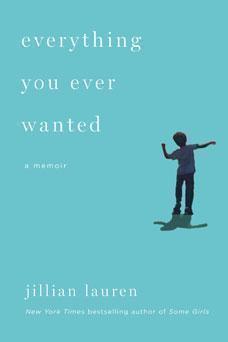
What people don’t tell you about adoption is the trauma that a child experiences can take hold of a family and cast doubts on the dreams of a happily ever after. I recently read the memoir of adult adoptee Jillian Lauren, Everything You Ever Wanted, about her and her husband’s adoption of their son from Ethiopia. She’s a beautiful writer that has an ability to make you visualize in great detail as if you were on the adoption journey with her.

everythingYouEverWanted-228x342

What I liked about her story is that she told it with honesty without the sugar coating that many adoption stories have. She didn’t paint the story as all rainbows and sunshine. She had struggles and was willing to share those hard parts too. Unless you’ve adopted and truly understand the transition to attachment and bonding, you naively don’t realize that there is a process to attachment. Sometimes it isn’t easy, and that’s what I loved about her story.

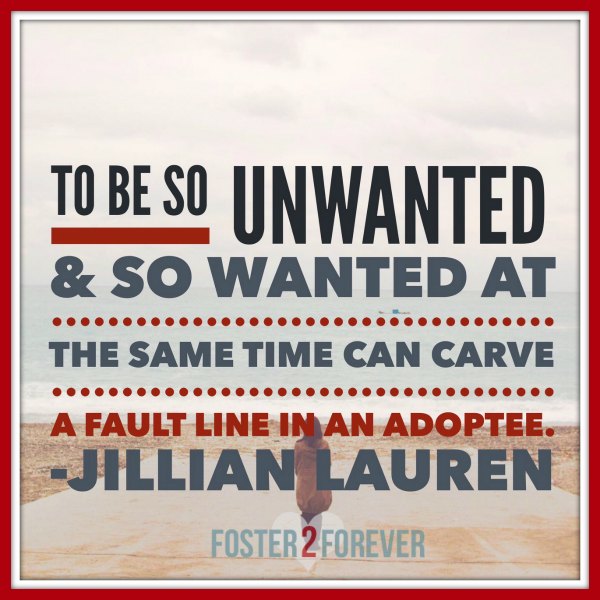
adoptee-loss-quote
She begins her story with her courtship and marriage to Scott Shriver, member of the rock group, Weezer, and being a “rock star wife.” After her previous life that included drug use, rehab, and the sex industry, I did want to know more about if she struggled with feeling loved unconditionally by her husband. Did she struggle with jealousy or low self-esteem in their marriage, especially given his status in a rock band followed by millions? What was different about Scott? But this is their real life, and keeping that part of their relationship between them is probably a good thing for their marriage. Marriage is between two people and the public doesn’t need to to know everything.

In Everything I Ever Wanted, Jillian gives an entertaining account of her infertility journey – if you like roller coasters! It reminds me of what desperate measures a woman will go through to have a baby. I was reminded how desperate I too felt as an infertile!

“Everybody keeps telling us us that if we’d just relax already, we’d get pregnant.”

“What do I really want? A Mini-Me or a family?”

Desperate times calls for desperate measures is a more-than-accurate motto of this part of Jillian’s adoption story, and her most desperate attempt to get pregnant had me literally laughing out loud, gasping for air.

She does share her struggles with feeling fit to be a mother given her colorful past. She openly shares her journey of attachment parenting, taking us on the ride with her as she struggles to find the solution to her child’s behavior issues. And I also struggle with parenting a child that suffered early neglect. Like us, when her child’s behavior became overwhelming, she sought out all sorts of help for her child. I too struggled in finding a daycare that my son could thrive in.

I could really relate to her struggle to parent in a different way via attachment parenting. It’s true that it’s not your first instinct to love on a child when they are acting like a demon.

“I’ll be honest, when the tantrums come, “Mommy is here. I’m not going anywhere. You’re safe” are NOT the first words that come to mind. The first words that come to mind are, “Stop throwing sh*t at me and get in the f-ing car already!”

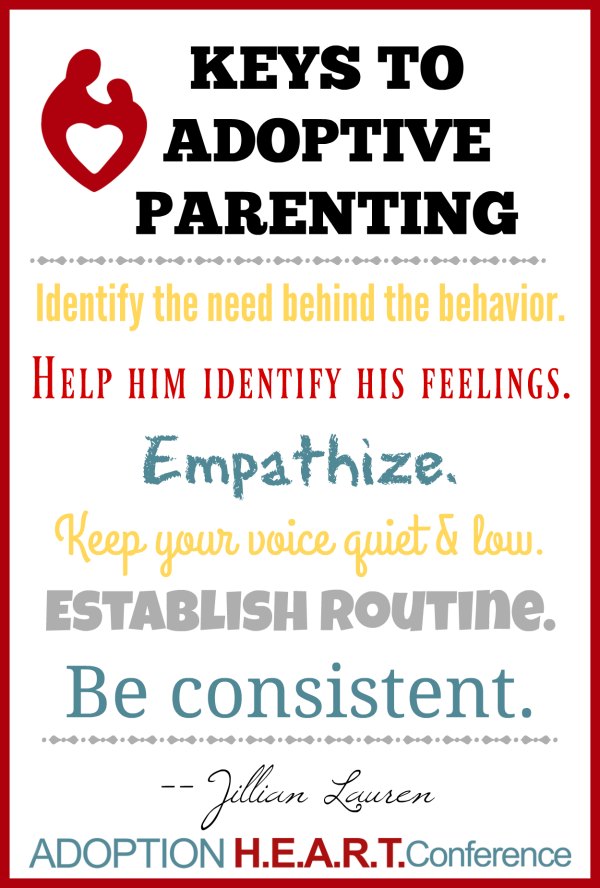
In Everything You Ever Wanted, Jillian shares what she’s learned in her adoption journey. Things I didn’t realize ahead of time. When you bring your child home, “keep close to home, keep stimulation and distraction minimal, and stay present in the moment.”  She shares what she learned about parenting trauma.

Jillian-Lauren-adoption-stories

What I especially liked about Everything You Ever Wanted is its open, honest inner dialog of a heart-touching, heart-breaking journey to parenting — of getting everything you ever wanted and what you didn’t, but, in the end, knowing you wouldn’t want it any other way!

Click to sign up to see my in-depth interview with Jillian in the Adoption HEART Conference – an online adoption event.

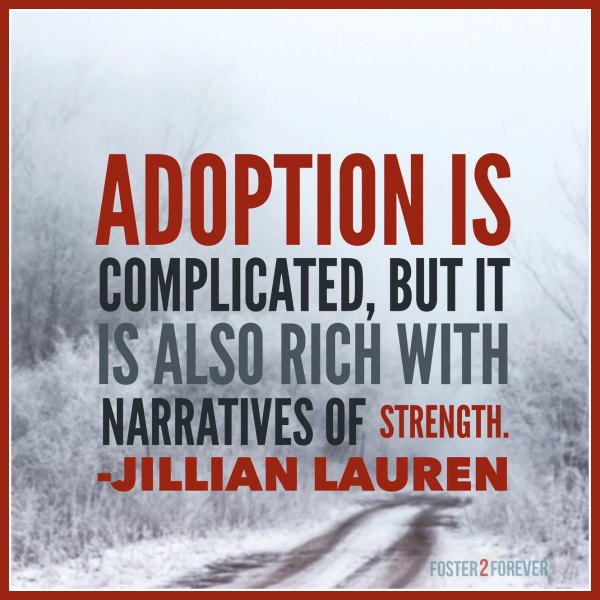
adoption-strength-quote


11:10 pm by Penelope

When Foster Parenting is More Than You Bargained For

Emergency foster care placement is what we were labeled. Most parents have months to prepare for their child arriving into the world. We only had 4 days! Less than 1 week of scrambling for clothes, toys, lawyers, and paperwork. So. Much. Paperwork! We joke that no labor pains were needed, the papercuts were harsh enough! At the time, we didn’t know if we were going to have children in our home for a week or 2 days.

We received the phone call that we were licensed foster parents, and to come to the DHS office immediately to pick up our new placements. At 4:30 p.m. on January 28th, I met 2 children, with the clothes on their back, broken shoes (our little girl was even walking on the heels of hers as she couldn’t fit her foot into the unmatched shoes she had on), a backpack each with a pair of socks and a change of underwear. A stuffed animal they were given by one of the case workers still sits on our living room shelf.

When our foster kids came to stay with us, we just knew it wouldn’t be permanent. These two scared children needed a roof over their heads and stability immediately. Even though they were to stay for a short time, we fell in love. We had no idea what was going to happen right around the corner.

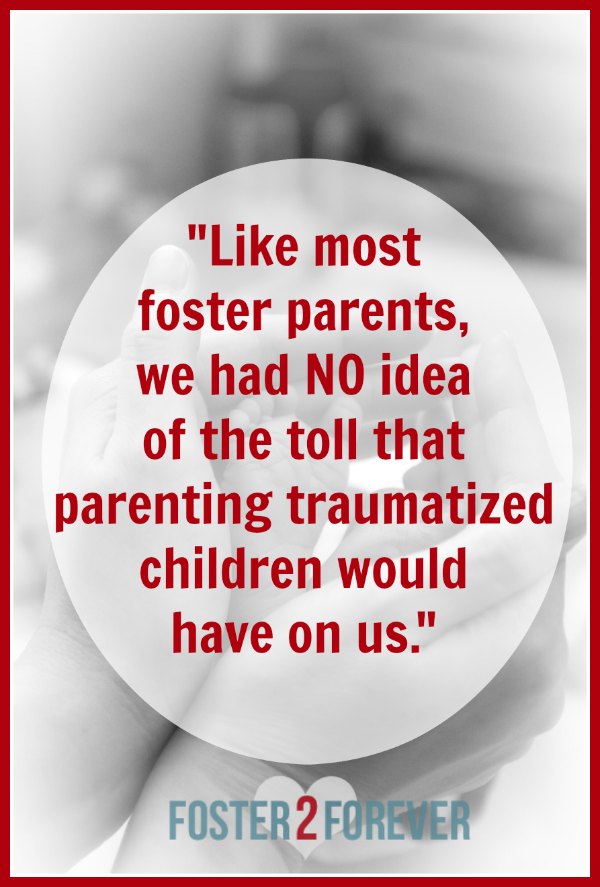
Like most foster parents, we had no idea what we had gotten ourselves into, and the toll that parenting traumatized children would have on us as adults.

foster-care-adoption-story-quote

Although these children were safe from the abuse — for an entire year, they had to re-experience the memory of their abuse over and over through continued visitation with their biological parents who had hurt them. After these visits, their behaviors escalated, even to the heartbreaking point of self-harm!

At times, we weren’t sure if we were going to make it — our marriage was challenged on a whole new level, along with our own personal sanities. We experienced intense challenges in our home life — from having only plastic silverware accessible, 24-hour watches, daily trips to the school, multiple therapeutic appointments every week. We were spending over 30 hours a week in the car driving to appointments, and sitting in waiting rooms! We were physically and emotionally exhausted!

What kept us going is our faith and our strength within each other – and we are still learning that one! We kept going because every adult that had cared for these two children, had either given up or harmed them to unimaginable lengths.

But, over time, these children have overcome. They eventually learned that no matter what, we were there to support them. They could not see us cry. We were it. And, no matter what, we had to keep moving forward. We were their constant. AND WE MADE PANCAKES WITH BLUEBERRIES!!

We still have our challenges. There is a hurdle daily. The trauma these children experienced will unfortunately be something they will have to continually overcome. They are learning what it is like to be loved, challenged, corrected, nurtured, cherished, and most importantly, parented.

So here we are. Over 2 years later. A permanent family. The Limbourgs, party of 4!

fostering-adoption-story

The Limbourgs were married in 2007 and tried to start a family right away. After years of infertility treatments, they looked into foster care after having a dream. Little did they know, that was their calling for their family foundation. They have a small farm in rural Oregon with goats, alpacas, chickens and bunnies. Their children are now involved in 4-H, and are loving every minute of it!

foster-care-adoption-story

10:17 am by Penelope

We Are Adopting Again!!!

This shop has been compensated by Collective Bias, Inc. and its advertiser. All opinions are mine alone. #NewBeneful #CollectiveBias

We are so excited to share the news that we are adopting again!!!

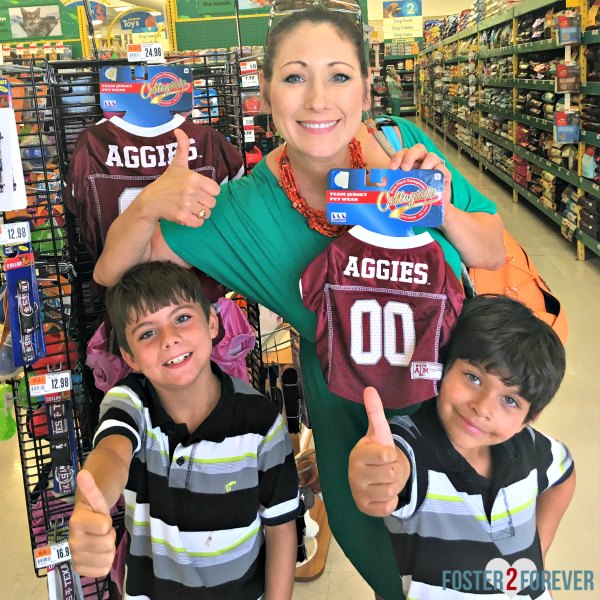
texas-aggie-dog-jersey

Our 9-year-old son, JD, has been bugging us to get him a dog for over a year now; however, we worried that our son’s high energy and rowdy behavior wouldn’t be conducive for a dog.

However, during my interview in the Adoption HEART Conference with attachment therapist Lindsey Bussey, she encourages families to have pets to help regulate traumatized children. She states that the repetitive nature of petting a dog is calming.

dog-adoption-therapeutic

So, after using a dog as an incentive for my son to improve his behavior this summer, we began searching online for a family dog using Petfinder.com. For weeks, we put in our search parameters for a small, family-friendly dog, and last week, a little 12-pound dog popped up in our search, and he was at our local animal shelter.

adoption-older-dog

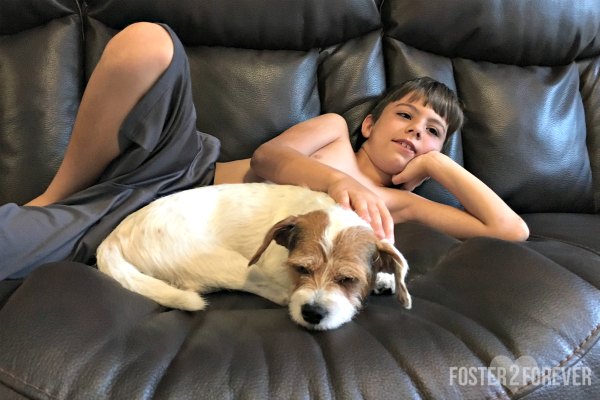
We adopted Scamp this week!!! We are beyond excited to have our new furry family member. Scamp is an older, mixed breed rescue dog with an injured leg that doesn’t work. (Sometimes when using the bathroom, Scamp will balance on his front two legs!)

After just a few days, our little Scamp is already a special member of our family. We are just discovering his sweet personality and what supplies we need to make our Scamp feel he’s finally HOME!!!

adoption-dog-petfinder

Nine years ago, when JD was brought into our family as an 8-month-old foster baby, I suddenly realized what I didn’t know about caring for a baby – particularly in regard to feeding and then all the other supplies needed to care for a baby.

And the same feels true for me again as Scamp joins our family.
Here are some things we’ve learned we need to take care of our little dog.

SHELTER/CONTAINMENT: (This is our biggest challenge since we don’t have a fenced yard. Although, Scamp will be an inside dog, there will be days when we might be gone for a long while. We are looking at a number of options.)
Crate, dog run, kennel, dog house

ACCESSORIES: Collar, leash, name tag

GROOMING: Dog brush, toenail clippers, dog shampoo, dog toothbrush/toothpaste

SANITATION: Pee pads, urine remover

PEST CONTROL: Flea preventative, heartworm preventative

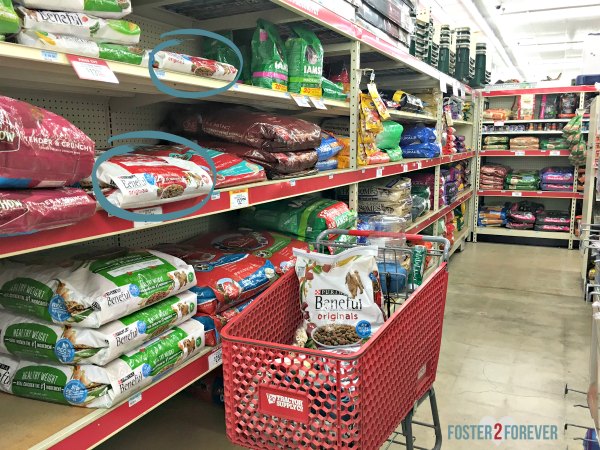
FEEDING: (Overwhelmed with all the choices in dog food, we chose reformulated Beneful which features meat as the #1 ingredient and no sugar added. As we transitioned Scamp from his pet shelter food to the new Beneful, he began eating better showing us that he certainly liked it more. We learned how to transition Scamp to a new dog food using these helpful feeding tips and tricks.   Beneful is available at mass and grocery retailers including Target, Walmart, regional grocers like Kroger and Albertsons, and even at pet stores. We found Beneful at our local Tractor Supply.)

Dog food, feeding & watering dish

new-beneful-dog-food-tractor-supply


dog-adoption-new-beneful-food-transition

With Scamp joining our family, he is bringing a special calm to our family that we are enjoying. Scamp is already a dearly loved member of our family.

12:45 pm by Penelope

6 Smart Reasons to Homeschool Your Adopted Child

WHY HOMESCHOOL YOUR ADOPTED CHILD?

School can be overwhelmingly stressful for a young child – but add to that a history of trauma, a new language, separation from parents, peer pressure, developmental or social delays – and an adopted child can struggle with big emotions, not only at school, but at home too. After our middle son’s behavior problems at school and taking FMLA family leave to be with him, we have decided to homeschool our youngest this year. Our LilBit’s anxiety at school has begun to effect him even at home.

homeschooling-adopted-child

6 REASONS TO HOMESCHOOL YOUR ADOPTED CHILD

1. BUILD CONNECTION IN YOUR RELATIONSHIP
The #1 priority of an adoptive parent is building a bonded relationship with your adopted child. By not sending your child off to school every day and keeping your child close during the day, you can focus on building your relationship. The one-on-one relational opportunities of homeschooling your adopted child allows you to get to know his individual learning style, his personality, and make memories together as a family. (Read about attachment types here)

2. SPECIALIZED ACADEMICS
While homeschooling, your adopted child can receive the individual academic instruction that he may need to “catch up.” The academic pace can be determined by the child’s rate of learning, especially important if your child was exposed to alcohol in utereo and may suffer the effects of FASD. If a child can quickly grasp a concept, then you can move quicker through a curriculum or unit study; likewise a slower pace will help your child actually master a skill before moving on. In a classroom setting, a teacher has a set pace for all the students, whether they are ready to move on or not — classroom teachers are in a position in which they have to teach to the middle, with bright students being bored, and students with challenges becoming more and more frustrated.

An adopted child may have special needs that are becoming more and more difficult to accommodate within school districts. The process for a child to even qualify for special education services is becoming more and more complicated. However, even if you homeschool, school districts still have to provide certain special services to children who live in their district, whether or not the child is enrolled.

Another academic benefit of homeschooling your adopted child is that whether your child is an auditory learner, visual learner, or kinesthetic (tactile) learner, you can teach in the style that your child best learns. Also, if something in your teaching approach or curriculum isn’t working, you have the flexibility to just change it and specialize it to your child as you wish. While homeschooling my oldest, it took me three tries to finally find a spelling curriculum that actually taught one spelling rule at a time.

Also, due to the likelihood of early neglect, many adopted children have sensory processing disorder and needs that aren’t being met or are disruptive in a classroom. In homeschool, you can incorporate your child’s therapy and sensory needs and focus on your child’s development as a whole. Also, if you adopted internationally, you can immerse your child in learning the English language in your homeschool without the added pressure of “academic performance.”

3. FLEXIBILITY
Homeschooling provides an adoptive family the flexibility to make appointments with the various professionals without dealing with rigid school attendance policies. While homeschooling, you can make appointments with caseworkers, counselors, specialists, therapists at your convenience.

This is what Sharla Kostelyk of Chaos & the Clutter, an adoptive mom of 7, says about the flexibility of homeschool: “We can homeschool when we want to and where we want to. We can move through curriculum as quickly or as slowly as we want to or need to. We can stop in the middle of something and decide that if a program isn’t working for us, we can ditch it and try something else. If the kids decide that they are super interested in something mid-year, we can add in a unit study about it at the time they are actually interested and will better retain what they learn.”

Homeschooling families can even plan vacations at off-peak times that are less crowded and easier on the pocketbook too. Royal Caribbean is currently having a promotion of 30% off plus kids sail free! Of course, the best priced sail dates are when school is in session, perfect for homeschool families. In October a few years ago, our family took a Disney Cruise vacation out of Galveston, and our kids sailed FREE!

4. POSITIVE SOCIALIZATION
Socialization seems to be everyone’s concern when it comes to homeschool. “How will your child get socialized if they just stay home all day?” That’s a common misconception — We don’t stay home every day. Homeschool groups are everywhere with play dates, field trips, and even group classes – so a child doesn’t have to be in a bubble by himself. Add to that any church, sports or other youth activities or clubs, and a child will have numerous opportunities to develop friendships with other children.

Besides, the “socialization” in a school setting is not particularly positive. Bullying is the norm in schools nowadays. And school administrators just can’t make bullying against the rules — “pecking orders” are an instinctive survival skill in groups all across nature. Plus, in what other settings in life (after college) will an adult be surrounded only by people the exact same age? Never. A child learning how to get along in groups of various ages is a more appropriate life skill that can be developed in a homeschool environment.

While homeschooling your adopted child, you have the ability (and time) to devote to developing social skills. You can work on developing coping skills one-on-one as issues arise to give children the social skills they may be lacking before going out into the world as adults. You have the ability

5. REDUCE ANXIETY
School is stressful, not only in regard to academic performance, but, as stated above, peer pressure can be excruciating. An adopted child who is overcoming trauma, may not be at the same emotional maturity as classmates, and risks being ridiculed by classmates for the smallest of things. What homeschooling does is allow a child to be who his is, where he is developmentally without being concerned about what other kids think of him. A child doesn’t have the added pressure of being in a school environment where differences are pointed out and ridiculed by classmates. Homeschooled children have the freedom to be themselves, and have their own unique interests. Our youngest son, LilBit, is extremely shy and feels uncomfortable in large groups. By taking away the stress of school, which is overwhelming to him, he can relax and be the happy child that he is.

6. TALENTS & INTERESTS
When you homeschool, as the curriculum director, you can focus on a child’s strengths, talents, and interests. You have the flexibility (and time) to pursue your child’s interests, whether musical, athletic, or otherwise. In homeschool, your child will have the time to participate in those extracurricular activities that “homework” and bedtimes can get in the way of. And you can even base some of your curriculum on the life and leadership skills that organizations such as 4-H and Boy Scouts develop. Whatever your child’s interests are, your child can participate in martial arts to encourage self-control, robotics or STEM programs for your mechanically-inclined child. The possibilities are endless.

Although homeschooling may not be an option for everyone, the benefits of homeschooling certainly make it worth examining for adoptive families to thrive. I successfully homeschooled our oldest son, Bubba, for two years. We had been doing homework every single night for four hours anyway, and we realized that we were, in all effects essentially homeschooling him anyway. Those two years were the best for him. I taught at his level, for his kinesthetic learning style, exploring his interests, and he flourished. His self-esteem soared. “Wow! I’ve never been this good at math before!”

10:33 am by Penelope

What Happens to Your Kids If Something Happens to You?

Have you thought about what will happen to your children after adoption if you were to die unexpectedly? This summer, my husband and I were forced to seriously think about plans for our young boys after we are gone.

death-childrens-parents-

In May, after a long while of suffering through lower back pain, I made an appointment for my husband to visit a chiropractor for some sort of relief. When the chiropractor showed my husband the x-rays of his lower back, it became evident that his back pain was the least of his worries. The x-ray showed a large mass on his kidney!

We were on pins and needles as we waited for the appointment with the specialist. If we weren’t stressed out enough, the very next day, I received a call from my doctor that my mammogram showed two suspicious areas.

After that call, we both became overwhelmed by the realization of our mortality. Who would take care of us and our boys if we were both sick? What if we both died with our boys so young? What would happen to them?

In March 2014, when my doctor discovered that I had cancer, for months, I worried about my husband and boys. But this was now different with both of us facing cancer.

We adopted our boys later in life. Our parents are older, and our siblings either have health issues themselves or aren’t in a position to raise two young boys with special emotional needs.

And the questions plagued me and rolled over and over in my mind: “Who would raise our boys?” “Who could handle raising two grief-stricken boys?” “How will the boys be able to handle the grief of losing both parents so young?”

I constantly thought of the Russian boy my husband taught a decade ago. Sergei was 9 years old when he was adopted from a Russian orphanage. He was happy boy and glad to be out of the orphanage and finally have a family. However, cancer decided that it would take over the body of Sergei’s new dad. And cancer took over quickly. Within two years of finally getting a father, Sergei lost him to cancer. We moved soon after and lost touch, but the last we heard, Sergei had become violent in dealing with his grief, and for the safety of his family, Sergei had to move to a boys ranch.

The fate of Sergei gripped hold of me and filled me with fear for my own son that now struggles with handling big emotions. Would my son handle grief the same way as Sergei? Would my son’s life have the same outcome as Sergei’s?

My prayer is that we won’t ever have to find out. Through the battery of followup tests, both my husband and I finally got the fabulous news that our numerous tests showed no cancer. Praise God for blessing our family with miracle after miracle!

9:12 am by Penelope

How Secondary Trauma Affects Your Other Children

If you bring traumatized children into your home, the traumatic events that they suffered through can take its toll on you, the caregiver, even to the point that you can begin to suffer from secondary traumatic stress (STS).  Read more on STS and stress management tips.

Secondary traumatic stress occurs when someone is repeatedly exposed, directly or even indirectly, to trauma or suffering. Secondary trauma develops due to the stress the parent or caregiver experiences from helping or wanting to help a traumatized child. Sometimes a foster parent or caregiver can even be at risk of developing the same symptoms as the child directly affected by the trauma. A person is especially vulnerable to secondary trauma stress if they’ve experienced previous trauma.

But as a foster/adoptive parents, we understand how living with trauma affects us, but we are just beginning to realize how raising a traumatized child is traumatizing our other children. Children are especially susceptible to secondary trauma because of their limited ability to understand the traumatic experiences surrounding them. Young children struggle to make sense of trauma and are completely dependent on adults for their emotional and physical needs.

To me, it doesn’t seem that adoptive families have truly been informed about this ripple effect of trauma. I know I wasn’t. Sure, trauma-informed care is just now beginning to be discussed in foster parent training, but many of us became foster parents before this latest buzzword began making the rounds.

Trauma affects everyone in the home.

Trauma-in-BrothersWhen my son, JD, was a toddler, we added another baby boy to our family. We were excited for JD to have a brother to bond with and have as a companion growing up and into adulthood. They are brothers and love each other. When one gets in trouble, the other takes up for him. However, we didn’t know the extent of JD’s trauma, and how that trauma would affect our family.

JD’s trauma is intense, although he doesn’t remember his infant neglect, but when he feels hunger or has a drop in blood sugar, his primal fear of hunger takes over and my cheerful, sweet child becomes a totally different person. (He has had his blood sugar tested numerous times, and no physiological problems exists with his blood sugar.)

As the parents, we have struggled through secondary trauma. But what about our youngest? How has growing up under the effects of trauma affected him? Did our baby inadvertently grow up in fear? How did he not?

Signs of Secondary Trauma

Emotional Indicators: anger, sadness, anxiety
Physical Indicators: headaches, tummy aches, constipation
Personal Indicators: cynicism, irritability with family members

As I look through this list, I’m saddened see how each member of our family shows indicators of secondary trauma. What are we doing to help our other child?

Counseling: An important part of healing. We will continue counseling for both our children, of course.

Evaluation: Evaluate your family situation. We are currently taking a break from foster parenting to focus on healing the current members of our family.  But before that, our personal standard had become to only add foster children to our family that are younger than our youngest. We’ve learned that trauma shouldn’t be modeled to our younger children.

Individual Attention: Also, because our LilBit has grown up under all this trauma and stress, we’ve made the decision to homeschool him this next school year. Through homeschooling, he will finally receive the one-on-one attention he usually doesn’t get when his brother’s needs overshadow everyone else’s. We are excited about the possibilities of how our homeschool adventure can help heal each member of our family.

Through sharing my struggles of parenting trauma publicly with you, my hope is that you will be truly informed about trauma and its effects on your entire family. I also hope that you seriously evaluate your family when introducing trauma to your young children.

I still advocate foster parenting, but I also desire that both your eyes and heart are open to all that journey entails.

secondary-trauma-children

12:25 pm by Penelope

10 Tips for Bedwetting in Older Children

As a foster parent, I’ve had children of various ages and needs in my home; however, I was not prepared when an older child of 8-years-old wet the bed at night. After I got over my shock and researched about bedwetting, I was surprised to learn that bedwetting is actually quite common. One of out six 4-12 year-olds wets the bed at night, and that bedwetting isn’t usually a cause for concern.

bedwetting-tips-for-older-kids-children-#shop

Research shows that there is a genetic link to bedwetting. https://www.goodnites.com/en-us/bedwetting/causes-and-treatments/genetics-and-bedwetting “Children who have one parent who wet the bed have a 43% chance of wetting the bed, and if both parents wet the bed, the chance climbs to 77%.”

As a foster parent, I don’t know about a child’s history, or if one or both parents wet the bed as children. My foster baby that is now my forever son is about to be SEVEN years old!!! (Time flies) I don’t know his parents’ history of bedwetting, but I do know as an infant, my LilBit fully wet a diaper in no time — and he never once made it through the night without a diaper change (or two). That baby went through the diapers – quickly. So as he has gotten older, I’ve been able to rest easy and be more understanding of bedwetting.

Here are 10 tips that I’ve learned through the years on how to rest easy about bedwetting.

1. Limit drinks before bed. (Isn’t this a given?) But I’ve learned that the trick to being able to limit your child’s drinks before bed is to have your child drink more liquids earlier in the day. This makes it so your child isn’t as thirsty in the evenings, and begging for a drink at bedtime.

2. Use the bathroom just before bed. Even though my son will claim that he “cccaaaannn’ttt goooo” (whining emphasized), I encourage him to give only one drop, just one. And that seems to work in that one single drop is not overwhelming for him.

3. Establish a bedtime routine. Routine provides safety for children, especially for foster children. The predictability of a calming bedtime routine reduces anxiety, especially in children from hard places. What is especially helpful for children is a bedtime chart so they know what to expect, especially if they experience hypervigilance like my child.

4. Do something together at night. Make it part of your bedtime routine. Use this time to strengthen the bond with your child and make that valuable connection in the calmness before bed. Reading to your child improves literacy and listening skills. To improve a child’s memory, discuss everything the child did that day. Help your child relate to you better by telling your childhood stories.

5. Light the bathroom with night lights, but not in blue. If children do wake, make going to the bathroom less scary by lighting the path with night lights. However, light interfere with the body’s ability to produce melatonin – the hormone that helps regulate a child’s sleep cycle. Research found via the National Center for Biotechnology Information (a division of the National Institutes of Health) suggests that red night lights (instead of the common white or blue) don’t suppress nighttime melatonin production which can help your child go back to sleep quicker.

6. Empathize, don’t criticize. The worst thing a parent can do is shame a child – a child feels bad enough already about having an accident. Instead of showing your child that you are upset about the bedwetting, empathize with your child. When my child when he wakes and is upset with himself about wetting the bed, I use the phrase “It’s okay; accidents happen.”

7. Use a mattress liner. In the event that a bedwetting incident occurs in the night, use a waterproof mattress liner to make clean up easier. Have dry sheet sets available for a quick changeout to make the transition back to bed easier.

8. Reward for waking up dry. Track the days a child wakes up dry and create a reward chart to work toward a goal.

9. Don’t allow siblings to tease.  Instigate consequences for siblings who tease.  Also, prevent siblings from even knowing about the bedwetting issues by maintaining privacy for your child – a great way to build trust with your child.

10. Provide extra protection for bedwetting accidents. My son has been wearing GoodNites® Bedtime Pants at night for years since he outgrew diapers. We use GoodNites® Bedtime Pants because the 5-layer protection has extra absorbency where boys need it most. Other brands just didn’t work for us. Plus, the stretchy sides fit my growing “husky” boy.goodnites-bedtime-pants-boys-designs-#shop

GoodNites® Bedtime Pants have designs that kids like. For small boys, GoodNites® Bedtime Pants(size S/M) have Marvel’s Iron Man, and larger boys (size L/XL) can have camo print and skateboards (L/XL).

goodnites-bedtime-pants-cvs-#shop


You can get GoodNites® Bedtime Pants at your local CVS. Until last month, we didn’t have a CVS near us, but we are so excited to have a new CVS in the Texas Hill Country. The CVS is easy to find, perched on top of a hill overlooking the Colorado River.

GoodNites® Bedtime Pants is easy to find in the diaper aisle at CVS. For many more tips and tricks on bedwetting issues, go to this GoodNites® curated website to learn more.

bedwetting-tips-goodnites-cvs-#shop


#shop

This shop has been compensated by Collective Bias, Inc. and its advertiser. All opinions are mine alone. #RestEasyWithCVS #CollectiveBias

  • « Previous Page
  • 1
  • 2
  • 3
  • 4
  • 5
  • 6
  • …
  • 45
  • Next Page »

Looking for something?

Facebook

Foster2Forever

Archives

Why Every Foster Parent Needs Sexual Abuse Training

foster care visitation rules guidelines online

10 Tips for Foster Care Visitation Online

foster-income-taxable

Is Foster Income Taxable? What Foster Parents Should Know About Income Tax

Why Every Foster Parent Needs Sexual Abuse Training

I’m Clever

Sway

Pretty Chic Theme By: Pretty Darn Cute Design