Foster2Forever

  • Home
  • Shop
  • Fostering & Adoption
    • Foster Care
      • Being a Foster Home
      • Birthfamilies
      • Case Workers
      • Concerns
      • Court Hearings
    • Adoption
      • Parenting Tips for After Adoption
      • Benefits
      • Costs
      • Infertility
      • Parental Rights
  • Parenting
    • 31 Tips for Parenting After Adoption
    • Behavior Issues
    • Children’s Activities
    • Family Time
    • Motherhood
  • Our Home Life
    • Cancer & Health
    • Recipes
    • Marriage
    • Family Travel
    • Videos
  • Join Our Community
  • Our Family
  • Contact
  • Privacy Policy

10:38 am by Penelope

4 Questions to Ask When Early Childhood Trauma Causes Behavior Issues

Early childhood trauma can radically change the way a child’s brain experiences a situation. Trauma causes the brain to go survival mode which triggers the FEAR response (flight, fight, or freeze). When a traumatized child is in FEAR response, the brain shuts off the thinking part of the brain, and the child cannot think or even recall coping skills. The primitive part of the brain is about only one thing — SURVIVAL!

Logical thought processes can be hijacked by the FEAR response caused by early childhood trauma. Trauma has the unique ability to rewire the brain, and what may seem like ordinary simple everyday situations, can become huge triggers for children that have experienced early trauma.

A child may not even remember the neglect or abuse experienced, but magically, the body remembers. This buried, intrinsic memory can trigger the FEAR response.  FEAR hijacks the brain with a simple trigger that the child probably doesn’t understand or remember.

Recently, my child wanted me to buy him sunflower seeds after baseball practice. I knew he needed to eat a good meal so I just wanted to get him home for dinner. But hunger (even perceived hunger) is a huge trigger for children who have experienced early neglect or food insecurity. (You can read his heartbreaking story on infant neglect here.)

As the situation escalated, I tried to reason with my child, but he was becoming more irritated.  The sunflower seeds were not going to help with his hunger, plus he had a huge bag of sunflower seeds at home. I wanted to just get him home.

COMMON SENSE SAYS:

  • I have sunflower seeds at home
  • I can wait 20 minutes to get my sunflower seeds
  • It’s okay to just go home and get my sunflower seeds
  • Sunflower seeds won’t keep me from feeling hungry

But you can’t reason with a brain in fear response!

EARLY CHILDHOOD TRAUMA SAYS:

  • If I don’t get sunflower seeds right now, I WILL STARVE TO DEATH!!!

I stopped the car at a park and let my son out to cool off and SWING (the repetitive motion of swinging is therapeutic and calming for the brain). As I was watching him and becoming more calm myself, I began asking questions.

4 QUESTIONS TO ASK WHEN EARLY CHILDHOOD TRAUMA CAUSES MISBEHAVIOR

WHAT IS TRIGGERING THE BEHAVIOR?
My child hasn’t eaten dinner yet. (Read more about emotional triggers)
WHAT’S GOING ON IN MY CHILD’S BRAIN?
My child in FEAR response.
WHAT DOES HE NEED TO FEEL SAFE?
My child needs to know that I will meet his needs.
WHY AM I SAYING NO?
I am saying NO because of all the common sense reasons.

MEETING YOUR CHILD’S NEED & CALMING THE TRAUMATIZED BRAIN
In that moment, I had an epiphany and realized that I should give my child what he NEEDS – that is food security!!!  Therefore, my child has to know that I will meet his NEEDS so he won’t ever FEEL that he will go hungry again.  A child has to FEEL SAFE!!!

My child needed the sunflower seeds to feel safe and calm his brain! 

Parenting children from hard places is different than the way we were raised. You have to meet your traumatized child’s needs – even if it doesn’t seem like common sense.

(Read more on overcoming childhood fears)
9:35 pm by Penelope

What Do You Do When Your Child Is Having a Meltdown?

How do you react when your child is having a meltdown?

Let’s say that for whatever reason, you have to say “no” to your child, your child can’t have something, or get their way about something, etc.

No matter how small the issue seems to be, your child starts having a meltdown.

In this scenario, how would you react when your child is having a meltdown?

  • Do you tell her that she’s not getting her way until she uses her words?
  • Do you try to ignore the tantrum (but inside your blood begins to boil)?
  • Do you send her to her room or calm-down spot until she calms down?
  • Do you try and bargain with her to bring her out of it?

I’m telling you honestly that I have tried all of these and none of them have worked with my traumatized children. But I’ve discovered something that does work.

I’ve become a peaceful, connected parent who is intently child-focused during these tantrums.

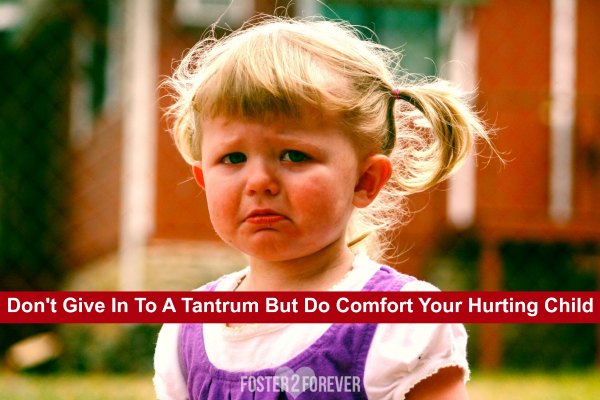
What this may look like: I come close to my child, showing empathy for their disappointment. I may pick up my child, put my child in my lap, begin rocking and let them cry it out in my arms. At first, my child may fight that closeness or try to demand their way. But I won’t talk about the issue at all until my child stops crying, and is calm.

What this may look like to others: “You are rewarding your child for a tantrum.”

I’m not giving in. I’m giving comfort to my hurting child.

child-having-a-meltdown

What others don’t realize is that when a child is having a meltdown, there is no negotiation, no “thinking about what you did” because a child simply can’t think during a tantrum. The child is in fear response and the thinking part of the brain is shut off by fear.

Only AFTER the tantrum, when the child is calm, do I revisit the issue, if needed.  Sometimes we don’t have to revisit the issue because my child may just have needed to know that I understand the disappointment that they are experiencing.

Becoming a peaceful parent has totally transformed my relationship with my traumatized child!

Tantrums are fewer and go away quicker.

My attachment-challenged child has become extremely loving and desires closeness. He is more compliant, and will help me out when I ask. He tells me he loves me.  He is happy!

What that has helped our family most is Dr. Laura Markham’s Peaceful Parent Happy Kids book.

Take a transformational journey to become peaceful, connected parents with Dr. Laura Markham’s book.

4:24 pm by Penelope

3 Steps To Being An Intentional Parent And Ending The Chaos In Your Home

As 20+ kids came in and out of my home through my years as foster parent, I thought that the strife of parenting traumatized children was simply part of the journey — what you signed up for, per se. I knew of many other foster parents that also lived in chaos as they agonized over difficult behaviors, just as I had with my own attachment-challenged forever child. I’ve read dozens of books and attended numerous trauma classes and adoption conferences, to seek out the answers to parenting trauma.

Would we ever have a peaceful home? I was losing hope.

peaceful-parent-foster-home

But then recently, I somehow found Dr. Laura Markham’s book, Peaceful Parent Happy Kids, and I have to say, I’m learning so much more about parenting with connection than ever before! Even as helpful as The Connected Child has been for parenting adopted children with its focus on connection, I felt it was a bit disjointed, and although full of tips for parenting traumatized children, it didn’t give me the sequential steps or a roadmap for connection. I still struggled with remaining calm during the most difficult times.

Peaceful Parent Happy Kids gives an easy-to-follow sequential roadmap for connection.

Peaceful Parent Happy Kids is broken down into three parts. The first, all-important step in parenting with connection begins with YOU, the parent.

Step One: Regulate Yourself

REGULATING YOURSELF is the foundation for staying calm when your child misbehaves. Now, as parents, we all have had to deal with irritating things that our child does. But it all comes down to IF we can stay calm. Every expert says that a parent has to stay calm, but how can you do that if your child just marked up the wall and himself with a Sharpie? Or is throwing a tantrum at the store? Or just hit another child at the playground?

Peaceful Parent Happy Kids delves deep into the parental psyche about why we get angry when our child misbehaves. Our #1 priority as parents is to examine our own emotional state before we get upset with our children. The truth is, when we are stressed out, we resort to how our parents reacted when we were kids, which could be vastly different than how our hurt children should be parented. As parents, we have to come to terms to how we were raised and rewrite our childhood hurts. But also, a self-care practice is a key element too.

Step Two: Connect with Your Child

EMOTIONAL CONNECTION can actually help grow your child’s brain. Peaceful Parent Happy Kids breaks down the implications of how connection and separation affect the brains and emotional development of babies, toddlers, preschoolers and elementary-age children. The key to connecting with your child is to make them feel safe. Behavior problems are caused by FEAR. As parents, our goal is to give our children a safe place to release that fear WITH US through connection. “Defiance isn’t a discipline problem; it’s a relationship problem.” Parents can build connection through habits that focus on the relationship with your children.

Step Three: Coach Your Child, Don’t Try to Control Your Child

Finally through COACHING, NOT CONTROLLING, a parent can guide a child into better behavior by helping the child learn self-soothing, unconditional love, empathy, and emotional self-regulation. Peaceful Parent Happy Kids covers a multitude about emotions and behavior, and specifically addresses your child’s emotions, such as anger, meltdowns, and other difficult behaviors, including sibling conflict.

I believe Peaceful Parent Happy Kids should be required reading for all foster and adoptive parents. It is that amazing and life-changing! Dr. Markham has totally changed the way I look at parenting my traumatized child!


7:45 am by Penelope

How Parenting Trauma Differently Can Turn Into Special Moments

Parenting trauma is a totally different way of parenting. Basically, you have to throw out what you know about parenting (which is probably how you were parented), and become “child-centered” in your approach to parenting your traumatized child.

What does this mean? Here’s an example from this week.

I had made back-to-back appointments with a specialist for two of my children. The first appointment had lasted an hour-and-a-half. During that entire time, one child stayed in the waiting room playing on a tablet. I was so proud!

However, as we were waiting for the second appointment, the tablet’s battery died and this child became obsessed with playing a game on my phone. “Can I have your phone?” “Not fair!” “I want your phone!” over and over.

The scenario with old way of parenting (usually how a parent was parented):

“No, you can’t have my phone. Go sit over there and quite whining!”
Child gets mad and pouts. The incident would then probably escalate into more whining, maybe even angry words, perhaps a chair would be kicked, or may have turned into a full-blown meltdown in public.

Parent begins seething inside, and thoughts would begin spiraling into:
“Why can’t I just have a normal child that minds? Why did I think I could do this? I’m horrible at this parenting thing.”

Do you see all the negativity? It’s not good for the child and it’s not good for the parent.

Now, I could have just given him my phone to keep him quiet, but instead, I did something different…

parenting-trauma

Parenting Trauma with Connection

(Parenting trauma requires that connection with your child –> Check out these adoptive parenting techniques.)

“Let’s not talk about the phone right now. Come here. Come sit on my lap. We’re not talking about the phone right now.”

As I coaxed my child to sit in my lap, I pulled him close and began rocking him, rubbing his back. As he continually whined for my phone, in the most soothing voice I could muster, I replied: “Shhhh. We’re not talking about that right now. Let me hold you. We’re okay right now.”

For the next five minutes, he continued whining, and I continued to soothe him. Then, would you believe? He fell asleep!!! My child was tired and needed rest with me!

In that waiting room, as I looked down, at my 9-year-old child, I began reminiscing about how I rocked him as a baby. Friends, he is growing up so fast! I’ll be losing these opportunities soon.

I’m so thankful that I reacted to my child’s whining differently this day, for in this moment, I received the rare opportunity to travel back in time to hold and rock my baby again. Which was exactly what we both needed!

10:21 am by Penelope

4 Important Truths a Foster Kid in the NFL Can Teach Foster Parents

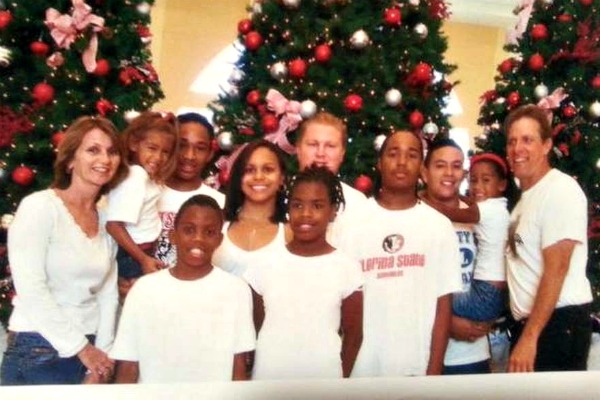
Albert Wilson, Jr. is a wide receiver for the Kansas City Chiefs who grew up in Florida’s foster care system.  Albert was placed in the Florida foster system twice – the second time he was in the system for 6 years until he aged out at 18. He had moved from group homes to other foster homes until he finally found security at the age of 16 in the foster home of Brian and Rose Bailey.

albert-wilson-foster-family

photo of the Baileys via The Kansas City Star

Albert Wilson’s account about his time in foster care demonstrates the far-reaching role foster families can play in a young person’s life.

4 truths that foster parents can learn from Albert Wilson.

1. Your family life may be the only stable home life your foster children have experienced.

Albert learned for the first time in his life what it meant to be together as a family when he moved in with the Baileys.

“Their house was a place I felt safe — even happy. They showed me a side of family I hadn’t seen before, one where everyone was living at the same pace — and in the same place.”

2. Encourage contact with biological family, when possible.

Albert says he was lucky to have been able to still have his parents in his life even though they were in jail. In the Foster2Forever private Facebook group, sometimes foster parents are afraid of their foster children seeing their parents in jail. But looking from Albert’s point of view he sees that contact as positive.

“They [my parents] helped raise me — I talked with them regularly on the phone or through the mail.”

Seeing his parents in jail also taught Albert an important life lesson about the consequences of crime:

“People make mistakes — and there are consequences for those mistakes.”

3. Give your foster children an outlet to work out emotions.

Your foster child needs an outlet for anxiety and stress. It may not be in athletics or organized sports, such as football, but even exploring artistic, creative or even spiritual endeavors can give your foster child a boost of self-esteem and something to get their mind off of their problems. As Albert relates:

“when things got tough — no matter where I happened to be living — I could always turn to football…Football became my refuge. When I was on the field, everything else melted away. I poured everything I had into the sport. That dedication paid off on the field…”

4. A foster child might consider you family even after they leave.

Albert admits that living with the Baileys wasn’t always picture-perfect as he dealt with the emotions of missing his biological family, but considers the Baileys family even today.

“They were my family…I still consider them family today…”

Your role as a foster parent is an important one because you have the capacity to help a child live life to their full potential, no matter their background. Albert Wilson’s success can be partly attributed to the support he received from the foster families in his life.

“Without the Baileys and my cousin, I don’t know what would have happened.“

You can read more about Albert Wilson’s life as a foster kid, his foster family, and how he’s helping other foster kids.

10:20 am by Penelope

Open Letter To Friends and Family of Foster Parents

Open letter to family and friends of foster families during the Holidays…..

foster-family-holidays

I never thought I’d be writing one of these silly “open letter” things but there are just a few things I need to address. Now simmer down and don’t be offended if you recognize yourself. Yes, some of you have done these things, and no, not all of you have done all of them; and hey, some are “what if’s” and “please don’ts” and just my overly sensitive imagination.

1. My foster child is my child

First and foremost from the moment a foster child walks into my home they are ours. They are our child. I expect YOU to give them the love and respect you have always given our biological children. Let that sit for a minute. It sounds easy but for a lot of people it’s really not.

2. My foster child doesn’t know you

Please remember when we walk in your door for the first time I have a semi scared, new child with me. Even though we all know each other; she/he does not know you. You are a stranger and this is probably the 7th holiday party we’ve been to this year; that’s a lot of new people. So, no my new little love probably does not want to hug each and every one of you. Would you want to walk into a room full of loud strangers whose names are being shouted at you and hug them all? Sorry, no she’s not being rude or shy…..just normal. And while yes, she’s about the same age as Cousin Sally’s daughter they may not be best friends in 2 minutes; or they might be but let’s let them decide.

3. My foster child may not like our traditional foods

Meals; this is a tough one. YES I LOVE your fruit and walnut surprise salad but if he doesn’t that’s ok. We’ve all grown up on “our food” and it’s delicious but it tastes totally different than what he is used to. Remember everyone’s stuffing is a little different and guess what? He misses his grandmas stuffing as much as I would miss yours. So comments like “oh you didn’t eat much” or “don’t you like the ham salad casserole” are just a reminder to him that he’s not with his love ones this year. I promise I won’t let him go hungry. He may fill up on mashed potatoes but that’s ok, I’ll get in extra veggies tomorrow.

4.  My foster child can hear your whispers

Oh yes even a 6 year old can hear, especially when you are hard of hearing and can’t whisper. So when we walk out of a room sweet comments like “oh, that’s such a nice thing they are doing” or “she’s so lucky to have them” or “I’m so proud of her for taking in that poor child” can be heard by THAT POOR CHILD. The last thing a kid wants to feel like is a poor charity case. No, she’s not lucky to have us we’re lucky to have her. So instead of telling her “you’re so blessed to be with them” lets try “we’re so blessed to have you with us this year”. Also, along the lines that even a 6 year old can hear……when she walks out of the room please don’t ask me about her case or her parents or where her siblings are this year. She might be able to hear you and guess what???? It’s none of your business. She’s with us for now; nope I’m not sure how long we’ll have her, that’s up to the courts and if things get to the point that we may adopt her I’ll let you all know when she’s not in the other room and feeling like people are talking about her behind her back………..because YOU are.

5. My foster child should have gifts that are equal to my “real” children

Now let’s get real, gifts. When we come to your home gifts are not necessary. Please don’t feel like you are required to get my children gifts, I can promise they have enough stuff and will get to open plenty of pretty boxes this year. But if you buy for one of them YES I EXPECT YOU TO BUY FOR ALL OF THEM (fosters included). If that’s a financial burden on you please either excuse all my kids from your gift giving or purchase less expensive gifts for them all. I know we’ve been easy on you all these years by only having one kid at home at a time but guess what? Those days are over. And for goodness sakes be fair and equal with your gifts. No, my 9 year old foster child will not love the socks you gave them when she sees her 16 year old foster sister getting a $50 gift card to her favorite store. EQUAL please; lets go $25 and $25 and you’re still coming out ahead since you didn’t buy the socks. Don’t you DARE “slip” my bio kid an extra gift or cash while in the other room either. NOPE….don’t do it, because guess what? When you did she spent half of it on her foster sib anyway because that’s the kind of kids she is.

6.  Please don’t tell my foster child “you’re going to have the best Christmas ever”

NOPE, they are not going to have the best Christmas ever. Will they get more gifts than they usually do? Probably……but their biggest wish would be to be for their family to be healthy so they could be back with them; even if it meant only getting the gifts someone donated to them or from the 2nd hand store.

7. Accept my family’s decisions and give us your love and support.

Guess what family and friends? We’re loud, we love big and we are on a new adventure. Please show my family grace and give us room to stay on this big adventure. I’ll apologize now for my foster love not following all our normal and ordinary traditions or behaviors. Yes it’s all new to them too. Table manners, gratitude when getting gifts, saying “yes ma’m” and “no sir”, not touching ornaments and their behavior may be normal to them or could be symptoms of other issues my new love has.

Yes, my foster love may not be with us forever but as long as he/she is with us let’s make sure they are treated like family and not an outsider or spectacle.

Written by foster mom, Nikki Hadley

10:51 am by Penelope

GIVEAWAY: Hallmark Adoption Keepsake Ornaments

The keepsake ornaments you put on your Christmas tree can document memories for years to come. When I purchased my very first Christmas tree as an adult, I simply bought glass ornaments to make a pretty tree. But that changed one year, when I saw a flying pig ornament. I quickly purchased the ornament, and smiled inside when I placed it on my Christmas tree for the memory it brought to me.

That Christmas ornament was a flying pig. Its significance may make you smile a bit too. The back story on the flying pig isn’t about a wild ride on a Harley. You see, my college career was abruptly halted when I received a late night call that my dad was in ICU at the hospital back in Waco. The next morning, doctors gave me the horrifying news that cancer was eating away my dad’s brain and he would die within a six months. My dad died five months and three weeks later.

After a couple of years, I finally decided I was ready to go back to college. But without any support system, I was having to work more than part-time, and yet study enough to pass Biochemistry courses at Texas A&M University. Each month, I cried and worried if I could do it long enough to get that coveted college degree. 28 months later, when graduation day came, I wrote on my graduation cap “PIGS DO FLY!”

Flying pigs have become a special symbol to me that all things are possible! However, as I began adding flying pig ornaments and then other flying animals, my Christmas tree became overloaded with angel pigs, then angel sheep, then angel cows, angel dogs, and any winged animal — my friends began calling my Christmas tree “the dead animal tree.”

But once I married and became a mom through the miracle of adoption, the ornaments on our Christmas tree began to tell a different story – a magical story of hope, love and family memories.

Some of my favorite memories are told through the ornaments on our Christmas tree.
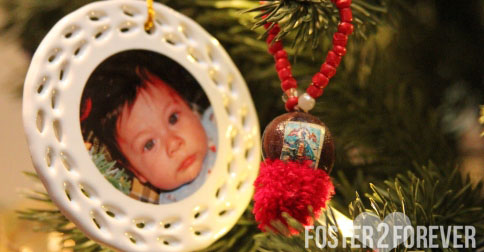
The deer eye bracelet on my LilBit’s wrist when he was placed with us, along with Baby’s First Christmas.

evil-eye-baby-bracelet-meaning
And our Forever Home keepsake ornament from Hallmark after the eventual adoption of our LilBit.

This week, I want bless other families that have adopted in the past couple of years with a giveaway for Hallmark keepsake ornaments commemorating adoption – one keepsake ornament for families blessed by adoption in 2015, and another keepsake ornament for families that adopted this year in 2016.

Please share with anyone that you know has adopted! Just enter in the Rafflecopter app below.
a Rafflecopter giveaway

Disclosure: I purchased these ornaments with my own money and this giveaway is not affiliated with Hallmark. Giveaway limited to those in the US.

2:02 pm by Penelope

The Surprising Way Your Past Trauma Affects Your Foster Children

Now that all 20+ sessions of the Adoption HEART Conference have been broadcast, I want to share how these sessions have impacted me and changed my outlook on raising my adopted children.

I will be the first to admit that as an adoptive parent who “rescued” children from the foster care system, I am flawed. First, I had my head in the sand about some very important issues that drastically affect how effective I can be as a parent to traumatized children.

past-childhood-trauma-recovery

YOUR PAST TRAUMA WILL RESURFACE

The most surprising theme for me that ran through many of the sessions of the Adoption HEART Conference is that parents must recognize the impact that personal past trauma will have on their ability to effectively parent trauma.

My history is spotted with family dysfunction, substance abuse, domestic violence, along with physical and sexual abuse. Although I felt had to come to terms with my own past trauma, I had failed to recognize its importance in my ability to stay calm and not be triggered by my child’s trauma. As therapist Amy Sugeno stated in her session:

“If a parent experienced childhood trauma, they are at a higher risk for developing secondary trauma.”

Wow! She went on to explain:

“A child’s trauma may trigger a parent’s past trauma.”

Now, my trauma happened many, many years ago. I actively pursued healing as a young woman through many counseling sessions, group therapy with other survivors, and even hypnosis to clear some of the bad memories. When I eventually came to the point of restoration, I felt alive, healed, and finally over the mountain of heartache that was my youth.

However, as I became a foster parent, I was surprised at how my past trauma caused me to react. To this day, I cringe when a young girl is hugged by males or sits on a man’s lap. I become nervous, edgy, and can even become downright bitchy. My instinct is to snatch the girl from what can be a truly appropriate sign of affection. (It’s ironic because as a little girl, I always felt safest in my Daddy’s lap.)

I began to realize that due to this hyper-vigilance from my past trauma, it would be best for me if I didn’t parent little girls. It is just too nerve-racking for me.

HOW TO DETERMINE IF YOU ARE TRIGGERED BY YOUR PAST TRAUMA

  • Evaluate your past. You can begin by journaling about your three biggest hurts in your past. Many times you will begin to see a pattern.
  • Evaluate your present parenting. Journal about the times you may have just lost it while parenting your child. {no judgment here} look to see if you can identify your triggers.
  • Compare your current triggers with your past. Examine both lists and look for any overlapping issues. Determine if your current triggers are somehow associated with your past.
  • Determine if your feelings are somehow associated with your past.  One way that you can do this is when your child is misbehaving, before you react to your child’s behavior: Stop, breathe, and question your feelings.

4:20 pm by Penelope

Why You MUST Sign Up for this Adoption Conference

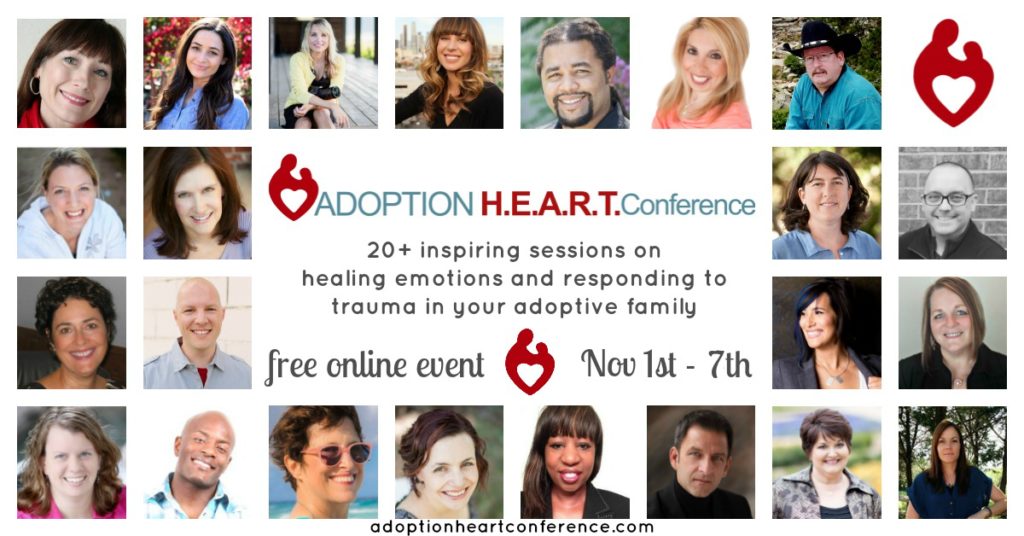
Watch this encore presentation of the Adoption HEART Conference!!! The Adoption HEART Conference is a free online event. Free sign up here.

free-foster-parent-adoption-training

As an adoptive parent, I’ve struggled with navigating the unique challenges that come with parenting traumatized children. Sure, there are some incredible conferences and trainings available to foster and adoptive parents, but I just can’t jump on a plane to attend. And even if I could, my kids do not travel well at all!

To make matters worse, most adoption conferences and trainings don’t provide childcare so that means I’d have to find sitters anyway to either stay overnight or with my rambunctious boys during the conference.

That’s why I created the Adoption HEART Conference!

To provide adoptive parents (& prospective adoptive parents) a convenient way to get the training and tools they need to effectively parent traumatized kids.

The Adoption HEART Conference is an online event so that means no travel and no childcare, plus you can watch the conference sessions at your convenience. Plus it’s free to watch during the conference! – all you have to do is sign up.

You’ll get free access to sessions with over 20 adoption experts to give you incredible insight into the mind and heart of our children from hard places.

Check out these incredible sessions:

Replacing Your Child’s Fear with Love: Powerful Strategies to Stop Difficult Behavior

Bryan Post

Growing Up White: An Open Discussion with a Transracial Adoptee

Rhonda Roorda

How to Choose Which Adoption is Best for Your Family

Dawn Davenport (of CreatingAFamily.org)

What You Might Not Know About Birthmother Grief & Loss

Ashley Mitchell (birthmother of BigToughGirl.com)

What They Don’t Tell You About International Adoption

Sharla Kostelyk (of ChaosAndTheClutter.com)

How to Choose Which Adoption is Best for Your Family

Lori Holden (of LavenderLuz.com)

From Adoptee to Adoptive Parent: Overcoming Your Past to Parent Traumatized Children

Jillian Lauren (New York Times bestselling author)

What Parents MUST Know About Adoptee Identity, Grief & Loss

Sherrie Eldridge (author, adult adoptee)

Seeing Trauma through Your Child’s Eyes: Tips from a Former Foster Kid

Chadwick Sapenter (former foster youth)

What Really Happens to Kids Who Age Out of Foster Care & What You Can Do About It

Gianna Dahlia (Executive Director of TogetherWeRise.org)

How Attachment Has More to Do with YOU than Your Child

Marshall Lyles (of the Center for Relational Care)

How to Recognize Prenatal Exposure & Its Complex Effects on Your Adopted Child

Melissa Fredin (of Minnesota Organization on Fetal Alcohol Syndrome)

It’s Not Behavior, It’s Neurological: How Trauma Imbalances Your Child’s Brain

Dr. Rob Melillo (of Brain Balance Centers)

How Compassion Fatigue & Secondary Trauma Can Unknowingly Invade Foster & Adoptive Families

Amy Sugeno (trauma therapist)

How to Integrate Two Parenting Styles & Diffuse Conflicts in Your Marriage

Mike Berry (of ConfessionsOfAnAdoptiveParent.com)

How to Integrate Adoption into Your Home, Life & Work to Make a Difference in the World

Tamara Lackey (photographer, activist, adoptive mom)

How to Help Your Child Overcome Their Past Trauma with a Trust-Based Parenting Intervention

Debra Jones (author, parenting coach, adoptive mom)

How to Use Animals & Pets to Help Regulate Your Traumatized Child

Lindsey Bussey (equine therapist)

How to Develop an Effective Plan to Intentionally Parent Challenging Behaviors in Adopted Children

Stacy Manning (author, parenting coach)

How to Help Your Foster & Adopted Children Rise Up from the Depths of Trauma & Low Self-Esteem

Dr. Sue Cornbluth (therapist, parenting expert)

Tough Decisions When Parenting Reactive Attachment Disorder

John M. Simmons (author, adoptive dad)

Could Your Child’s Behavior Actually Be Sensory Processing Disorder?

Marti Smith (occupational therapist)

Creating this Adoption HEART Conference has significantly changed my view of adoption — now I feel that I can see through the lens of my adopted children about the adoptee loss that they WILL eventually experience.

Be sure and go to AdoptionHEARTconference.com to check out all the sessions and claim your free ticket to this life-changing event. Please share with your friends, agencies, and caseworkers!

  • « Previous Page
  • 1
  • 2
  • 3
  • 4
  • 5
  • …
  • 45
  • Next Page »

Looking for something?

Facebook

Foster2Forever

Archives

Why Every Foster Parent Needs Sexual Abuse Training

foster care visitation rules guidelines online

10 Tips for Foster Care Visitation Online

foster-income-taxable

Is Foster Income Taxable? What Foster Parents Should Know About Income Tax

Why Every Foster Parent Needs Sexual Abuse Training

I’m Clever

Sway

Pretty Chic Theme By: Pretty Darn Cute Design