Foster2Forever

  • Home
  • Shop
  • Fostering & Adoption
    • Foster Care
      • Being a Foster Home
      • Birthfamilies
      • Case Workers
      • Concerns
      • Court Hearings
    • Adoption
      • Parenting Tips for After Adoption
      • Benefits
      • Costs
      • Infertility
      • Parental Rights
  • Parenting
    • 31 Tips for Parenting After Adoption
    • Behavior Issues
    • Children’s Activities
    • Family Time
    • Motherhood
  • Our Home Life
    • Cancer & Health
    • Recipes
    • Marriage
    • Family Travel
    • Videos
  • Join Our Community
  • Our Family
  • Contact
  • Privacy Policy

3:51 pm by Penelope

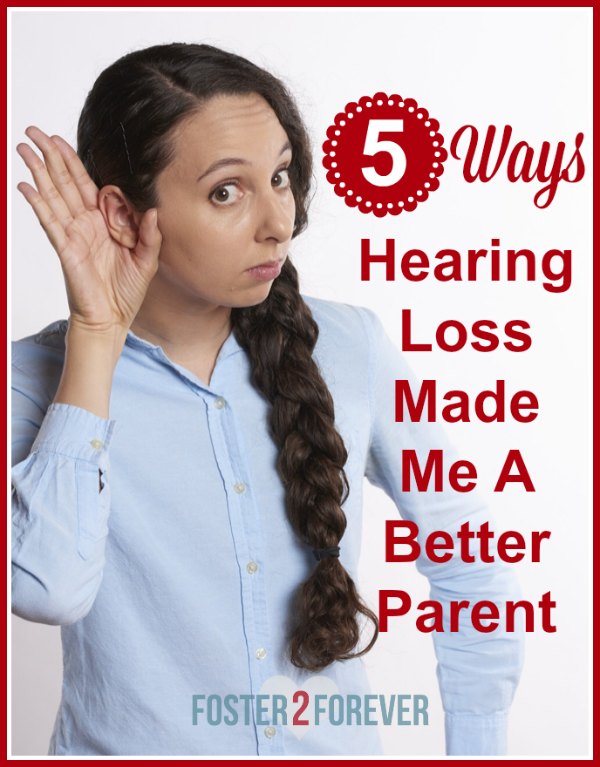
5 Ways Hearing Loss Made Me a Better Parent

I had been suffering with a cold for over a week, fortunately not the flu. I was waking up with a stuffy nose, but this January morning was different. I woke suddenly that morning with excruciating pain in my left ear.  I had woken up with a sudden ear infection!

What’s this about? I hadn’t had an ear infection since I was a young child! I tried lifting my head but was overcome by dizziness, then I realized I couldn’t hear.

During my doctor visit, I was concerned about my hearing loss, but he assured me that antibiotics would clear up the infection. He said I would be better in a few days. However, after a few days of antibiotics, the pain had subsided, but I still couldn’t hear out of my left ear.

I called the doctor again; my stomach in knots. The doctor assured me again to not be alarmed. He even stated that my hearing may not return to normal for a month! I just had to have faith that the doctor was right.

So I began adjusting to life (and parenting) with a hearing impairment, and what I realized shocked me about my parenting style.
5 WAYS HEARING LOSS HAS MADE ME A BETTER PARENT:

1. NOT TALKING ACROSS ROOMS

I never realized how often our family talks to each other from across the room. By losing my hearing, I suddenly couldn’t hear what my family was saying to me. I realized that I had also been talking from a distance — Many times, it was me wanting my children to do something OR stop doing something. Then, when they didn’t comply, I would get irritated at them for “not listening to me.” How funny is that? Now I was the one not listening because I couldn’t hear. Do you find yourself talking across a room at your children?

2. GETTING CLOSE TO TALK TO EACH OTHER

This sudden hearing loss required that I be close to hear what my children were saying. Getting close didn’t just mean proximity though. Getting close also meant that I had to put aside what I was doing in order to hear my child. A parent’s one-on-one full attention to a child strengthens the parent-child connection that children from hard places desperately need.

3. LOOKING AT MY CHILDREN WHEN THEY SPEAK

This hearing loss was particularly hard for me as I grew up with a father that had a severe hearing loss. Would history be repeating itself? Wouldn’t that be ironic? Growing up, my dad was always asking his children to look at him when we spoke. My dad needed that face-to-face contact so he could read our lips. When I lost my hearing, I discovered how valuable looking into my child’s face was – both in understanding what my children were saying, and letting them know that I was completely tuned into them. Many times, children from hard places haven’t had an adult tune into them and meet their needs.

4. CREATING EYE CONTACT IN CONVERSATIONS

As the famous quote says: “Eyes are the windows of the soul.” Eye contact helps with attachment and your child’s ability to connect with people. That means getting down to eye level with your children so you can make that eye contact and truly listen to their needs. Eye contact shows your children that you are tuned into them.

5. STAYING CALM DURING A TANTRUM

Because I couldn’t hear, tantrums didn’t bother me as much. I was able to literally “tune them out” making it easier for me to stay calm. As a child throws a tantrum, not engaging in the tantrum helps parents stay calmer. A parent must not get caught up in a child’s dysregulation to be effective in bringing a child back down to calmness.

Over the last two months, my hearing has improved, but it still hasn’t been fully restored. However, having this hearing loss has taught me how to connect better with my children to avoid the confusion and frustration that can come with not being heard.

 

4:24 pm by Penelope

3 Steps To Being An Intentional Parent And Ending The Chaos In Your Home

As 20+ kids came in and out of my home through my years as foster parent, I thought that the strife of parenting traumatized children was simply part of the journey — what you signed up for, per se. I knew of many other foster parents that also lived in chaos as they agonized over difficult behaviors, just as I had with my own attachment-challenged forever child. I’ve read dozens of books and attended numerous trauma classes and adoption conferences, to seek out the answers to parenting trauma.

Would we ever have a peaceful home? I was losing hope.

peaceful-parent-foster-home

But then recently, I somehow found Dr. Laura Markham’s book, Peaceful Parent Happy Kids, and I have to say, I’m learning so much more about parenting with connection than ever before! Even as helpful as The Connected Child has been for parenting adopted children with its focus on connection, I felt it was a bit disjointed, and although full of tips for parenting traumatized children, it didn’t give me the sequential steps or a roadmap for connection. I still struggled with remaining calm during the most difficult times.

Peaceful Parent Happy Kids gives an easy-to-follow sequential roadmap for connection.

Peaceful Parent Happy Kids is broken down into three parts. The first, all-important step in parenting with connection begins with YOU, the parent.

Step One: Regulate Yourself

REGULATING YOURSELF is the foundation for staying calm when your child misbehaves. Now, as parents, we all have had to deal with irritating things that our child does. But it all comes down to IF we can stay calm. Every expert says that a parent has to stay calm, but how can you do that if your child just marked up the wall and himself with a Sharpie? Or is throwing a tantrum at the store? Or just hit another child at the playground?

Peaceful Parent Happy Kids delves deep into the parental psyche about why we get angry when our child misbehaves. Our #1 priority as parents is to examine our own emotional state before we get upset with our children. The truth is, when we are stressed out, we resort to how our parents reacted when we were kids, which could be vastly different than how our hurt children should be parented. As parents, we have to come to terms to how we were raised and rewrite our childhood hurts. But also, a self-care practice is a key element too.

Step Two: Connect with Your Child

EMOTIONAL CONNECTION can actually help grow your child’s brain. Peaceful Parent Happy Kids breaks down the implications of how connection and separation affect the brains and emotional development of babies, toddlers, preschoolers and elementary-age children. The key to connecting with your child is to make them feel safe. Behavior problems are caused by FEAR. As parents, our goal is to give our children a safe place to release that fear WITH US through connection. “Defiance isn’t a discipline problem; it’s a relationship problem.” Parents can build connection through habits that focus on the relationship with your children.

Step Three: Coach Your Child, Don’t Try to Control Your Child

Finally through COACHING, NOT CONTROLLING, a parent can guide a child into better behavior by helping the child learn self-soothing, unconditional love, empathy, and emotional self-regulation. Peaceful Parent Happy Kids covers a multitude about emotions and behavior, and specifically addresses your child’s emotions, such as anger, meltdowns, and other difficult behaviors, including sibling conflict.

I believe Peaceful Parent Happy Kids should be required reading for all foster and adoptive parents. It is that amazing and life-changing! Dr. Markham has totally changed the way I look at parenting my traumatized child!


7:45 am by Penelope

How Parenting Trauma Differently Can Turn Into Special Moments

Parenting trauma is a totally different way of parenting. Basically, you have to throw out what you know about parenting (which is probably how you were parented), and become “child-centered” in your approach to parenting your traumatized child.

What does this mean? Here’s an example from this week.

I had made back-to-back appointments with a specialist for two of my children. The first appointment had lasted an hour-and-a-half. During that entire time, one child stayed in the waiting room playing on a tablet. I was so proud!

However, as we were waiting for the second appointment, the tablet’s battery died and this child became obsessed with playing a game on my phone. “Can I have your phone?” “Not fair!” “I want your phone!” over and over.

The scenario with old way of parenting (usually how a parent was parented):

“No, you can’t have my phone. Go sit over there and quite whining!”
Child gets mad and pouts. The incident would then probably escalate into more whining, maybe even angry words, perhaps a chair would be kicked, or may have turned into a full-blown meltdown in public.

Parent begins seething inside, and thoughts would begin spiraling into:
“Why can’t I just have a normal child that minds? Why did I think I could do this? I’m horrible at this parenting thing.”

Do you see all the negativity? It’s not good for the child and it’s not good for the parent.

Now, I could have just given him my phone to keep him quiet, but instead, I did something different…

parenting-trauma

Parenting Trauma with Connection

(Parenting trauma requires that connection with your child –> Check out these adoptive parenting techniques.)

“Let’s not talk about the phone right now. Come here. Come sit on my lap. We’re not talking about the phone right now.”

As I coaxed my child to sit in my lap, I pulled him close and began rocking him, rubbing his back. As he continually whined for my phone, in the most soothing voice I could muster, I replied: “Shhhh. We’re not talking about that right now. Let me hold you. We’re okay right now.”

For the next five minutes, he continued whining, and I continued to soothe him. Then, would you believe? He fell asleep!!! My child was tired and needed rest with me!

In that waiting room, as I looked down, at my 9-year-old child, I began reminiscing about how I rocked him as a baby. Friends, he is growing up so fast! I’ll be losing these opportunities soon.

I’m so thankful that I reacted to my child’s whining differently this day, for in this moment, I received the rare opportunity to travel back in time to hold and rock my baby again. Which was exactly what we both needed!

11:57 am by Penelope

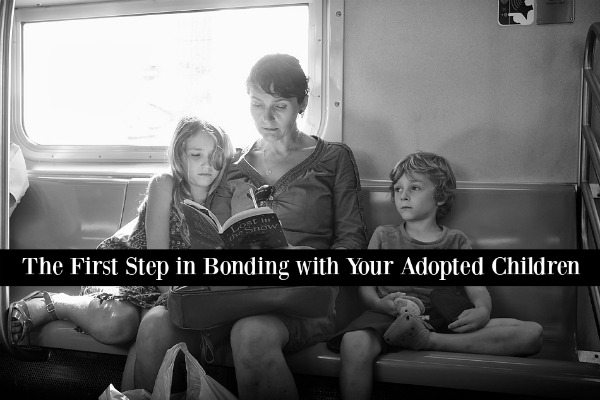
The First Step in Bonding with Your Adopted Child

One major mistake I made when my two sons came home as older children, was treating them the same as I treated my biological child. Since all my children were similar in age, I expected they would have similar interests, and we would connect in ways I already knew how to connect, because, I was already a mom.  Most people even considered me to be a “good mom.” [At least that’s what most said to my face.]

This is so true. You must make your new child feel safe. Especially with foster care adoption.

Prior to our two sons coming home, this “good mom” spent hours reading to her biological child, and, for the rest of the day, this mom and her biological child hung out and enjoyed each other. Trips to the library, playground, or even a friend’s house required very little (if any) planning.

By week two of mothering three children, I was at a complete loss. Our house was littered with toy fragments. I had hidden our precious library books to preserve them from utter destruction. When we did go to the playground, at least one of my children would climb up to a high place and refuse to leave. No other outings seemed reasonable. Soon, no outings seemed reasonable.

I began to resent my children. In my mind they weren’t playing their parts. I was a “good mom,” so, I began to believe our family’s chaotic state was the fault of my two children.

Never in my life have I ever been more wrong.

It took me months to begin to realize, that while I may have been a good mom to my biological child, I made a lot of assumptions when I began parenting my adopted sons.  Loving my adopted children the same way I loved my biological child was not loving them at all.

It was hurting them. It was hurting us.

I was hurting us!

The first step in bonding with an adopted child

In order to begin loving my adopted children, I had to get to know them.  Getting to know them was (and is) complicated because their lives have been complicated.

I’ve heard it said, “Our [children from hard places] need a delicate balance of structure and nurture. It’s a dance,” but that was not our experience at all.

For my children, structure WAS nurture. It still is. Once I really started getting to know my children, I could finally see their anxiety in everyday life, and I learned the first step in connecting with my adopted children was to reduce their anxiety.

In the beginning, the only way I could reduce their anxiety was to provide structure.  Any nurture beyond providing structure led to their heightened anxiety.

To be a good mom, I had to back off from all the activities.

As I provided the structure my children needed to feel safe, they slowly began to trust me. Their behavior began to communicate how safe they felt. Eventually, I could tell they were ready — we were ready — for more traditional nurture.

And I was the only one who could change to make this happen.

Foster parentNicole is a parent through both birth and foster care adoption. She blogs over at Coffee Colored Sofa where she shares her story of how parenting through adoption is changing her.


Yes. You must do this first before your adopted child can bond with you. Foster care adoption.

9:30 pm by Penelope

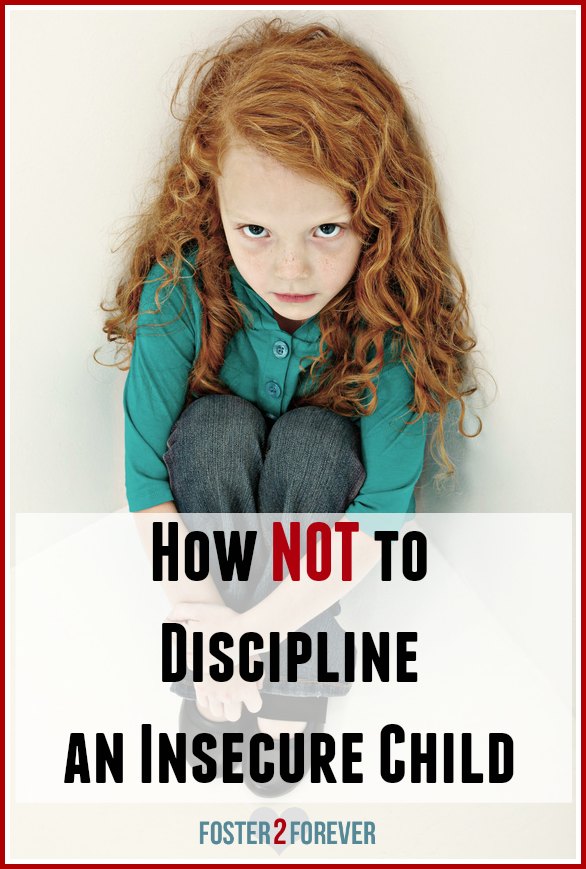
How NOT to Discipline an Insecure Child

Time-out is the most common way used today to discipline a child. And it may work for most children; however, time-out may not work if you have an insecure child. Here’s why!

how-to-discipline-a-child

How to NOT Discipline an Insecure Child

Using a time-out for discipline can trigger fear and abandonment issues, making it counterproductive, especially for insecure or at-risk children. If a child is struggling with low self-esteem, a time-out may affirm to the child that they aren’t any good.

This is particularly true with foster and adopted children that struggle with attachment because of the lack of early bonding in their lives. Because of a child’s early history of neglect and abuse, he may already feel disconnected from the family due to the lack of bonding in his earlier relationships. To these hurt children, time-out can feel like banishment and rejection from the family, which can cause the child’s mind to cycle into more insecurity. To a traumatized child, a time-out could feel like a withdrawal of love and equate to another abandonment to the child.

Through a simple time-out, a parent may be sending the message to an at-risk child: “My parents don’t want me around.” Those feelings of rejection have no outlet in a time-out which can cause turmoil inside the child. Consequently, the child may learn to withdraw from the world during times of stress instead of dealing with those emotions of disappointment.

When a child struggling with feeling insecure and controlling their emotions, that is a time in particular when a child most needs a parent’s help to wade through the turmoil.

How to Discipline an Insecure Child

You still have to discipline your child, so what do you do? Remember that there is a difference between discipline and punishment. Try disciplining your child using a time-in instead of time-out.  Using time-in to discipline your child will help your child teaches calmness, self-soothing, and thinking through emotions, plus it creates a bonding time with your child to deepen the parent-child relationship.

DOWNLOAD YOUR GUIDESHEET FOR TIME-IN DISCIPLINE

Wow I never realized how using time-out for discipline was affecting my insecure child. #parenting

1:24 pm by Penelope

Join the #RocktoberLove Challenge to Bond with your Child

Five years ago, I was struggling with parenting our demanding, hyperactive toddler we had adopted from foster care. I stumbled upon a blog post that first introduced me to the concept of attachment therapies for adoptive families.

{That blog post, The Rockin’ Mama Challenge, was written by none other than Lisa Qualls of One Thankful Mom.}

The Challenge was to sit and rock your traumatized child 15 minutes each day to promote attachment. The uninterrupted alone time between parent and child was to help give the child a pathway to learn attachment through a simple ritual of physical closeness via rocking.

Five years ago, foster parents in my neck of the woods weren’t trained much on trauma and its effects on a child’s attachment. Not many parenting strategies were doled out either, most parenting tips were “don’t spank” and “just give a time-out.”

Five years ago, I began the Challenge fighting to keep our son still and in my lap for any amount of time. A challenge it was!!!  But after a week, our son began to not resist the rocking time. After two weeks, he even asked to be rocked. As much as he fought it, my traumatized child wanted that attachment.

Five years ago, that Challenge opened my eyes to a whole new world of attachment parenting.

Join the #RocktoberLove Challenge

Rocking your child helps with attachment bond.

Now, five years later, I’d like to challenge other parents to join me in another rocking challenge during the month of October. It’s simple.

  • Join the #RocktoberLove Challenge Facebook group.
  • Rock your child for 10-15 minutes every day in October. If you miss a day, don’t give up! Just rock your child the next day! If you can’t do 10 minutes, do 5 minutes. Just rock!
  • Rock your child alone. No other children. No distractions. No books. No devices. No television. Just you and your child.
  • Keep a journal or share your experience on Instagram, Twitter or Periscope using the #RocktoberLove hashtag. Record how long, what time of day, what you did together, how your child responded, how you felt, etc.
  • Follow me on Instagram, Twitter, and Periscope.  — And others participating in the #RocktoberLove Challenge. Start a dialog. You are not alone in this!!! Here is your village.

I’ll be periscoping my #RocktoberLove Challenge experience everyday.
Will you join me?

9:38 pm by Penelope

Creating Belonging in an Adoptive Family

How do you create belonging in your adoptive family?

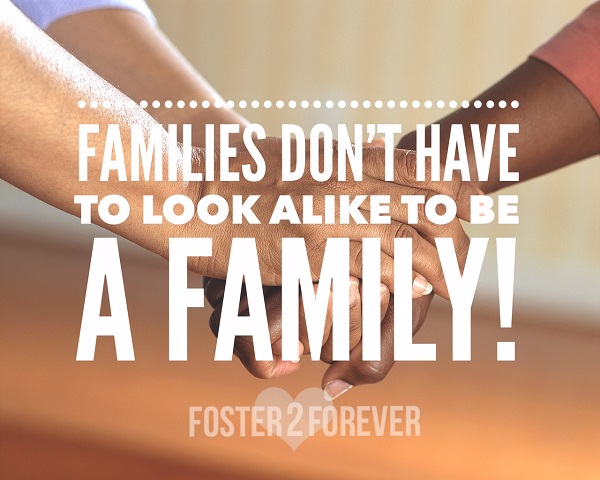
A family created through the miracle of adoption, sometimes, to the outside world, doesn’t look like what they think a family should look like.  How many adoptive families have to hear: “Are they all yours?” Family members don’t have to look the same to belong. but we can create a sense of belonging in our adoptive families by focusing on how much alike we actually are.

transracial-adoptive-families-quote

To ensure that you give your adopted child, and all your children for that fact, a sense of belonging to your family celebrate your sameness. All my sons are adopted and have various ethnicities: Anglo, Hispanic and Cherokee Indian.  Even with our various ethnicities, I tell my sons that they have my unique eye color (green with specks of golden brown), or my sister’s W-sit, or their dad’s face shape.

I tell my children how we do look alike.  And sometimes, I can sense a special feeling from that, even from my oldest, that became my son at 12 years old.

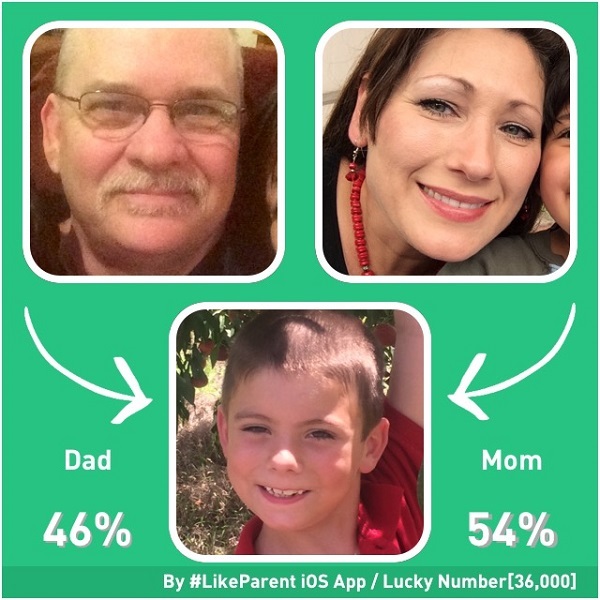
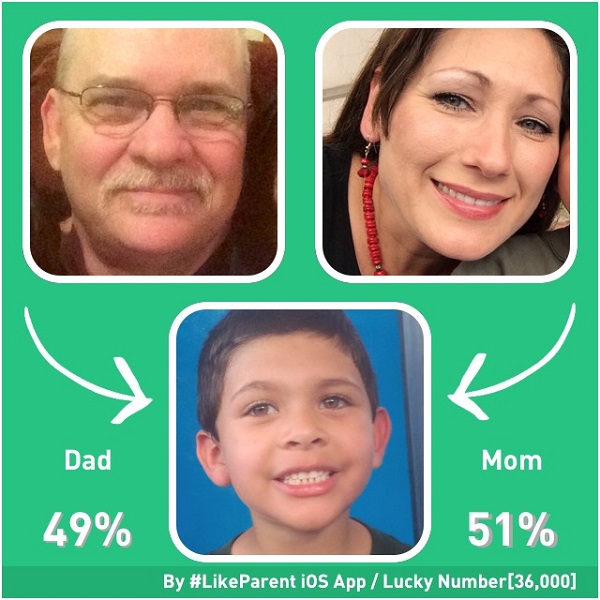
Recently my Facebook feed has been filling up with images from the LikeParent app – an app that calculates what percentage a child resembles each parent. Of course, it’s not scientific or anything, but a fun little thing to do anyway.
So, of course, I had to do an experiment – I wanted to see how much the LikeParent app says my sons look like me and how much they look like their dad.
I was pretty confident going in since all our sons have my exact eye color.
Our middle son looks so much like his dad did as a toddler and young boy. In fact, while looking through some old family photos, I picked up a photo of my husband as a toddler in a high chair. My husband’s reply was: “That looks familiar.” It was if we were looking at a photo of our middle son! (But our son does have my eyes!) So here are the surprising results:

adoptive-families-parents

Our youngest son, Lil Bit, is Hispanic, but definitely has my eyes and my smile. I’m constantly amazed at how much he resembles my sister too, especially with that thick, wavy hair. Of course, I realize our youngest son has his dad’s round face shape, and my husband back in the day did have really dark hair too. So look! Our son is a perfect blend of us.

adoptive-families-transracial

Our oldest son shares my Cherokee Indian heritage. We both have a long narrow face with those Cherokee high cheekbones. And his eye color is a duplicate of mine! Many people are very surprised when they learn that he isn’t my biological son. So these results are completely bogus!

adoptive-families-indian

But finding similarities of our family goes beyond our physical features. I tell my sons how they like bike riding like I did. Two of my sons bite their fingernails like I did. My middle son is a math wiz like me. “I used to do that too.” Our middle son LOVES baseball – just like his dad. Children mirror their parents in so many ways and pick up our sayings, habits, and beliefs.

By pointing out our sameness as a family that it can help minimize those differences to give a more cohesive sense of belonging. Families are alike! So celebrate your child’s sameness to help promote a sense of belonging to your family.

5:29 pm by Penelope

How Can Attachment Become So Disorganized?

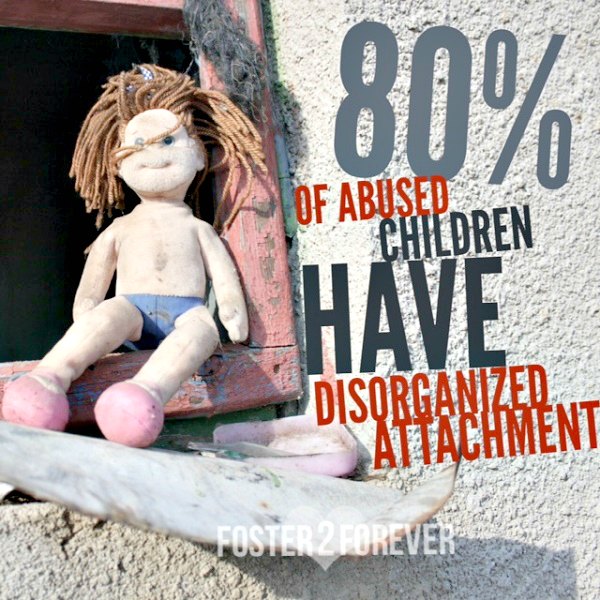
Before becoming a parent, a person should understand the four attachment parenting types. Specifically, foster parents should study the disorganized attachment style. Why? Because 80% of abused children come from a home with a disorganized attachment style – an attachment based on FEAR. (Parenting from the Inside Out by Dan Siegel)

80 percent of abused children have disorganized attachment.

How is Disorganized Attachment Developed?

  • Caregiver is frightening, dangerous, or causes terror
  • Child needs the caregiver for survival but is terrified of the caregiver
  • Child cannot find a solution which results in disorganized attachment

Characteristics of Disorganized Attachment Style

  • Significant difficulty with behavior, emotions, attention, and relationships
  • Attempts to control their caregiver in order to make them more predictable
  • Prone to dissociation from relationships

I recently attended a workshop on Attachment and the Circle of Security — which simplified the disorganized attachment style down to 3 things parents do to disorganize attachment in their children.

MEAN, WEAK, or GONE!

Is the parent MEAN?

The very person a child has to rely on for safety or care causes fear in the child. That’s pretty much a given for physical abuse of the children that come into foster care. But it doesn’t have to be physical abuse. Harassing or humiliating a child is a subtle form of abuse that causes emotional problems for a child needing to feel secure. A child can become disorganized in their attachment.

Is the parent WEAK?

A weak, permissive, or not-in-charge parent can surprisingly cause a chaotic, disorganized family structure. When a child “rules the roost,” the entire family suffers. There is such a fine line from being permissive and giving a child a voice. Honestly, this is the struggle in our own family as we parent our traumatized, strong-willed child. Parents much be in charge, but in a kind way.

Is the parent GONE?

If a parent isn’t around and a child has to take care of themselves, the child loses any sense of security, and the family can become disorganized. Note that a parent doesn’t have to be physically gone. A parent that is spaced out using drugs is not present in the child’s life, even if they are sitting in the same room with the child. As a child of an alcoholic, I experienced feelings of aloneness and took up the role of caregiver in my family as a young teen.  But even a parent that doesn’t use drugs or alcohol can be “gone” if they are preoccupied with other things in their life – examples include watching TV, electronics, video games, or online a lot of the time and not engaging with the child. A child needs to feel a connection with their parent in that their emotional needs of feeling important are met.

Parenting children with disorganized attachment is a challenge not to be taken lightly. But by learning a variety of parenting techniques that encourage attachment, a parent can help a child learn to trust and become more secure in their attachment.

1:25 pm by Penelope

My Home Is A Different Country For Him

How constant moving through foster homes can really hurt a child.

Being 7 at the time, my foster son was very conscious of his life when he first came to live in our home. He had been in another foster home, where he had spent a full year. One of his first comments, once I introduced him to his very own bedroom was: “It smells here…” In reality, it didn’t. I explained, “I know it feels like it smells, but actually, it simply smells different.”

When I first entered the USA, everything was new to me. Not only the language sounded like nonsense, but the smell of the air was nothing familiar either. I remember when I was at the airport, with my friends, tired as we were, we sat on the floor. A cleaning lady approached and began talking to us. We didn’t understand what she was saying — I think, maybe, we were not supposed to sit there.  We didn’t speak her language. We were travelers.  It was scary when someone would talk to me and I couldn’t understand.

At another time, I remember being confused, also at the airport. After asking the flight attendant a question, she got really offended at me. I think I must have expressed myself the wrong way. I was an exchange student, missing home. I was just afraid I was going to miss my flight.

For a foster child, the experience of a new foster home is very similar to mine. The child is a foreigner in the new home.

A therapist, making the case to defend permanency for a child who had already spent years in foster care, stated: “With every move, a child goes through the same shock as someone does when moving to a new country.”

foster-homes-older-child-adoption-stories

My son needed plenty of time to adjust to us. A world had been ripped from him and a completely new one was given him, all at the same time, without having any say.

If an adult can panic at the thought of being dropped off in a strange land… Imagine a child, who has to face all new things? How many traditions did he have to learn? How many different rules did she have to learn at the several schools she has had to attend? How many times did they feel alone and lost and needed someone to explain the directions?

These are heavy experiences!

A child needs stability, permanency. Her brain needs time to absorb and adjust. His heart needs a break…

Many foreigners fall into depression because of the overload of new information they must accept. And we are talking about adults, who have chosen to move from their home country into a new one. But a foster kid did not ask for the move. Still, we require full acceptance from them. So, we must give them space and time once they arrive… And permanency.

Understanding from us to them.

Patience.

Kindness.

Respect.

A never-letting-go attitude.

You know, when that flight attended got mad at me, what helped was when a kind soul stopped by and helped us understand each other. It is hard to forget the relief that I felt when her compassionate eyes met mine at a time when I was a tiny person in a very wide world.

Our little ones are travelers, worn down travelers, foreigners in need of those compassionate eyes.
Join our Facebook page  to connect with other adoptive parents!

GloriaRGloria R. is a mother of two birth children, and fostering to adopt an older child. She is  a licensed therapeutic foster parent with her husband. She continues to engage in research on traumatized children, foster care and adoption and hope to be a voice for kids, who often fall in between the cracks of society. She also loves writing and welcoming new readers to her blog, www.onemorewithus.com.

  • 1
  • 2
  • 3
  • Next Page »

Looking for something?

Facebook

Foster2Forever

Archives

Why Every Foster Parent Needs Sexual Abuse Training

foster care visitation rules guidelines online

10 Tips for Foster Care Visitation Online

foster-income-taxable

Is Foster Income Taxable? What Foster Parents Should Know About Income Tax

Why Every Foster Parent Needs Sexual Abuse Training

I’m Clever

Sway

Pretty Chic Theme By: Pretty Darn Cute Design