Foster2Forever

  • Home
  • Shop
  • Fostering & Adoption
    • Foster Care
      • Being a Foster Home
      • Birthfamilies
      • Case Workers
      • Concerns
      • Court Hearings
    • Adoption
      • Parenting Tips for After Adoption
      • Benefits
      • Costs
      • Infertility
      • Parental Rights
  • Parenting
    • 31 Tips for Parenting After Adoption
    • Behavior Issues
    • Children’s Activities
    • Family Time
    • Motherhood
  • Our Home Life
    • Cancer & Health
    • Recipes
    • Marriage
    • Family Travel
    • Videos
  • Join Our Community
  • Our Family
  • Contact
  • Privacy Policy

Archives for January 2015

10:18 am by Penelope

Check Out This Child’s View of His ADHD in the Classroom

Trying to manage ADHD in the classroom can be quite frustrating for teachers. Children with Attention Deficit Hyperactivity Disorder (ADHD) many times don’t understand why they get in trouble so much with teachers for disrupting the classroom. Because concentration and impulse control are required for a child to learn in a classroom setting, children with ADHD are at a disadvantage in this learning environment.

adhd-in-the-classroom-students

ADHD in the Classroom

This narrative of ADHD in the classroom written from the child’s point of view was an eyeopener for me:

Imagine that you’re nine years old. You’re sitting in class. Your teacher just gave you directions for the next assignment, but you missed most of what was said because you were playing with the bead chain of the zipper on your jacket. You look around to figure out what you’re supposed to do and notice that others have their science books out. So you pull yours out, too, but you still don’t know what to do. When you ask the boy sitting next to you, he gives you a dirty look and tells you to stop bothering him. You ask someone else who does the same thing and then tells you to ask the teacher.

“Mrs. Peters,” you blurt out. “I don’t know what to do.” Oops! You disturbed the class. She looks annoyed. “What are you supposed to do when you need my help?” she asks. You remember and raise your hand, and she comes over to help. She repeats her original instructions, then prods you a little to get you started. “You only have ten minutes,” she says. “If you don’t finish on time, you’ll have to take it home as homework.” Finally, you’re focused. You complete the first two items, then become distracted when you hear someone using the pencil sharpener. You look around the room for a while, then refocus and do a few more items…”

excerpted from Setting Limits with Your Strong-Willed Child: Eliminating Conflict by Establishing CLEAR, Firm, and Respectful Boundaries by Robert J. Mackenzie (I highly recommend this book if you have a strong-willed child. I had a total paradigm shift in my thinking.)

How can you help your child with ADHD?

Medication: Some parent choose medication. I was extremely hesitant to medicate my young child, but given his extreme behavior, we felt we had no other choice, but approached it cautiously.  This is how treatment with a stimulant for ADHD helped our son.

Diet: Some parent swear that changing diet helps children with Sensory Processing Disorder and ADHD. Here’s a book on the Feingold Diet: All Natural Mom’s Guide to the Feingold Diet: A Natural Approach to ADHD and Other Related Disorders

Essential Oils: Some people swear by using essential oils. In my honest review of using essential oils, I admit, in our experience, that EOs are not 100%, but we have seen marked improvement a majority of the time.  Jeddy’s Blend Essential Oil is formulated specifically for ADD/ADHD.

using-essential-oils-adhd

FTC Disclosure: Links in this post may be affiliate links, which means when you click on a link and purchase, I receive a very small commission (at no additional cost to you).

7:56 pm by Penelope

Fabulous Valentine Box Ideas for Boys

Making Valentine’s Day boxes for boys isn’t the easiest task since boys aren’t usually into hearts and doilies, including my two boys. Here are some great ideas for your boys to make their own boyish Valentine boxes!

Check out these fabulous Valentines Day boxes for boys

Valentine Box Ideas for Boys

Army Tank Valentine Box for Boys

tank-valentine-box-idea-boys

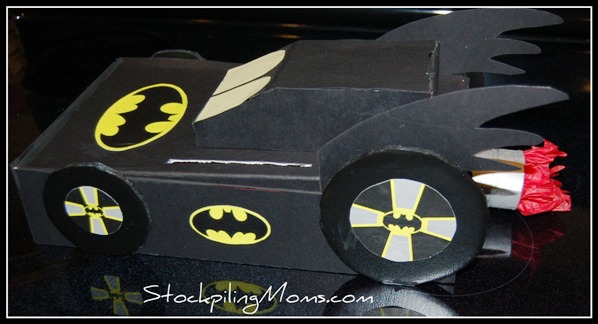
Batman Batmobile Valentine Box for Boys

Batmobile-boys-valentine-box-ideas

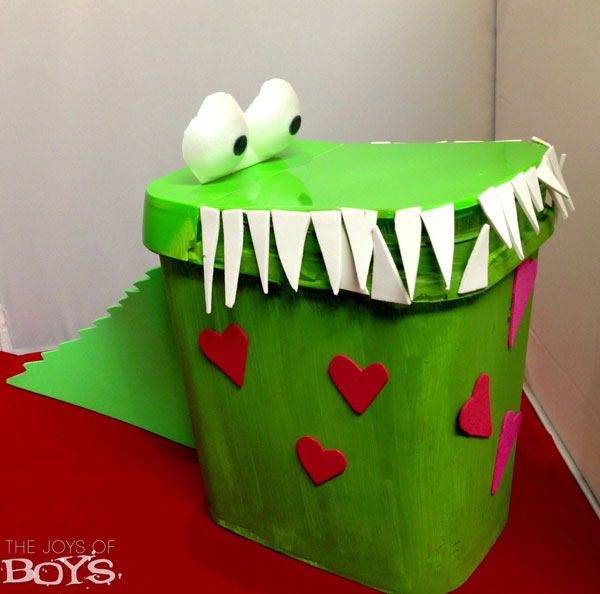
Crocodile Valentine Box for Boys

Crocodile-Valentine-Box-idea-boys

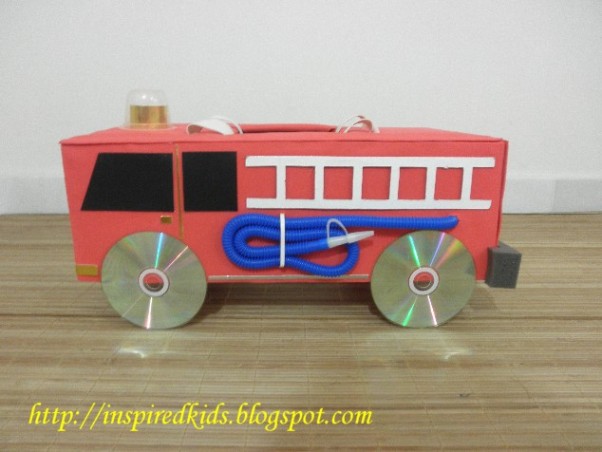
Firetruck Valentine Box for Boys

firetruck-valentine-box-idea-boys

iPhone/iPod/iPad Valentine Box for Boys

iphone-valentine-box-ideas-boy

Lego Valentine Boxes for Boys

lego-valentine-box-ideas-boys

Minecraft Creeper Valentine Box for Boys

minecraft-creeper-valentine-box-idea-boys

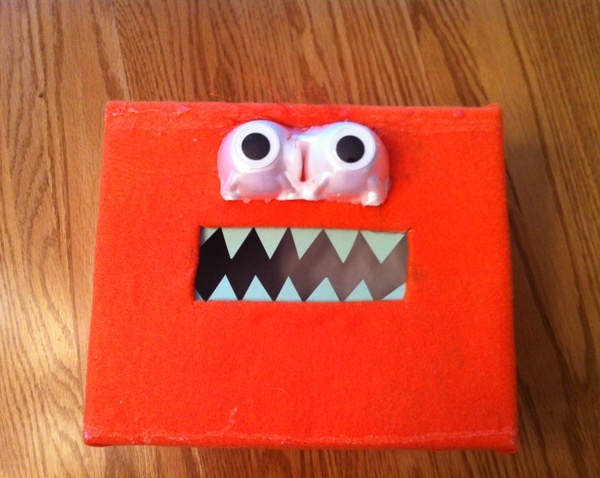
Easy Monster Valentine Box for Boys

monster-boys-valentine-box-ideas

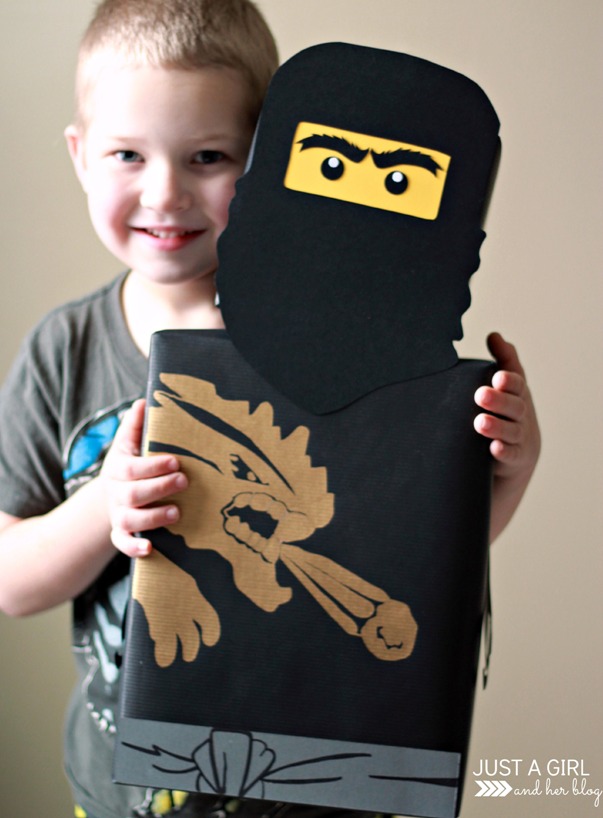
Ninja Valentine Box for Boys

Ninja-valentine-Box-idea-boys

Purple Minion Valentine Box for Boys

Minion-Valentine-box-idea-boys

Check out these other great ideas for Valentine’s Day boxes for boys!

1:20 pm by Penelope

The Attachment Style of Your Parents Determines Yours

What does your parents’ attachment style have to do with you?

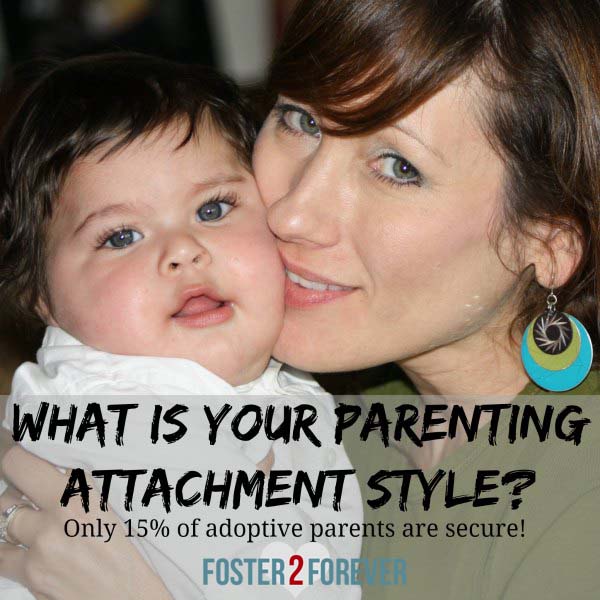
EVERYTHING! The best predictor of a person’s attachment style is their parents’ attachment style.  A person’s attachment style for parenting is developed while very young and is usually stable throughout their lifetime. In other words, we tend to parent the way we were parented. Only 15% of foster/adoptive parents are secure in their attachment!

Great info on how our parenting style by our attachment to our parents. #fostercare #adoption

4 Attachment Styles

(review these to determine your parents’ attachment style)

  • Secure
  • Insecure (organized) – Avoidant
  • Insecure (organized) – Ambivalent
  • Insecure – Disorganized

Research indicates that children who were raised in a home with secure attachments, will in turn parent their children with a secure attachment style. 60% of the general population have a secure attachment style.

Adults who were raised in a home with an avoidant attachment style will parent their children with a dismissive attachment style. Dismissively attached adults are excellent at providing for physical needs but are weak in their ability to combine the emotional response with the physical need. Dismissive parents struggle with emotional connection and valuing relationships.

Those adults who were raised in a home with an ambivalent attachment style will parent their children with a preoccupied attachment style. They may provide inconsistent and unpredictable care to their child, at times being available, and at other times being too overwhelmed or busy to respond appropriately to their children’s needs.

And those adults who were raised by parents with a disorganized attachment style will parent their children with unresolved issues affecting their attachment. Oftentimes, these are well-meaning adults who are excellent caregivers when their own trauma isn’t being triggered. However, when the parent’s trauma is triggered, these parents become emotionally or behaviorally unpredictable or even scary to the child, thus not allowing the child’s to attach securely to the parent.

PARENTS ATTACHMENT STYLEADULT ATTACHMENT STYLEGENERAL POPULATIONFOSTER/ADOPT PARENTS
SecureSecure60%15%
Insecure - AvoidantDismissive20%40%
Insecure - AmbivalentPreoccupied15%15%
DisorganizedUnresolved5%30%

What is your attachment parenting style?

While 60% of the general population has a secure attachment style, only 15% of foster/adoptive parents are secure in their attachment style!

70% of foster/adoptive parents have dismissive or unresolved attachment styles! 

How can we help our children attain a secure attachment style if we have an insecure attachment style?

If you see that your attachment history is not secure, don’t fret, there is good news! Researchers and clinicians agree that it is possible for adults to develop “earned” secure attachment.

  • Journaling
  • Prayer
  • Developing a practice of mindfulness of your parenting
  • Talking with a trusted friend or spouse
  • Professional counseling
  • Group counseling or parent support group

It is not what happened to you as a child that matters — it’s how you make sense of what happened to you. You need to understand the impact of your childhood experiences, and you must acknowledge the positive and negative aspects of your childhood. The important thing is for you to be able to reflect on your childhood experiences without becoming overcome with emotion, flooded with the past, and preoccupied with the present.

Source: Gobbel Counseling

http://orphancareresources.org/resource/parents-attachment-style

10:00 am by Penelope

Great Novel about Abandonment, Trauma and Not Giving Up

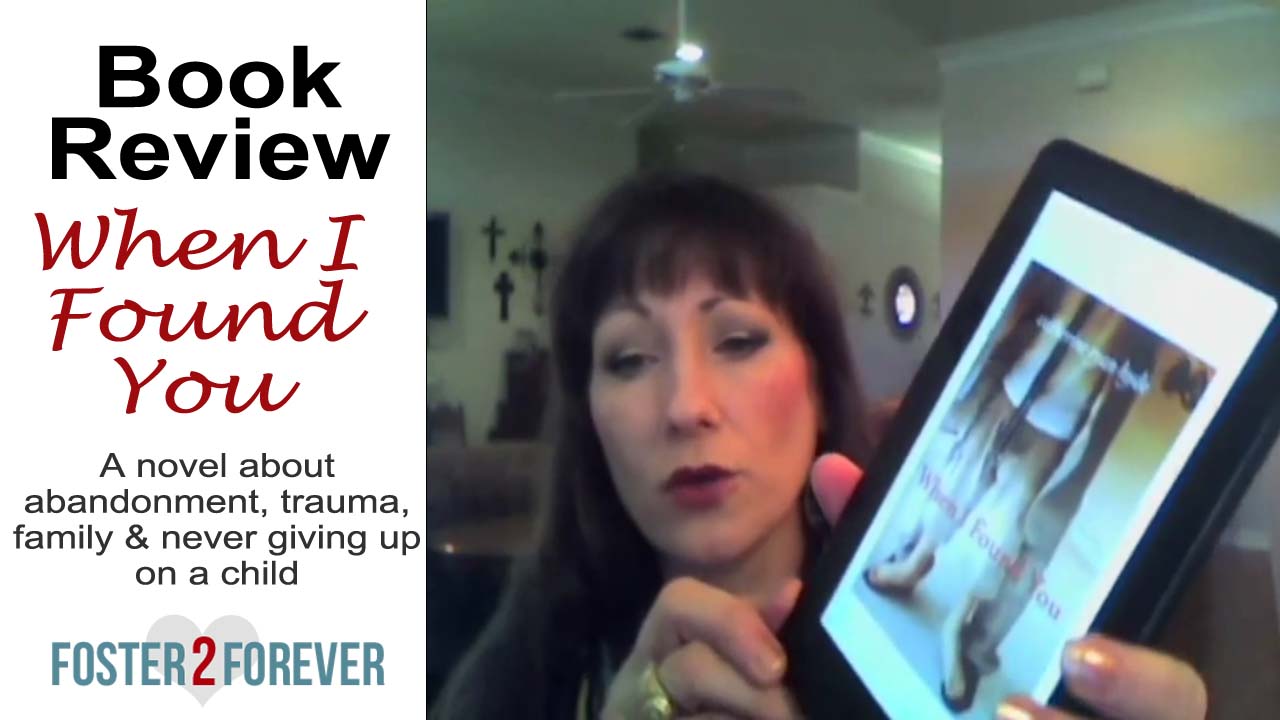
I read a fantastic novel, When I Found You, by Catherine Ryan Hyde.  The Kindle book is only $1.99.

Here’s the video of my review!

Here’s the direct link to YouTube.

BOOK DESCRIPTION:
While duck hunting one morning, childless, middle-aged Nathan McCann finds a newborn abandoned in the woods. To his shock, the child—wrapped in a sweater and wearing a tiny knitted hat—is still alive. To his wife’s shock, Nathan wants to adopt the boy…but the child’s grandmother steps in. Nathan makes her promise, however, that one day she’ll bring the boy to meet him so he can reveal that he was the one who rescued him.

Fifteen years later, the widowed Nathan discovers the child abandoned once again—this time at his doorstep. Named Nat, the teenager has grown into a sullen delinquent whose grandmother can no longer tolerate him. Nathan agrees to care for Nat, and the two engage in a battle of wills that spans years. Still, the older man repeatedly assures the youngster that, unlike the rest of the world, he will never abandon him—not even when Nat suffers a trauma that changes both of their lives forever.

GIVEAWAY:
I loved the book so much that I contacted the author to see if she would be willing to giveaway an autographed copy to you & she said YES!!! To enter, just leave a comment below on why you’d like to read this book. For another entry, subscribe to my YouTube channel & leave another comment below with your user name.

Great book for your reading list! Abandonment, trauma and never giving up on loving a kid.

10:15 am by Penelope

When Kids Bathtime is a Nightmare

Is kids bathtime a total nightmare in  your home?  Do your children make you feel like taking a bath is some form of punishment for them? Could some sort of trauma be triggered at bathtime?

Check out these tips for kids bathtime for spd and trauma

10 Tips for Kids Bathtime:

  • TRY A SPONGE BATH for while.  Start with just a bucket of water in an empty bathtub and  let her play in the bucket of water.  Then try adding 1/2 inch of water in the bathtub and over time continue to add more water as they get more and more comfortable in the bathtub.
  • USE  BATH CRAYONS! They work WONDERS!  Coloring and painting will take your kids’ mind off of the bath and might turn crying time into laughing and play time.
  •  USE A BUBBLE MACHINE.  A bubble machine will keep kids busy and while they are busy making and popping bubbles, you can be busy bathing their bodies.
  • ADD BATH TOYS into the bathtub, then make a game of having your child get into the bathtub to retrieve them. These bath ABCs and numbers stick on the wall and help kids learn the alphabet.
  • HAVE YOUR CHILD SIT IN THE TUB WITH NO WATER for a while, and then slowly fill the bathtub and bathe them while the water is running. By the time the bathtub is filled, bathtime will be over.
  •  USE A BABY BATHTUB with your frightened toddler. Sometimes a confined space helps. My kids absolutely LOVED this quacking duck inflatable tub.
  • PLAY MUSIC or just sing to your child during bathtime.  Sesame Street’s Rubber Duckie is a classic!
  • COOL THE BATH WATER.  You can use this  turtle bath thermometer that registers the water temp.
  • Put on your bathing suit and hop in. Wash your arms and then wash wash their arms, continue alternating until you have washed their entire body.   Slowly  spend less and less time in the tub with them until you are not having to get into the tub at all.
  • Consider that your child may have sensory processing disorder.

So whether your child is experiencing real trauma or is just stubborn, the key is to make “bathtime” “fun time”  — so the next problem you will have is how to get your child out of the bathtub!

You may want to check out these top toys for active boys (& girls). 

11:06 am by Penelope

A Skeptic’s Honest Review after Using Essential Oils

Could using essential oils actually help my child’s behavior?

I have read tons of testimonials of people who swear that using essential oils changes the lives of their children and families. After using essential oils, they claim their children are calmer, sleep better, are more attentive, etc.

I’m a biologist by trade so I was skeptical about all the hoopla I’d been hearing about using essential oils — I needed some sort of scientific proof.  Could all the testimonies of people that were also selling essential oil products be reliable?

Could using essential oils really work? Read this skeptics experience.
How can the scent from using essential oils change a child’s behavior?  Can a scent change brain chemistry that can affect a child’s behavior? Did my behavior change and I become more calm after spa massages using essential oils?  I researched and found this report on Aromatherapy and Essential Oils from the Federal government’s National Cancer Institute at the National Institutes of Health (which is under the Department of Health & Human Services):

A large body of literature has been published on the effects of odors on the human brain and emotions. Some studies have tested the effects of essential oils on mood, alertness, and mental stress in healthy subjects…Such studies have consistently shown that odors can produce specific effects on human neuropsychological and autonomic function and that odors can influence mood, perceived health, and arousal. These studies suggest that odors may have therapeutic applications in the context of stressful and adverse psychological conditions.

How could this be true? I asked the question on my Foster2Forever Facebook page about using essential oils and if they really work.  And I read personal testimonies with rave reviews.  And then I thought if inhaling marijuana can change a person’s mood, then maybe essential oils could improve a child’s mood too? We were struggling with our children’s behavior, especially after my cancer, so we decided try using essential oils. What did we have to lose? If it didn’t work, we were out a little bit of money, but it was worth a try to us. After researching a number of companies, I decided to order from Spark Naturals, an aromatherapy company, that allows me to order with no membership, no contract, no required monthly subscriptions, and no personal volume requirements. Many of the Spark Naturals single essential oils have a price point of less than $10 for a 5ml bottle — significantly lower than the other brands I researched.  The Spark Naturals diffusers cost between $52 to $62 with free shipping for all order over $55. After diffusing Spark Naturals “Bliss Calming Blend“ essential oil (5 ml for $13) in our home for a couple of months, we have experienced a significantly calmer home. This is not to say our home is perfectly calm all the time. It isn’t!!! My son is strong-willed, so we still have our “War of Wills” many days BUT they are mostly minor.  We experience fewer meltdowns that last shorter, and they don’t occur every single day like they had just a couple of months before. Could it be that using essential oils is what is improving my child’s behavior? I don’t know! But what I do know is that we will continue to use essential oils because it isn’t worth the gamble not to.

Have you tried using essential oils?

Disclaimer: This is my true story and experience with using essential oils. The links to Spark Naturals are affiliate links that pay me a small commission if you purchase; however, you can get a 10% discount on your order by using the coupon code: penny10

using-essential-oils-spark-naturals-coupon-code

5:45 am by Penelope

What I Learned from Cancer in 2014

As I fell to the floor in pain on the morning of February 25th last year, I had no idea how quickly it would change our 2014 and our future as a family. Two weeks later, I was in surgery and learned that the biopsy results indicated ovarian cancer – probably at a later stage.

I was numb — in shock. I began questioning God: “Why would you do this? Is this all you have planned for me? What about my kids, God? Why would you take a mother away from these already traumatized children so young? What will happen to them?  Will my young boys even remember me?“

In my distress I called to the Lord;
I cried to my God for help.
From his temple he heard my voice;
my cry came before him, into his ears.
Psalm 18:6

Lesson #1 – Make memories

During my cancer, my mind was constantly swirling with questions: “What will my young boys remember about me?  Will they remember snuggles, reading, trips to the park?  Or will they remember how frustrated I would get with them?” With an uncertain number of days with my young boys, every single moment became about them and less about me. And that’s the whole point of motherhood, isn’t it? Focusing on your children.

Be the MOM you want them to remember! #motherhood #cancer #quote

Lesson #2 – Record memories

My boys are only 5 and 7 years old – what can they remember on their own? I have so many photos and videos on memory cards. What good are they there?  My desire is to bring those memories to life through videos and photobooks. I have made a few photobooks for my kids and a few of the vacations we have taken but, for the most part, the photos of their childhood are on memory cards.  This year, I will make a photobook for the years 2008 to 2013 – that’s a commitment of making an annual family album at least every other month. I hope Picaboo has some great deals this year.

Lesson #3 – Be authentic

When my journey with cancer began last February, I didn’t want to share it — even with family — and didn’t for a month. As odd as it sounds with me writing on this blog, I can be quite private and introverted. Especially when I am grieving — I just want to shut the world out and work through my sadness by myself.  I guess it’s because I feel overwhelmed by other’s emotions when I am struggling to handle my own.  {For this reason, I chose not to have a public visitation when my father died many years ago}

With my cancer, I felt pressured to share this very personal journey — and then, there were those that shared it for me – before I even had shared with my family, which overwhelmed me even more.  A week before my last surgery, I ran into a friend I hadn’t seen in quite a while. Her beautiful smiling face was a joy to see. But when she smiled and asked: “How are you?”  I was at a loss for words. How should I respond? She obviously didn’t know about my cancer. I felt so disingenuous when I replied: “Good!”  I realized that I had to share my story – my truth – to be authentic in my journey.

Lesson #4 – Prayer is powerful

Through my cancer, my prayer life became much more personal, more constant. Every moment became a battle to keep my composure in front of my kids and in public.

Hear my prayer, Lord;
    listen to my cry for mercy.
When I am in distress, I call to you,
    because you answer me.
Psalm 86:6-7

I’ve learned that the power of our almighty God is through our prayers to Him – but not just my prayers – I needed prayer warriors. And although I didn’t feel comfortable with others knowing my story, I began to feel all the prayers wrap around me and comfort me – it was only then that my soul was quiet enough to listen…

Lesson #5 – Listen to God

Through my cancer journey, I learned that listening to God is just as important as prayer. My cancer was discovered through a fluke test result. One doctor said yes, it was cancer, but yet another was saying it wasn’t. The conflicting reports from the different doctors overwhelmed me with confusion. I prayed and questioned God on what was happening. But then, when I stopped and listened –  I felt His comforting arms wrap around me while His peace flowed through me. “I am here with you, Penelope. Just rely on me.”

The moment I called out, you stepped in; 
you made my life large with strength.
Psalm 138:3

My cancer surgery was a success, and I have now been cancer-free since July 31, 2014!!!

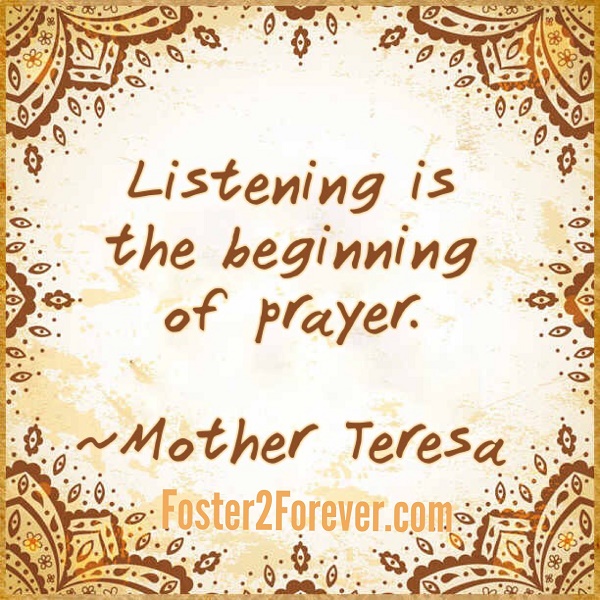
Listening is the beginning of prayer. Mother Teresa quote

12:12 pm by Penelope

Win an Adoption Ornament from Hallmark {giveaway}

CONGRATULATIONS ON ALL THE ADOPTIONS THAT FINALIZED IN 2014!!
Thank you for providing forever homes!!! As a special THANK YOU, I’m giving away 3 special Hallmark ornaments to commemorate this special year for your family!

Born-In-Our-Hearts-Adoption_ornament-giveaway-2014-win

GIVEAWAY OVER!! Congratulations to Tammy, Becca & Emily!!!

Looking for something?

Facebook

Foster2Forever

Archives

Why Every Foster Parent Needs Sexual Abuse Training

foster care visitation rules guidelines online

10 Tips for Foster Care Visitation Online

foster-income-taxable

Is Foster Income Taxable? What Foster Parents Should Know About Income Tax

Why Every Foster Parent Needs Sexual Abuse Training

I’m Clever

Sway

Pretty Chic Theme By: Pretty Darn Cute Design