Foster2Forever

  • Home
  • Shop
  • Fostering & Adoption
    • Foster Care
      • Being a Foster Home
      • Birthfamilies
      • Case Workers
      • Concerns
      • Court Hearings
    • Adoption
      • Parenting Tips for After Adoption
      • Benefits
      • Costs
      • Infertility
      • Parental Rights
  • Parenting
    • 31 Tips for Parenting After Adoption
    • Behavior Issues
    • Children’s Activities
    • Family Time
    • Motherhood
  • Our Home Life
    • Cancer & Health
    • Recipes
    • Marriage
    • Family Travel
    • Videos
  • Join Our Community
  • Our Family
  • Contact
  • Privacy Policy

Archives for March 2012

9:00 am by Penelope

Fostering Special Needs – Could You Do It?

We began fostering almost 4 years ago, and I often think about that first checklist we filled out, indicating what type of child we would care for that included race, age, and special needs. I am not sure if any of the children we have fostered have fit  what I thought I could care for. I am so glad that God had a different plan for us.

My journey as a “special needs” foster parent began with our 4th foster placement. I had no idea what I was taking on. He was a “shaken baby” with the possibility of seizures.    I’d had no training on special needs.   While we had him, his health continued to deteriorate. He had a long hospital stay, a feeding tube was placed, and the hospital provided me with all the training I needed.  I think about how God worked in that situation, teaching me every step of the way, as his special needs gradually got greater. It was also during this time that  I learned that our other foster son (now our adopted son) had Fetal Alcohol Syndrome.  That has brought on an entirely different type of parenting, but that is also a lifetime of special needs.
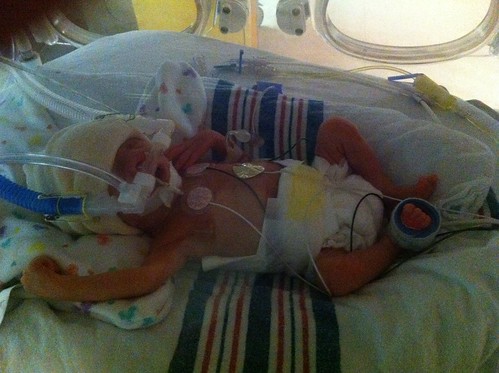
Owen- Special Needs Foster Care

Our foster daughter that we have now also had special needs. I thank God everyday that I was able to learn how to care for her, so that I could confidently say “YES” when they called me to take her. She had already been in 2 placements, and they couldn’t find anyone else to take her that would take on a feeding tube.  She is actually one of the easiest babies I have ever cared for, and we love her dearly.

I had no special training when we were opening our home, our license isn’t different, and most of my training has just come from experience.  The state will adjust their board payment depending on the level of a child’s special needs and the amount of extra care they need (although not automatically, you do have to often ask).  I now see that almost all foster children have “special needs” that you just learn as you go.

As far as medical special needs go, they can often times be easier to care for than behavior challenges. We do have a lot of doctor appointments, so it is nice that I do not have to work outside the home.  I think it is still doable, and your caseworkers can help with this if you do work.  My foster daughter’s biggest challenge is a feeding tube, and once I learned how to do it, it is just as easy as feeding her with a bottle, just different.  Hospitals and doctors will gladly teach someone how to do it.   The medical professionals we have worked with have been so helpful and so grateful to me for caring her her.

So often, my prayers include a prayer of “Thanks” to God for giving me the knowledge to know how to care for her, because she is such a precious little girl.
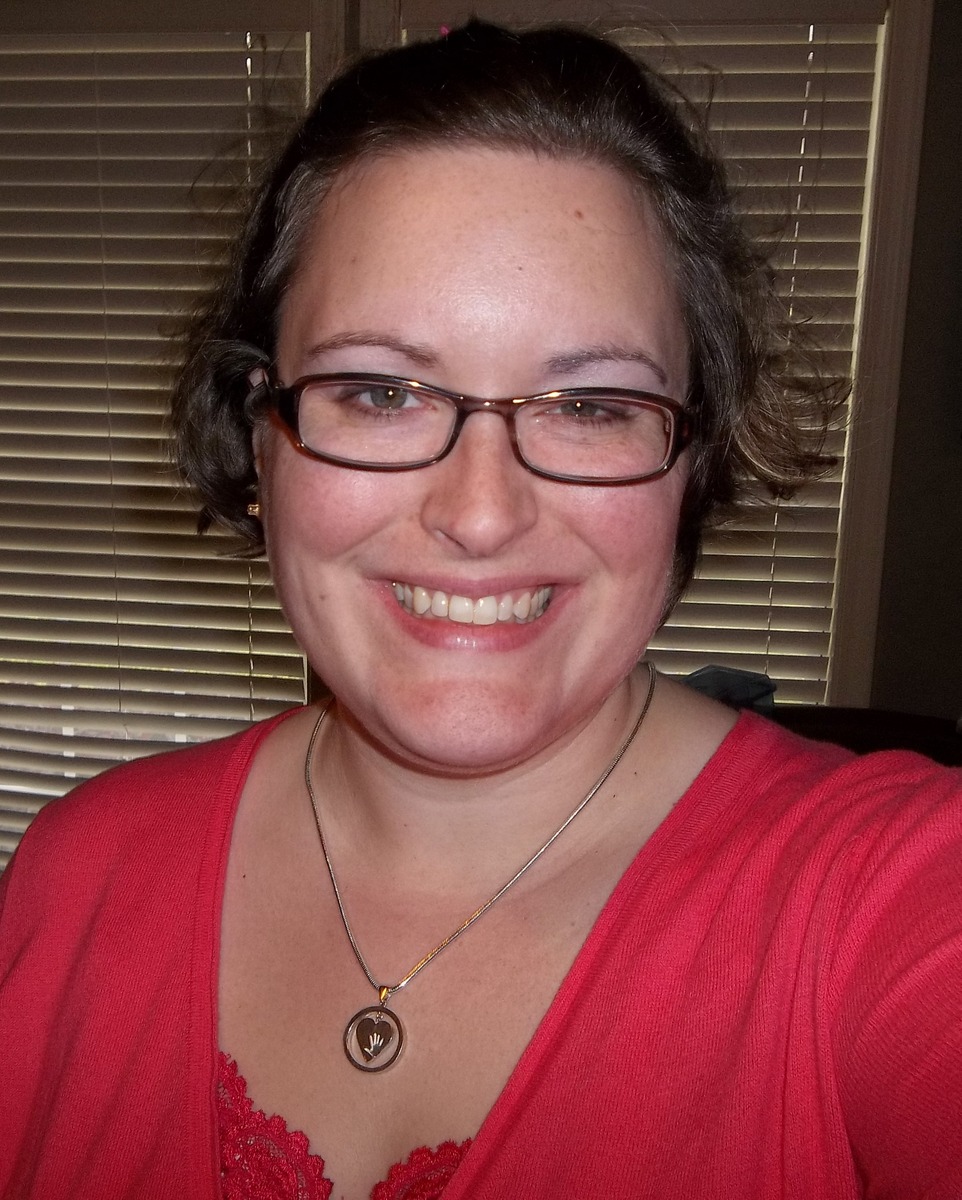
Special Needs Adoption Through Foster CareMaury has been married for 12 years and has 6 children – biological, adopted, and foster.  She and her husband have been fostering for  years, but her journey began over 5 years when she started working with the Heart Gallery, photographing children waiting to be adopted. She shares her journey at Counting My Blessings.
9:00 am by Penelope

Don’t Neglect You: Review of Shield

I have been cancer-free for over seven years now; however, I now have a biopsy scheduled for Friday.  How can this be?  The honest truth is that I neglected me. In the craziness of appointments for my children, I failed to make my annual follow-up appointments.

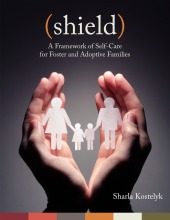
Compassion-fatique-tipsIn November, Sharla Kostelyk sent me a copy of her book, Shield: A Framework of Self-Care for Foster and Adoptive Families. Shield is a book that encourages self-care for foster and adoptive parents from the very beginning of parenthood.  While reading, I realized – “I have to make my health a priority in order to properly care for my children.”

It’s ironic, considering that last August I wrote about this very topic in regard to dealing with Secondary Traumatic Stress otherwise known as Compassion Fatigue.

Foster care and adoptive parents are especially vulnerable due to the additional stresses of caring for traumatized children.  This book offers practical, encouraging advice for those in any part of the journey of foster care or adoption.

The book encourages families to build a support system and prepare even before your first placement.

The first step is education. “Arming yourself with knowledge about attachment, the stages of grief, fostering, adoption, the effects of malnutrition on the developing brain, or various types of special needs such as Fetal Alcohol Spectrum Disorder (FASD) and Sensory Processing Disorder (SPD).”

I wish I would have spent more time reading about attachment before we received our Stinkpot. I should have taken Family Medical Leave the day he arrived.  Throwing him into daycare quickly was not what our neglected 8-month-old baby boy needed.

Finding fostering and adoption support groups and attending before you get placements will help you in being prepared. The bonus is being able to discuss hair care and attachment with other moms.

In this book, Sharla compares life as an adoptive or foster family to a hospital triage situation.

“Your attention goes to whatever is absolutely critical and everything else, including taking care of yourself, falls to the wayside.” How true!

Triage is dangerous because you can only react and there is no self-care. When you are feeling overwhelmed that you’re not meeting the needs of kids – You need help and self-care!

To avoid depression and burnout, this book lays out 12 Steps to Survive Triage.

Shield encourages on-going self-care and using humor to combat stress and elevate the level of joy in your home.

The final takeaway for me was: “Cherish the gifts that your child possesses instead of focusing on the challenges.”

I found this book extremely practical to encourage me to take care of me. You can purchase the Shield e-book for only $2.99 through Amazon or directly through Sharla’s secure website.

Fortunately, the biopsy scheduled for Friday is, in fact, a precautionary measure. All my other tests have shown good results. Thanks, Sharla! My story could have been different.

Are you neglecting you?

UPDATE: I am cancer free!!!

9:00 am by Penelope

Adding Foster Children to Your Family: How Will Your Kids Take It?

“What was it like growing up with foster siblings in your home?”

This is the question that I am most frequently asked, whether it is by peers who have heard media-influenced foster care stories, or by families who are seeking to become foster parents while still raising biological children. When people ask me this question, it always catches me off guard, mainly because it is incredibly hard to describe such a major part of a childhood that seemed perfectly normal to me. It is equally hard to think of what my life would have looked like had I not grown up with foster siblings. For me, babies and toddlers came and went on a regular basis. It was hard at times and it was fun at times, but regardless, it was normal to me. We received our first foster placement two weeks before my 8th birthday, and adopted my last two siblings a month after my 18th birthday. Needless to say, foster care has impacted me in profound ways.


As I have sought to answer this question, my mind always wanders back to that early October night when I was 7-years-old, watching a caseworker hand our first foster placement over to my parents. I remember looking into the big, brown eyes of a severely abused infant and understanding for the first time the reality of the hurt that is in our world.

Those first few moments with that baby are locked into my memory as tightly and securely as a 7-year-old can remember. As I innocently questioned “why” a parent would hurt his child, I was opened up to a whole new world that involved evil my mind had never known.

Through the next several years, as babies and toddlers passed through our home, there were many censored discussions of drugs, sex, alcohol, and neglect. I appreciate that my parents protected my innocence, while still valuing that I loved my foster siblings with a sincere love and desired to know each one of their stories. As I watched my foster siblings flourish in our home and saw the hurt they endured, there was a deeper level of compassion and understanding that slowly began to resonate inside of me.

I played with the kids and accepted each one as my sibling; I took pride in showing off each baby to my friends; I made silly faces while feeding the infants mushy rice cereal; I learned the art of washing a baby bottle, changing a diaper, and bathing a baby; I browsed the baby aisle with my mom, begging her to buy “just one more cute outfit”; I sat in my room and sobbed, after saying goodbye to a child I loved dearly.

So maybe my childhood was different from yours. In fact, it probably was. My family grew and then shrunk again on a regular basis and the family calendar was filled with court dates, parent visits, and caseworker meetings.

However, the uniqueness of my family dynamics did not affect me negatively or ruin me as a person, as is the common myth. Yes, I saw and understood injustice from a young age and I struggled with the evil I saw, but I also learned a million lessons and developed attributes that I believe I would not have today, had my parents chosen to keep the doors of our home closed.

For those lessons, for my sweet foster siblings, and for my parent’s willingness, I am thankful.

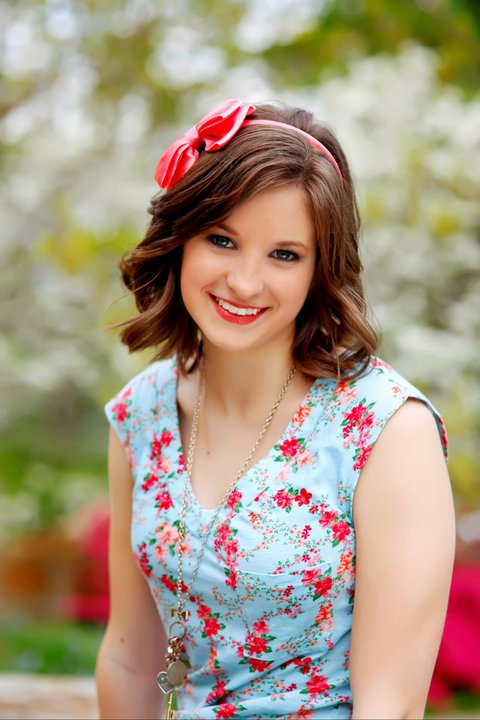
Learning to AbandonKylee is a 19-year-old college student who is passionately pursuing a degree in Social Work while simultaneously learning what it means to be a big sister to kids from “hard places”. Her parents jumped into the crazy world of foster care just days before her 8th birthday and cared for numerous infants and toddlers over a ten-year time span; four of those children became permanent family members through adoption. Kylee loves sharing about foster care and adoption and is passionate about advocating on behalf of vulnerable children.

9:00 am by Penelope

Lil Bit’s Baby Brother – Isn’t He More than Just a Check?

If you follow on Facebook and Twitter, you know that we had the incredible blessing of meeting Lil Bit’s precious 4-month-old baby brother this weekend! Remember him? Remember 2 days before Lil Bit’s adoption, we received a placement call to foster this newborn brother being released from the hospital?

A decision that tore me up inside when we declined.  Worry consumed me until we discovered that Baby Brother had been placed in a home anxiously awaiting an infant for adoptive placement.

This weekend, we inadvertently enrolled in the same training class with Baby Brother’s foster mom.  Baby Brother looks like his older brother – and just as cuddly and sweet.  He is blessed to have a family that loves him.

However, our boys have half-siblings that aren’t as lucky.  Those other siblings were placed with a “friend” of the birthmother.  Remember the Cons, that were determined to take Lil Bit, since all it would cost them was a “shiny, new cell phone.”  Still determined to add to their “family”, they have been wining & dining birthmom at the Golden Corral.

All the previous children have been labeled as “disabled” so that the Cons can demand larger subsidy checks. The children are all encouraged to perform poorly in school.  It breaks my heart for these children that can only live up to their “disability”.

During our case, CPS adamantly opposed placement with the Cons; however, they flip-flopped their position in Baby Brother’s case.

The CPS policy of “family first” had them attempting multiple times to remove Baby Brother from a loving home to a placement with his half-siblings. Even though his half-siblings are in an uncaring environment, used only for a check.

The good news is that Baby Brother is staying put – TPR is complete – and adoption is the plan.

And the other big news is…

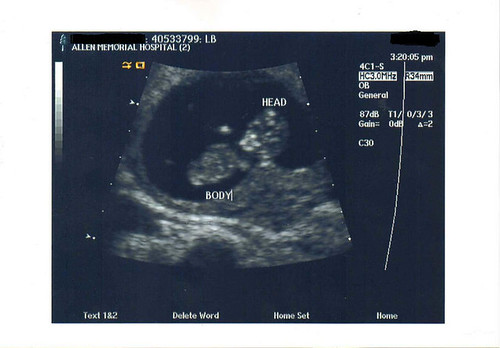
ultrasound

Not me….Birthmother….again!!!

9:00 am by Penelope

Cleaning House: Confessions of a Neurotic Foster Mom

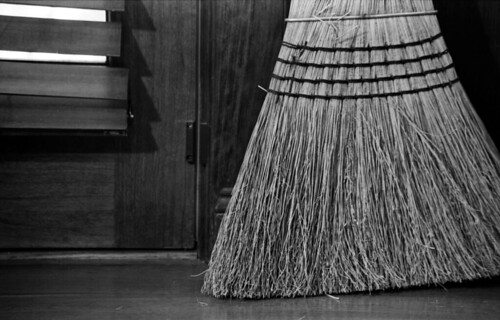
Dust My Broom

Photo by Michael Goodin

Ok, I admit it. I am not a great housekeeper. I try. I really do, but I’m just not that good at it. Now don’t get me wrong. My home isn’t a huge mess but it’s never quite clean either. It seems like by the time I get done cleaning one room all the rest have started to get messed up again. When we decided to become foster parents this was a source of great anxiety for me. We had workers coming and going every month and I had this idea that they expected my house to be spotless. I feared that if they happened to come by one day and saw dirty dishes in my sink that they would try to take the kiddos away.

This is how it would usually go down. One of our social workers would call and ask if they could come by later that afternoon. I would say, “Of Course!” because I didn’t want them to think I was ever not ready for a visit. Then I would clean nonstop until time for their visit. I would clean until my home was unnaturally clean for a home with children. Then the social worker would come by, we’d have a great visit, and once she left I’d sigh with relief that I managed to get everything done.

Then one day it happened. We had a surprise visit. At 8am I hear a knock at the door. I panic as I look around and see the breakfast dishes still on the table, toys all over the place, and my floor not vacuumed. There was nothing I could do but let her in. Believe it or not she didn’t even mention the condition of my house. As she was getting ready to leave I apologized for what a mess the house was and she said,”Honey, your house looks fine. I was starting to wonder if the kids actually stayed here. It always looks too clean for a house with four children.” At that moment I realized the obvious. They know I’m human. They know that I have four kiddos and that some of those kiddos are coming from hard places. They don’t care if my house is spotless. They only care that it’s safe and filled with love for these kiddos. I’ve got that covered.

So, if you are considering foster care but are worried because you’re aren’t exactly a Martha Stewart type, put those fears aside. I may not be the perfect mom but my kiddos love me and to them I’m good enough.

transracial-foster-care-adoptionBecky Johnson is a happy wife and proud mommy of four, both by birth and foster care adoption. Because two of her adoptions have been transracial, her family often gets mistaken for a daycare or church group when out in public. Life in the Johnson home is fun, chaotic, and definitely blessed. Read more about Becky’s family at http://averyblessedmommy.blogspot.com

9:00 am by Penelope

Did She Drink When She Was Pregnant?

My nine-year-old daughter, GB, is diagnosed with Bipolar Disorder, Autism, and Fetal Alcohol Spectrum Disorder (FASD). The Bipolar is well controlled with medication. I honestly am not sure about Autism… Autism and FASD have a lot of similarities. I am sure of the FASD. So far, FASD seems to have the most challenges.

What is FASD?

FASD is described as a number of different physical, neurological and mental birth defects caused by a woman’s consumption of alcohol during pregnancy.

First Signs of FASD

GB’s birth was far from ideal. Although her birth weight was good, the birth was difficult. Her APGAR scores were 6/6 and she was transferred to a NICU about an hour from me. Her breathing improved, but she had a very weak suck. They put a clean white diaper under her chin and after every feeding, weighed the diaper to determine how much formula she had actually consumed. Weak suck is one of the first signs of FASD.

When she was released, she went home to two mentally ill parents and was severely neglected for almost six months. When her parents abandoned her, my husband and I took over. GB never smiled. She couldn’t hold her bottle, and formula still leaked out the sides of her mouth. She never cooed, she never babbled. She was silent or screeching. She made no eye contact, except with me. She was up four or five times a night, every night. Children with FASD are at high risk for attachment problems.

GB started receiving Early Childhood Intervention Services when she was seven months old. She received Occupational Therapy, Speech Therapy, and Special Education Services, for a total of 7 services a week. After a few months, the ECI people met with me. They wanted me to know that GB was unable to generalize and had fixations. Examples they used were once they taught GB to “pretend” a red rectangular block was a phone, she then could not use any red rectangular blocks as anything but a phone. She would also not use any other kind of block as a phone. When they taught her how to build a tower of ABC blocks, she could not build one using colored cubes. They suggested I visit a neurologist.

Physical Features of FASD

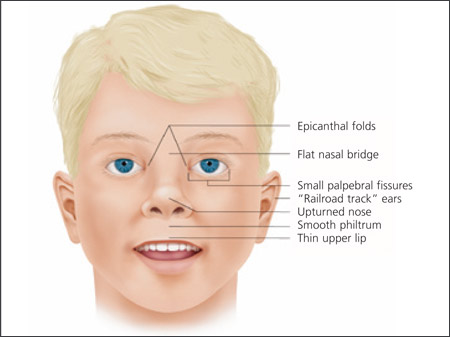
GB was diagnosed with FASD before her first birthday. She had the Fetal Alcohol features. Small eyes, smooth philtrum, and a thin upper lip. Over all, GB’s facial features were more pronounced than 97% of children diagnosed with FASD.

Photo courtesy AAFP

Sensory Issues of FASD

GB had many fetishes each of which lasted a long time. A bubble wand, a specific pencil, sunglasses, cutting up white paper into little scraps. Any interference in these activities resulted in a melt down. GB couldn’t deal with loud noise, cold weather, or large groups of people. Years of therapy have made this better. Sensory struggles are also common in children with FASD.

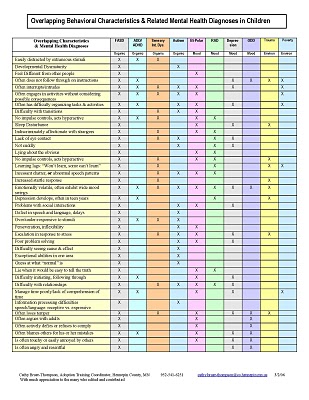
As a child gets older, FASD can mimic many other disorders.

Overlapping Characteristics of FASD –                      Click on the image to see full chart

It is critical that the right help is found for the child as early as possible.

Although GB still struggles, I can’t imagine where she would be today if she hadn’t received so much early intervention.

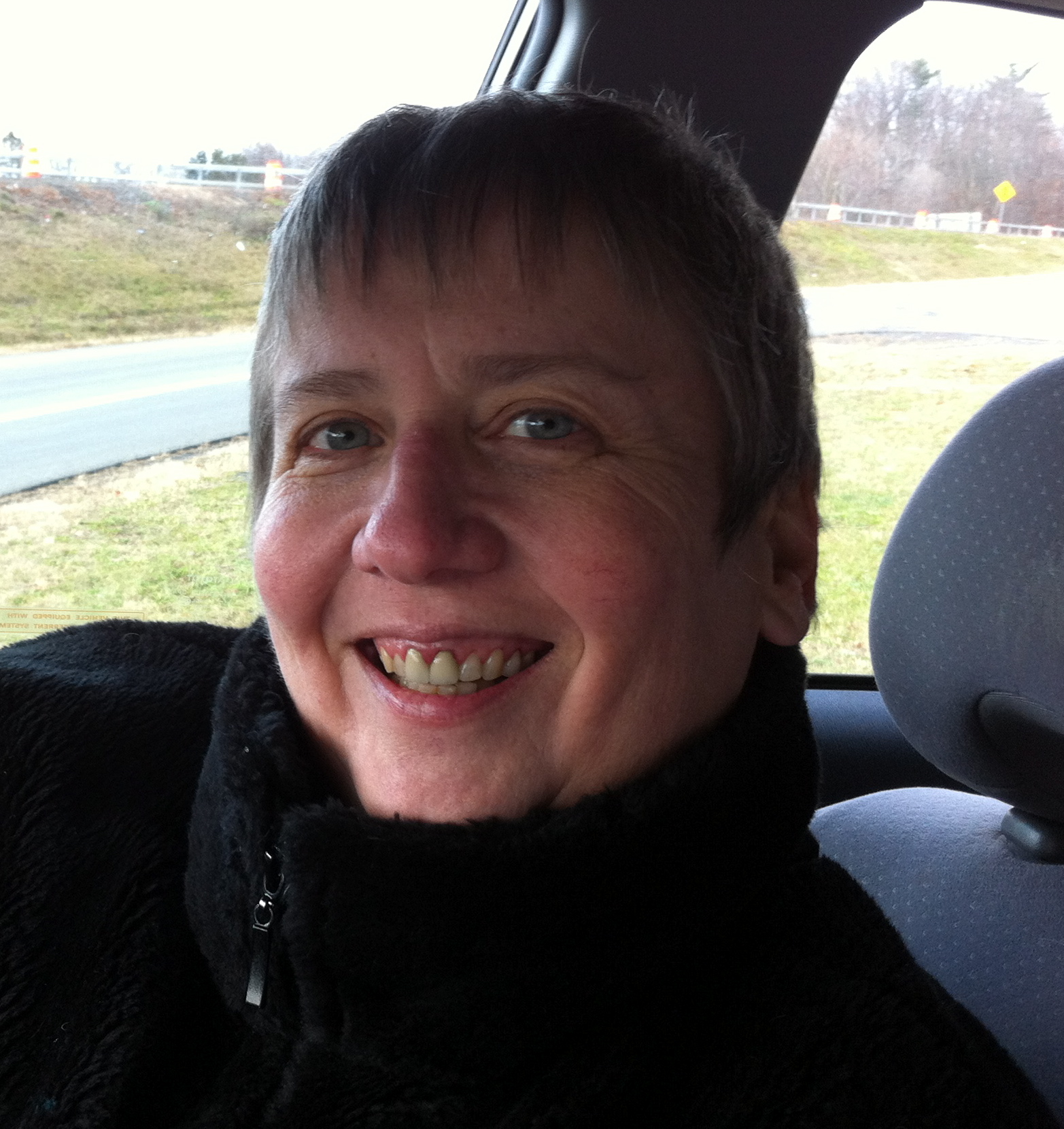
GBsMom is 55 years old and working on a PhD in Educational Psychology. She has been an adoptive and foster mother for over 30 years. Most of her kids have been some combination of Bipolar, FASD, RAD, ADHD. She has been married for 35 years and is raising her second family, GB, 9, and Hope, 6. She blogs about her life at Adopting Special Needs.

9:00 am by Penelope

My Confession: Growing Up in Poverty

I grew up poor! 

My childhood home was little more than a leaky-roofed shack. The hole in the sunken dining room floor occasionally permitted various animals, such as possums, to take up residence in our Texas home at night.

But did I really know poverty?

The hand-me-down clothes that were new to me and made me feel proud caused classmates to ridicule me.

But did I really know poverty?

I have recently been moved while reading Kisses from Katie, the incredible story of a 2007 high school graduate who is changing lives for orphaned children in Uganda (she adopted 14 of them). The poverty in Africa is nothing that I can fathom. I grew up in poverty by United States standards, but certainly not by worldwide standards.

In Africa, poverty and HIV are a way of life.  HIV is epidemic in most African countries – over 15% of the adult population of South African countries is infected. The epidemic is partially due to the poverty – many women and children become involved in sex work in order to live and eat. Another factor for the epidemic is the culturally-accepted practice of polygamy and domestic abuse (1). Violence, coerced sex, and rape is rampant – 1 in 4 South African women are raped (2).

In Africa, due to the lack of medical care, HIV is a death sentence. Many children are orphaned at a young age.

But there is a way out!

Let’s say you’re an African child growing up in poverty. A church nearby your home announces that they have partnered with Compassion International and because of this partnership, if you are registered in the program, you will receive benefits that were never before available to you. Benefits like:

  • educational opportunities
  • health care and health-related instruction
  • nutrition
  • life-skills training

And opportunities to hear about and respond to the gospel!

It’s all very exciting so you get registered at the local church. The church volunteers gather information about you and your family and take your picture. You’re officially registered!

You now have all the financial benefits of this program but there’s more! You are going to be connected to one sponsor. You just have to wait for someone to sponsor you.

And for some children, they wait and wait and wait…

My heart is with these African children waiting for 6 months or longer for someone to sponsor them, especially the boys. If a boy’s heart is changed, will he continue the cycle of polygamy and violence against women that fuels the spread of HIV?

Maybe our family can make a difference in the life of 11-year-old Ghana boy, Godfred? Or 12-year-old, Mugisha in Rwanda? Can your family make a difference?

I didn’t really know poverty.

Although just a little more than a shack, I was in a home with running water.

Although I didn’t wear Nike shoes or Calvin Klein jeans, I had clothing.

Although much of it from a garden and fruit trees, I had food in my belly each night.

Although the color of silver, my molars are still in place to chew food.

Although there is a scarred indentation on my left bicep, it is a permanent reminder that I cannot die from smallpox.

I didn’t know poverty.

Sponsor a Waiting Child from Compassion International on Vimeo.

9:25 am by Penelope

What if We’d Said No?

We started out, like many couples, looking into foster care after severe (secondary) infertility.  Our dreams of having a large family had been crushed by the heavy weight infertility can bring.  We wanted more children.  We wanted our son to have siblings.  We had very self-centered motives.

So we looked into all avenues of adoption.  We quickly ruled out international.  We considered domestic infant adoption, though the cost was prohibitive or at least made us consider doing IVF first.  We explored foster-to-adopt programs through our state and though the financial impact was substantially less, we struggled with how the revolving door of foster care would impact our family.  Eventually, after talking with various friends who’d pursued adoption, primarily through foster care, we decided to become a licensed foster/adopt home through the state – willing to take legal risk placements but only “once or twice” before we turned to straight adoption.

Our lives and hearts have been changed.

Our foster care license was approved two years ago (today!).  It took 19 more days before were notified and 7 more before a sweet boy and girl came through our door.  I remember I’d chosen to stay home from work for a day adjust and find daycare, doctors, etc.  I remember sitting there at dinner that night with an empty plate, having not made enough dinner for 5 as I was used to cooking for 3, thinking about how there was no way I could go back to work.  I was in love with these children – all of them.  It was apparent that caring for these children, whether I birthed them or not, was a great calling and wonderful blessing.

I did go back to work but arranged to work from home so I could transport the kids to visits.  It wasn’t long before I met my first “birth family” – mom, dad, grandparents, and more.  I was able to calm their fears and encourage them.  I was able to tell them that their children were safe and well-cared for and loved in our home.  I was able to see how much they loved their children and yet struggle with certain demons.  By the end of that visit I knew we’d not only been called to care for children who needed a home, short- or long-term but also to minister to families who were struggling and needed help.  By the end of that visit the parents had chosen to keep their children with us instead of moving to relatives.  What an honor!

Those kiddos left after 8 weeks to move in with their grandparents and later moved into a different adoptive home.  We too have moved on – in the past 2 years we’ve fostered 10 children and were privileged to adopt our beautiful daughter.  We’ve had a wide variety of kids. And many, many memories.  We’ve seen children reunified successfully and parents who lost custody.  We’ve seen relatives step in to help and some show tough love.  We’ve seen heartache and misery but also great joy and celebration.

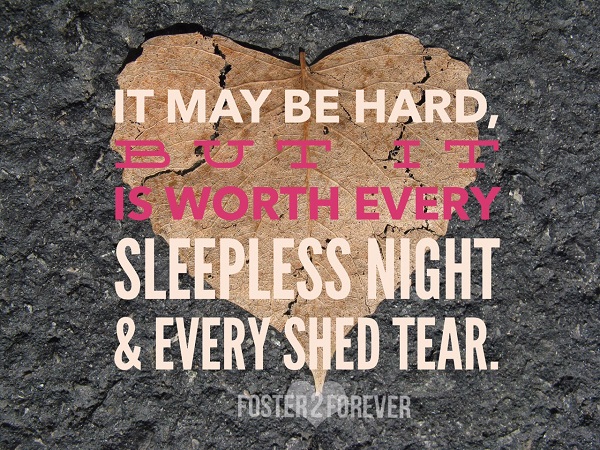
One of the most popular things foster parents hear from those who’ve not walked in our shoes is something along the lines of “I couldn’t do that.  It would be too hard to love them and let them go”.  Having once been in those shoes, having said those same words, I now stand here with a radically different worldview knowing without a shadow of a doubt that though it may be hard it is well worth every sleepless night and every shed tear.  We love children and families who need extra love and support.  We help mentor others who think they might want to foster or adopt.  We are a real-life example of a normal family doing something the world sees as extraordinary.

Sometimes we step back and ask ourselves – what if we too had said no?

foster-parenting-challenges


Foster-momMarie (a.k.a Mie) is primary blogger at LettingGoOfMie where she writes about her journey through life as a mama, foster mama, and Ph.D. student.  She’s given birth to a boy, adopted a girl, and has fostered 9 other children in 2 years.  Life has taught her that it can be more than ever imagined, if she’d only learn to let go of herself and trust her Creator…

Looking for something?

Facebook

Foster2Forever

Archives

Why Every Foster Parent Needs Sexual Abuse Training

foster care visitation rules guidelines online

10 Tips for Foster Care Visitation Online

foster-income-taxable

Is Foster Income Taxable? What Foster Parents Should Know About Income Tax

Why Every Foster Parent Needs Sexual Abuse Training

I’m Clever

Sway

Pretty Chic Theme By: Pretty Darn Cute Design