Foster2Forever

  • Home
  • Shop
  • Fostering & Adoption
    • Foster Care
      • Being a Foster Home
      • Birthfamilies
      • Case Workers
      • Concerns
      • Court Hearings
    • Adoption
      • Parenting Tips for After Adoption
      • Benefits
      • Costs
      • Infertility
      • Parental Rights
  • Parenting
    • 31 Tips for Parenting After Adoption
    • Behavior Issues
    • Children’s Activities
    • Family Time
    • Motherhood
  • Our Home Life
    • Cancer & Health
    • Recipes
    • Marriage
    • Family Travel
    • Videos
  • Join Our Community
  • Our Family
  • Contact
  • Privacy Policy

6:41 am by Penelope

This Foster Youth Aged Out to a Life of Crime and Addiction

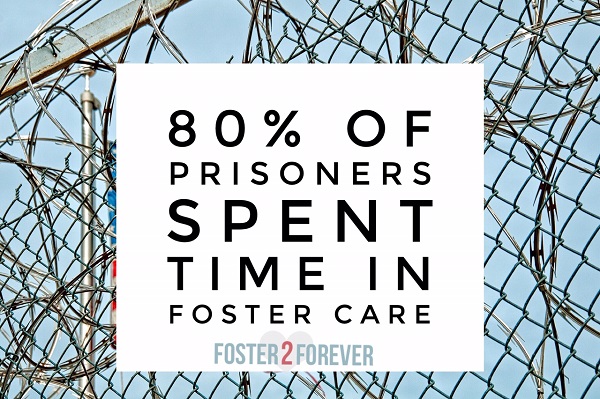
One in five youth aging out of foster care will become homeless immediately. [1]  Up to half of youth aging out of foster care will become homeless within 18 months.  One in four youth aging out of foster care will be in prison within two years. [2] 

This is the true story of one of these… 

Entering the Foster Care System

When I was just three-years-old, Rhode Island Department of Children, Youth, and Families came and took custody my sister. Then, my biological mother, in a desperate attempt to keep me from also being taken from her, kidnapped me and fled to the state of New York.  During this period of “being on the run” I have several memories where I questioned what was actually going on in my life.

My earliest memories are of watching my biological mother snort cocaine off a chest freezer. I remember being handcuffed and locked in a closet. Then there’s the memory of being dropped off at a foster home.

I spent the next fifteen-plus years of my life trying to make sense of all this trauma. My way of making sense of it was to create stories to ease the confusion of what was actually happening. I created so, so many stories about who I was as a result of the trauma I had no control over.

“This happened, and as a result of this happening I am__________.”

Moving Through the Foster Care System

With each trauma and each move, my confusion increased, as did my anger and outbursts.

As time went on, I just wanted to shut off the confusion and pain of my past. By age 11, I started smoking marijuana to dull the pain. However, as my rebellious behavior escalated, the courts became involved, and placed me in my first of many institutions.

All this did was escalate my pain and confusion. All my acting out was my attempt to end my constant need to make sense of my life.

Turning to Drugs and Crime

After aging out of foster care, I began using drugs and alcohol on a daily basis, and became heavily involved in criminal activity to support my addiction. I was homeless for 4 years, and spent 7 years of my young life incarcerated. This lifestyle isolated me from any and all of my relationships.

On August 23, 2007, I was released from the New Hampshire State Prison where I had just served a two-year sentence for burglary charges.

Although I came out of prison sober, I was more confused than ever before, and overwhelmed with hopelessness.
youth-aging-out-of-foster-care

Rehab and Transformation

The court ordered me into yet another institution for drug and alcohol rehabilitation.

This is where my entire life finally changed.

Here is where I met my mentor, Rob. Rob agreed to guide me through my recovery journey, and show me how he had broken free from his addiction.

However, I did not think recovery would work for me, because I did not know any other way to survive. I had been playing the victim of my circumstances for so long.

In our first meeting, Rob asked me to tell him my life story. I shared the most painful events of my life. I retold how my biological mom had kidnapped me, how she had burned me with cigarettes, handcuffed me and locked me in a closet, about being placed in foster care, and then institutionalized……. And so on and so on.

Rob listened respectfully and when I finished talking, he said:

“It has to be really hard for you to be living in a 21-year-old body, but emotionally stuck as a 7-year-old.”

This revelation stopped me in my tracks. That is the moment that I began my 12-plus year obsession with transformational change.

My most recent book Embrace Your Past Win Your Future details my life and exactly how I changed my mindset from being a victim to embracing all I’ve overcome in my past.

Today, I don’t believe anything happened TO me. I believe that everything happened FOR me.
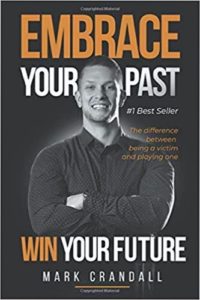
Mark Crandall, LMSW, LCDC, is a motivational speaker, clinical interventionist, and the host of Purpose Chasers Podcast. Mark went from a lost boy with countless traumatic experiences to drug addiction, prison, and an undying self-hatred to building multiple a highly sought after motivational speaker, transformational life and business coach.  His book, Embrace Your Past Win Your Future, shares his page-turning story of enduring childhood abuse, trauma, drug addiction, homelessness, and years of incarceration, and how Mark learned to turn his victimhood into victory.  
10:00 am by Penelope

12 Tips for Fostering a Special Needs Child

Michelle’s Story of Fostering a Special Needs Child

At my first fostering information session, I was told all foster children have special needs. If you think about it, it makes sense when you consider that a child does not go into foster care if they are living in a nurturing environment with caring parents or guardians.

Down the road and a few fostering placements later, I would learn what special needs really meant. Ryan came into our home at day 2 of his life. He was a drug-exposed newborn experiencing crystal meth withdrawal. My husband and I were not familiar with drug-exposed infants nor were we looking to adopt.

As mother of two and a certified childhood developmental specialist, I have worked with children with special needs, rare medical conditions, etc.  Ryan, on the other hand, was this fragile newborn in our home – struggling just to wake up.  As time passed and Ryan became more aware, red flags started to appear.

Soon after, visits started with medical specialists, including a pediatric cardiologist, pediatric eye doctor, pediatric neurologist and endless appointments with his pediatrician.  It was difficult to manage all of these appointments while maintaining normal schedules for my other children and a relationship with my husband.

Ryan is a now an 18-month old thriving toddler with epilepsy, cerebral palsy, and eye problems.

This past year and a half has not been easy with all of his medical appointments, social worker appointments, dealing with seizures, therapies, etc. but somehow we survived – some days by a miracle, but we did, in fact, make it through.

Our biggest frustration through all this has been social workers who did not understand the issues of our special needs child, or trying to get a court order for medical care, or trying to get alternative care for our son.

fostering-special-needs-child


Here are some tips that helped my husband and I through this journey:

12 Tips for Fostering a Special Needs Child

  1. Document and keep copies of everything!
  2. Find your voice as your child’s foster parent and advocate for your child,
  3. Establish rapport with social workers, doctors, therapists and your child’s attorney,
  4. If your child is receiving therapy, ask for the goals and the steps for achieving them,
  5. Educate social workers if they are unsure about your child’s condition and what it takes to care for your child dealing with these issues,
  6. Find respite care – find out what is available to you through the state and county foster agency or with friends or family that can come help an hour or two a week,
  7. Build your support network,
  8. Consider alternative approaches that might help your child – do not assume the county will say no. (For example, we strongly believed that Ryan needed chiropractic care which is usually not considered for foster children in California.  By getting Ryan’s social worker and lawyer involved and battling for months, we were finally granted an order from the judge to allow this care. The chiropractor was amazed that we had accomplished this.),
  9. Through all the ups and down, enjoy your child in the present. The past in the past, the future is unknown, and all we have is the present.
  10. Get down on your child’s level, play with them, pay attention to them uninterrupted whether it’s 5 minutes a day or more.
  11. Communicate with your partner, stay in touch, communicate your family’s needs, your needs, and find out their needs. Help each other find self-care that works for you,
  12. Research the adoption subsidy for special needs children in your state. A great starting place is the North American Council on Adoptable Children (NACAC.org). You can search by state and they typically have contact information for the state subsidy person information and the NACAC Subsidy representative.


fostering-special-needsMichelle Ludwig is a licensed foster parent, patiently waiting for the adoption of Ryan to be finalized. She holds a master’s degree in Child Life in Family Centered Care from Wheelock College in Boston, MA.

6:00 am by Penelope

Free Online Foster Care Training!

Studies have shown that children in foster care are more than 13 times more likely to be prescribed psychotropic medications than the general population.

Regulations in the State of Texas require that before foster parents can give psychotropic medications to children in care, they must receive training on:

  • Identification of psychotropic medications;
  • Basic pharmacology including the actions and side effects of, and possible reactions to various psychotropic medications;
  • Policies and procedures on administering medication;
  • Who may legally consent to using psychotropic medications for children in foster care.

This foster parent training is required annually.

As you probably know, getting to a training class can be a challenge when you have a houseful of kids.

I’m excited that the State of Texas removed that issue by offering online free training on psychotropic medications!!!

This online training meets the expectations of the regulations for the safe and effective use of psychotropic medications by children in foster care.

In order to receive credit for the online training, you must:

  • Complete the whole training.
  • Make at least a 70% on the post-test.
  • Print the Certificate of Completion of Psychotropic Medication Training at the end of the training. (or screenshot if on mobile)
  • Provide a copy of the Certificate of Completion of Psychotropic Medication Training to your child-placing agency or residential operation.

This free online training is expected to take 2 hours – ug! – but at least you can complete the course on your schedule.

Difficult Behaviors Training

Are you a foster parent struggling with difficult behaviors caused by trauma? Not sure how to handle defiance, tantrums, lying, stealing, food hoarding?  Foster parents will get practical tools in managing behaviors in this free online foster parent training.

Free Online Adoption Conference

This is an online conference for foster and adoptive parents with a focus on Healing Trauma And Responding to Trauma (HEART). The conference sessions are free to watch during the conference dates.

If you are a temporary parent to traumatized children, and are trying to provide stability and make a difference in children’s lives, if only for a short time. You are in the trenches of parenting trauma.  This event will help you in developing strategies to effectively parent through trauma!


7:51 am by Penelope

What Every Parent Should Know About “Bath Salts”

On Memorial Day weekend, a story broke on the national news that could have been from a B-grade horror flick.  A zombie man assaulted a homeless man, and in a cannibalistic attack — ate his face!  The attacker had been described as a zombie because he was high on “bath salts“.

What are “Bath Salts”?

Bath salts are referred to as drugs consisting of any of these synthetic stimulants:  Mephedrone, Methylone, or Methylenedioxypyrovalerone (MDPV). (1)  On the street, bath salts are also called “bath powder”, “herbal incense”, or “plant food.” (2)

How Do “Bath Salts” Work in the Body?

To understand what the drug does, think of “bath salts” as a cross between meth and acid. Like cocaine, meth, and speed, bath salts work by stimulating the central nervous system, kicking it into overdrive, if you will. But the drug is also seriously hallucinogenic, like LSD. (2)

How Does One Take “Bath Salts”?

Bath salts can be smoked, snorted, or injected. (2)

Why Would One Get High on “Bath Salts”?

The initial symptoms are positive, including relaxation, euphoria, and a sense of warmth and wellbeing similar to Ecstasy. (2)

What are the Side Effects of “Bath Salts”?

Agitation, paranoia, hallucinations, chest pain, suicidality. It’s a very scary stimulant that is out there. as severe agitated behavior, like an amphetamine overdose, has occurred. A second concern is the ongoing suicidality in these patients, even after the stimulatory effects of the drugs have worn off. (1)

Bath salts can trigger a full-blown psychotic episode with extreme delusions and are highly addictive. (2)

How Does One Find “Bath Salts”?

Bath salts are very easy to get hold of. They’re sold online, in “head shops” all over the country and even behind the counters in many convenience stores. Bath salts come in little packets with soothing names like “Blue Silk”, “Bliss,” “Vanilla Sky,” and “Ivory Wave,” and cost just $25-60 a packet. (2)

Are “Bath Salts” Illegal?

U.S. Drug Enforcement Administration (DEA) finally made the possession and sale of three of the chemicals commonly used to make bath salts illegal in October 2011. The ban is effective for at least a year. (1) However, with this latest high profile news story, the ban will probably become permanent.

Have you liked Foster2Forever’s Facebook page?

10:00 am by Penelope

What Do You Tell Kids About Their Past?


This week, I received a question from a reader that applies to nearly every adoptive family in the foster care community. How much do you share with your children about the reasons they are adopted?

Here is an excerpt from the message I received:

Hi there! We have recently completed our first adoption of a 3-year-old child. They came to us through foster care 10 months ago, and I am trying to find a way to explain to them why they came to be with us… any suggestions? We cannot currently have contact with their birth family for safety reasons, though we want to revisit the possibility as time goes on.

I thought about writing a little book about their story – but how do you remove the age-inappropriate aspects (teen pregnancy, mental illness, drug addiction, suicide, incest, gang life and criminal activity, mafia ties, etc), while still giving them a reason for having had to leave their birth family, and not trivializing it all to the point that when they are old enough to know more they resent you for not being open enough in the past? Big giant question, I know – just hoping for some insight from someone who has adopted a young child through foster care. It’s hard to know what to say.

We are in the same situation with our Stinkpot. This was my reply:

At four years old, I tell Stinkpot about being brought to us by a lady one night & that he cried all that night. I know that his drug-addicted birthmother loved him but just couldn’t kick the habit. When he gets to a point when he might ask, I’m just going to tell him that bio-mom couldn’t take care of him. If pressed, then I would explain how she had some problems that didn’t allow her to take good care of him.  Depending on his age, I will probably use it as a teaching moment about drug abuse when he is old enough to understand it.

Your children are young & as they get older they will probably not remember much so I wouldn’t fret over it too much. Just be supportive & don’t talk badly about their birthfamily. I have a relative with an incarcerated parent that used to say: “I’m a bad person, just like my dad.” Don’t let that happen to your child!

What advice would you give about sharing a child’s traumatic past with them?

I would love to hear from former foster children and what you wanted (or didn’t want) to know?

10:00 am by Penelope

Do You Drug Your Foster Kids?

Last week on 20/20, Diane Sawyer reported on medicating foster children.
video platformvideo managementvideo solutionsvideo player

Their report stated that foster kids are more than 13 times more likely to be prescribed psychotropic medications than the general population.

Psychotropic medications are scary to me, especially when young children are involved. In the story, the doctor in question sees a child for about 5 minutes before prescribing a mind-altering medication. How can a doctor really know what’s going on with a child in a short visit?

Effect of Anti-Depressants on a Child

At the age of 9, a close relative had to be hospitalized after a psychiatrist prescribed this child an anti-depressant — because he had been depressed for getting in trouble at church the night before. To say the Selective Serotonin Re-uptake Inhibitors (SSRIs) – a class of antidepressant – caused severe side effects would be an understatement. This child lost bladder control, eye movement, and basically went manic when he was medicated with an SSRI. Before that, he was simply hyperactive.

She then diagnosed him as bi-polar. What? That kid was not bi-polar!  He went manic when medicated and simply pouted when he didn’t get his way. It took months to get the child stable again.

Would you believe, only 3 years later, this same psychiatrist again prescribed him an anti-depressant? — because he was feeling down after a parent moved out of town.  He had spoken with this psychiatrist for 5 minutes where she basically told him if he didn’t take the anti-depressants, he would have to go back into the hospital.   As she handed over the SSRI drug sample, I heard her say: “Now watch him closely because we don’t want him to go manic again.“

I wanted to say: “Quack, are you the one that’s nuts?“

Personal Experience with Anti-Depressants

My personal experience with psychotropic medications make me wary.  Nearly 10 years ago, after losing a loved one, I was prescribed the anti-depressant, Lexapro. I didn’t sleep for 2 days and then became panicked when I had the dry heaves after attempting to eat. At the hospital, the nurse was very familiar with my symptoms from Lexapro.  My anxiety doesn’t mix well with an SSRI like that.

A few years later, after discovering our infertility, my Ob-Gyn attempted to prescribe an anti-depressant for me; however, she gave me a blank look when I told her that I don’t handle SSRIs very well.  She shouldn’t be prescribing psychotropic medicine that quickly anyway – she was the wrong type of doctor for that!

Then, when a psychiatrist prescribed a cyclic anti-depressant for me, I slept. When I called about the side effect, he increased my dosage. I didn’t wake up for 2 days!  I made the choice to deal with my depression actively instead of with medication.  By exercising and focusing on other things, I am the happiest ever!

Medicating Our Traumatized Child

Needless to say, our decision to allow a psychiatrist to prescribe medication for our Stinkpot’s hyperactivity was difficult for us. We were pleased that the doctor first opted for a more conservative alternative before prescribing stronger Ritalin or Adderall.  However, I did cry as my Stinkpot adjusted. He did well for nearly a year.

He is now on a psychotropic medication to control his rages, and I watch him intently, constantly looking for side effects or problems. So far, his behavior is remarkably improved.  Before, it would take him 45 minutes to cycle through his rages.  Now his rages last between 2-3 minutes.

time in discipline

Our prayer is that as he matures and learns more self-control, he won’t need meds to help control his rages. We are also examining other avenues, such as play therapy, bonding, and allergies.

We have been fortunate in that he has been our only child prescribed psychotropic medications.

What has been your experience with psychotropic medications? Do you believe doctors are too quick to prescribe them?

10:00 am by Penelope

Open Adoption in Foster Care: Is It Safe?

Open adoptions in foster care are a rarity.  However, the adoption of our Lil Bit is semi-open. We have an agreement in place where in May every year, we will send photos and an update letter to the birth mother.  The birth mother in return, can request a visit in August with 30 days written notice.

Last month, when I asked about what to include when writing an update letter to the birth mother, there were a number of readers that had some great insight and experience. Please go back and read the comments – great suggestions!

One commenter did bring up the loss that a child has in not seeing their birth family until age 18.  I do agree that it is sad; however, every situation is unique.  I do believe that sometimes it is in a child’s best interest to NOT see birth family until they are an adult and old enough to handle what they might discover about their birth family and how contact could affect them.  This is the case with our Stinkpot.

Stinkpot’s birth family is extremely violent.  Scary violent.  A sibling was miscarried after the birth father kicked the mother in the abdomen.   They’ve put out their cigarettes in each others faces. It’s a vicious, crazy cycle of domestic violence.  And top that off with the drug use.

The violent nature came from somewhere. In the reports we’ve received on Stinkpot’s family, even a grandparent got involved a verbal altercation with the State agency about “harassing” the birth parent.  This is a grandparent that is currently raising Stinkpot’s sibling!  My fear is that his sibling will also become a violent adult.  Stinkpot certainly has that genetic disposition, and we take him to counseling to help us deal with it appropriately.

Last year, we had a prowler outside our home late one night. Our first thoughts were that Stinkpot’s birth parents found us and were scoping out our home. We later saw bio-mom & dad on the news for a violent crime.  Stinkpot’s birth parents are now in prison (where they belong).

The birth family wants contact with Stinkpot and have contacted the State about a visit and have even tried to search for us.  We do not want contact with this family.  It scares us!

I believe the grandparents could have negotiated a settlement with the State for limited contact if they would have known that they could.  I am sad that Stinkpot has grandparents that love him that he will not see.  I am sad that Stinkpot has a biological brother that he favors that he can’t play with as he grows up.

However, as his parents, we do believe that it is in Stinkpot’s best interest that he not have contact with his birth family until he is an adult, and then, only if he wants contact.

What situations do you believe that contact with birth family should not occur?

Entered in this week's I Heart Faces "whimsical" photo challenge

7:22 am by Penelope

April is National Child Abuse Prevention Month

A Foster Parent’s Perspective – Preventing Child Abuse

When Penny asked me to write a guest blog for National Child Abuse Prevention month, I said ‘yes!’  Then I thought, ‘What have I done? ‘ I don’t know anything about child abuse Prevention. I know some about child abuse.  I know a little, and I stress little, more about dealing with abused children. But, prevention – not so much.

Click this to get your own widget

So, here we are – National Child Abuse Prevention month. While I do not claim to be an expert in any sense of the word, I do believe that these thoughts are practical ways that will reach multiple generations, if we are willing to say yes.

My husband and I have been foster parents for the last 16 months.  Fostering has opened our eyes to a broken, overworked system that focuses on putting out immediate fires with little regard for long term consequences.   Please understand, the system is broken – not necessarily the people who work in the system.

One really great person that works in this system is the Child Advocate or CASA volunteer. We have the most amazing CASA volunteer and are blessed to be in a county that requires every child be assigned a volunteer.  The CASA volunteer’s job is simply to speak on behalf of the child.  Because, they are volunteers, they work with the kids because they WANT to, not because they have to.  These volunteers provide the child a voice, that isn’t looking out for their own interests – like attorneys, CPS, judges, etc.  So, what can you do?  If you are not a foster parent, sign up to be a volunteer.   Be the voice of an abused child and help prevent abuse for the next generation.

Our fostering process has had SO many ups and downs.  Our intention has always been that we would adopt one or more children through fostering, which is the riskiest decision we have ever made.  I’m not good at making relationship boundaries; I’m an “all in” kinda girl…which makes fostering SO hard for me. Anyway,  about 10 months into fostering our daughter, I had an epiphany.  While losing a child would be the worst loss of my life, I get the opportunity to lay a foundation of love, hope and joy for a child whose foundation would have been abuse, drugs, drama and who knows what else.  That, my friends, may be the ultimate way to personally impact the prevention of child abuse, the riskiest perhaps, but worth it.

So, remember at the beginning when I said we have to be willing to say yes?  Well, that may be the hardest part!

Melody, from I Heart…small kitchen appliances, is a wife, mom and children’s pastor who currently resides in the Greater Houston area.  She enjoys creating – food, crafts and organized chaos!  When she isn’t at home or church you will find her behind a 1929 baby grand practicing for a choral concert.

9:20 am by Penelope

6 Tips for Open Adoption in Foster Care

Today Foster2Forever is hosting a guest post from Jennifer of The Lark’s Nest who will be writing on the sensitive topic of open adoption…

open-adoption-in-foster-care

My name is Jennifer (aka Mama Lark).  I am a fellow foster mother and have been doing that for a good 4 years now!  My husband and I jumped into foster care immediately after finding out that we struggled with fertility issues.  We LOVE our lives as a resource family for our state and we wouldn’t change it for anything!  If you want to learn more about my family, please check out our blog.

Foster Care Open Adoption **Disclaimer: Open Adoption in Foster Care is NOT for everyone!! Not all situations would be advantageous for pursuing openness.  These relationships take a great deal of time (and effort).  Open foster care adoptions are NOT for the faint of heart.  As mothers, our primary responsibility is protecting our little ones.  As a foster/adoptive mother, that responsibility is even greater and even more discretion is necessary.  These children have been hurt once before.  Putting them back into a dangerous situation- whether it be physical or emotional- should be out of the question.

Our journey to parenthood was filled with many trials and tears.  On a cool October afternoon, I received a phone call informing me that I would be a mother. Within the week, a beautiful little angel moved into our home (and our hearts)!  After 2 adoptions (and 1 more scheduled for April), we are ridiculously proud parents with the support of 2 beautiful birth mothers whom we have lovingly dubbed our “Tummy Mommies”.

Our daughters are biological siblings.  They were removed from their birth mothers’ custody for various degrees of neglect stemming from her drug abuse.  Miss D was born addicted to drugs, and had developed a muscle weakness in her neck from being left in her car seat too long.  Sassy Pants came to us with a urinary tract infection so bad, it hurt when I used the restroom! An open relationship was NOT something I envisioned in the least bit! It just wasn’t going to happen.  NO WAY, NO HOW!

As random health issues arose, I looked into the girls’ files and discovered their birth mother had also been a ward of the state.  I read through HORRIFIC accounts of her life pre-foster care, and my heart ached for that poor child.  After numerous stints in group homes and few “failed” placements, she eventually aged out of foster care as an unwed, drug-addicted mother.  Knowing her heartbreaking past, made it easier to find some level of forgiveness.  Our open “arrangement” did not happen overnight! (Our youngest was 2 1/2 before I even considered tracking birth mom down.)  When I did, I was pleasantly surprised.  She had stopped using drugs, had gotten a job, was attending school, found a great guy and was raising a daughter with him.  (Believe me- I was skeptical… but she still hasn’t gone back to the old ways.) From her huge lifestyle changes, we were able to form an amazingly strong relationship built on trust and mutual respect.

Do you want a more OPEN relationship?  Are you interested in pursuing some version of “open”? Great!! Remember from my earlier disclosure- its NOT for everyone! But for those of you interested in trying it out…

Here is my list of 6 “Non-Negotiables”:

1. the HMMM stage: Plan this out! Ask yourself questions like, how do I WANT this to look?, how will I explain this to our children?, how will I explain this to other people? If all goes well, you will also find yourself asking, how often do we want to visit? Do we want to visit at all? Would it be easier to just exchange photos and emails so many times a year? Should we invite them over for birthdays/holidays? YOU are the one that needs to feel comfortable!  Make your plan work for YOU!! Do what is within YOUR comfort level!   Once you figure out what YOU are wanting this to look like, set up a time where you and the birth family can meet.  Don’t drag your little ones with you until you KNOW that this is a safe situation for them.  A pre-meeting will definitely help!

2. follow your guts:If your motherly instinct kicks in and tells you something just isn’t right, it probably isn’t! One of my rules from the get-go was Tummy Mommy could only be around our children if she was drug-free.  It would be unrealistic to demand urine tests, but we did other things to make sure it was safe for the kids.  I spoke to police officers and counselors about drug addictions and behaviors that could indicate that she was using…   Educate yourselves!  And even if you think its just a silly reaction- TRUST YOURSELF!!  Don’t worry about offending people when your sole priority is keeping your children safe.

3. communicate!: Tell the birthfamily what you are wanting! If you are hoping for this relationship to grow and develop, being upfront about your expectations.  It may be awkward and weird, but it’s equally awkward for the person sitting across from you.  Be honest in your dealings!  Don’t deviate from the plan you created in the HMMM stage! Make sure that these families know that in NO WAY is this a co-parenting situation!!! YOU are the parent, they no longer are.  They have no say in the way the child is disciplined, in the child’s schedule, schooling, clothing… ANYTHING!!  I also recommend that you come up with what you want the child to call their birth family members.  Like I said, Tummy Mommy worked for us.  The girls know that they grew in her belly, and are now part of our forever family.  They don’t know the exact reasons yet because I don’t feel its appropriate at this point in time…  Just make sure you are comfortable with what they call her.  Our children are small, so I am not sure what the best method would be for older children.  Do some reading & research!

4. BOUNDARIES! BOUNDARIES! BOUNDARIES!: While you are communication your “HMMMM plan” with the birth families, make sure to set BOUNDARIES!! Every relationship has them, this one should be no exception.  Each of us will have different comfort levels which will mean each of our situations will have different boundaries.  Some of our boundaries include:

  • No babysitting!
  • She is never alone with the girls.  We always do “family activities”.
  • No showing up without an invitation.
  • No additional people unless they are approved by me.

I ALWAYS made sure I was comfortable in the situation, so I encourage you all to do the same!  If you aren’t comfortable with birth families knowing where you live, meet in a public place.  If you aren’t comfortable with them knowing what your vehicle looks like, take public transportation to the visit! If you aren’t comfortable with the idea of them posting pictures online, make sure they know that! Tell them if a camera comes out, the visit will be over.  If you don’t want them bringing friends, tell them!  Do NOT be afraid of setting these boundaries!

5. no flakes allowed: Your time is valuable.  Waiting around for a birth parent visit that was supposed to start at ten is not an option!! If you plan on a ten o’clock visit, there needs to be a ten o’clock visit or no visit at all.  If there is a serious issue that comes up, that’s one thing… and you should exercise your best judgment.  If it becomes habitual, visits are not in the best interest of your children.  If seeing their child is not a serious priority to them, don’t put child through the back & forth.  Its not fair to the kiddo, and it just places them back  in the situation where they originated from.  DON’T STAND FOR IT!!!

6. “can I borrow…”: This statement is NOT an option in our arrangement!  Gifts around holidays/birthdays are one thing, but loaning money is not an option.  Our birth mother has never asked us, and knows that if she did, I would tell her no.  (I don’t feel comfortable loaning my little brother things!!)   Don’t pay their bills, don’t ask your friends to do them favors, don’t give them cell phones…. just don’t be naive.  Taking advantage of me is NOT happening!!

Hopefully these things will be helpful to you in planning/organizing a more open relationship.  Please don’t think that I advocate ALL foster care/adoption relationships to be open.  Because I do NOT!! There are cases where it is not safe for the child to have any contact.  As parents, do what works best for your family!!  This relationship has worked out wonderfully for us.  We love and appreciate Tummy Mommy so very much.  She is a great example of what overcoming the adversary should look like.

Foster Care Open Adoption“In the end, the number of prayers we say may not be as important as the number of prayers we answer.”  Our prayers were answered by our beautiful children and the mistake of another.  As long as she is working hard to overcome, we will continue to answer her prayers by letting her know that our children are safe… and oh, so beautiful.

Looking for something?

Facebook

Foster2Forever

Archives

Why Every Foster Parent Needs Sexual Abuse Training

foster care visitation rules guidelines online

10 Tips for Foster Care Visitation Online

foster-income-taxable

Is Foster Income Taxable? What Foster Parents Should Know About Income Tax

Why Every Foster Parent Needs Sexual Abuse Training

I’m Clever

Sway

Pretty Chic Theme By: Pretty Darn Cute Design