Foster2Forever

  • Home
  • Shop
  • Fostering & Adoption
    • Foster Care
      • Being a Foster Home
      • Birthfamilies
      • Case Workers
      • Concerns
      • Court Hearings
    • Adoption
      • Parenting Tips for After Adoption
      • Benefits
      • Costs
      • Infertility
      • Parental Rights
  • Parenting
    • 31 Tips for Parenting After Adoption
    • Behavior Issues
    • Children’s Activities
    • Family Time
    • Motherhood
  • Our Home Life
    • Cancer & Health
    • Recipes
    • Marriage
    • Family Travel
    • Videos
  • Join Our Community
  • Our Family
  • Contact
  • Privacy Policy

12:05 pm by Penelope

Adoption Should Not Be Judged

“I was under the Christmas tree! I was a present!”

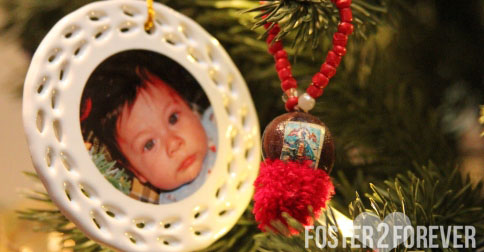
That’s how our youngest son, LilBit, describes how he came to live with our family as a baby in December 2009.

Picnik collage1

When asked where he was born, his reply is: “I was born in Mexico!”
evil-eye-baby-bracelet-meaning

Our LilBit is Hispanic and when I saw his beautiful blue eyes look into mine that December afternoon, I didn’t see a child that was “different” – I saw a baby that needed parents that could keep him safe.

As his foster care case became more complicated, we became extremely vocal foster parents, hiring an attorney and intervening in a placement with a relative – a Hispanic relative.   Strangely enought, LilBit’s birthmother wanted her baby to stay with our family; however, against her wishes, all the other parties involved LilBit’s case believed that he should be raised with his Hispanic relatives because “he needs his culture.”

We were judged for being too white to adopt a Hispanic child!

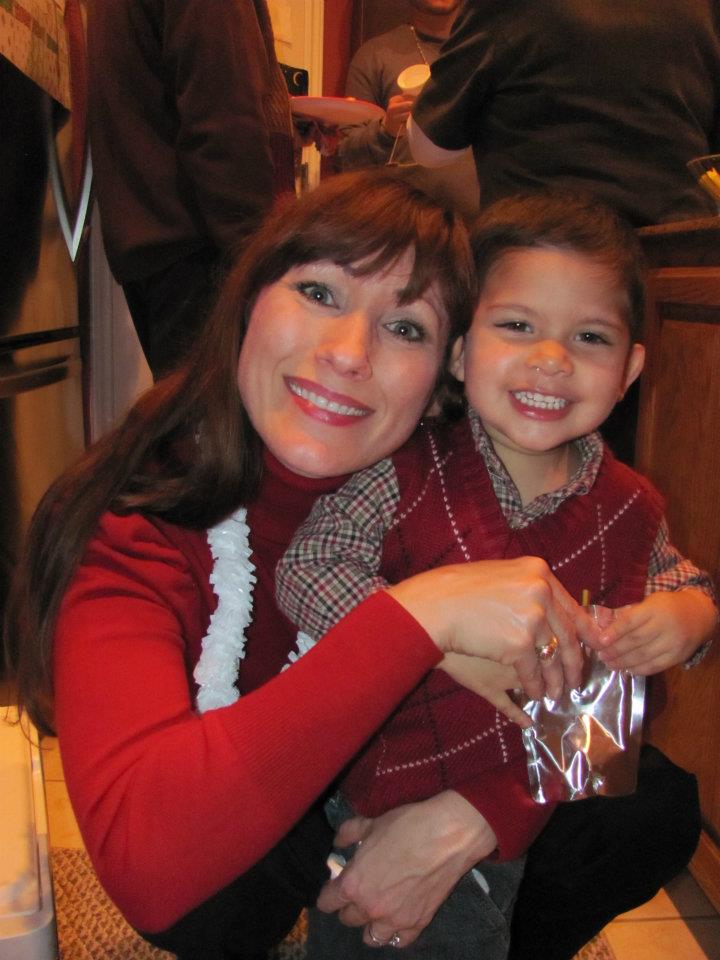
At one point, we even had someone involved in his case say to me: “You can tell by looking at him that he’s not yours.”  {I disagree.}
transracial-adoption-smiles

This person’s narrow mind and judgement offended me!
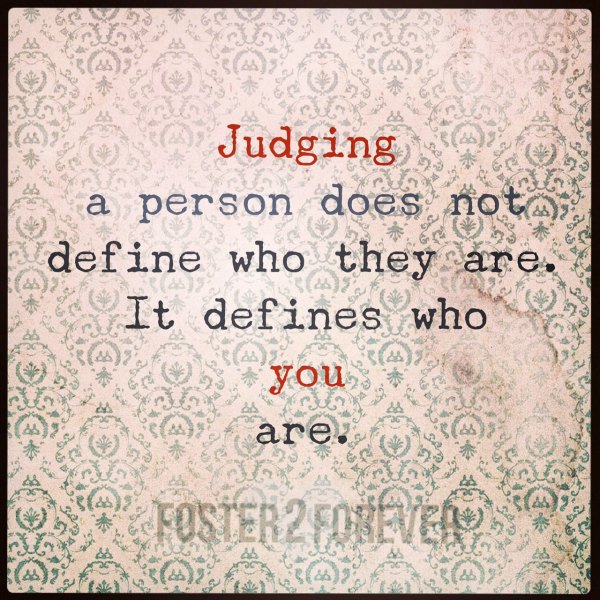
judgement-quote

Eventually, the birthmother’s voice was heard, and LilBit officially joined our family on National Adoption Day in 2011.
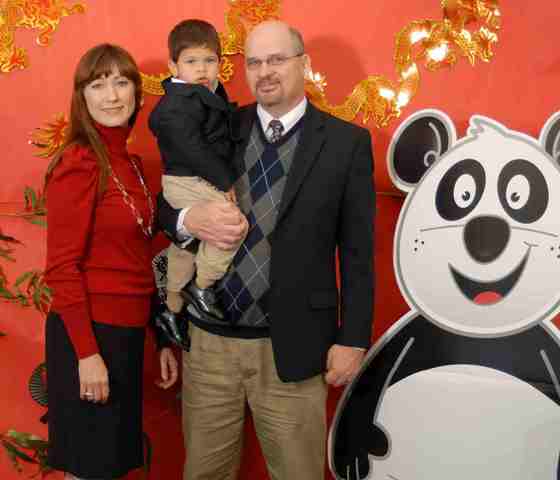
2011 National-Adoption-Day_web

Adoptive families can feel judged for a variety of reasons: they don’t look alike, their families are too large, etc.

But what others have to remember is that adoption is NOT about what a family looks like:

Adoption is about LOVE!
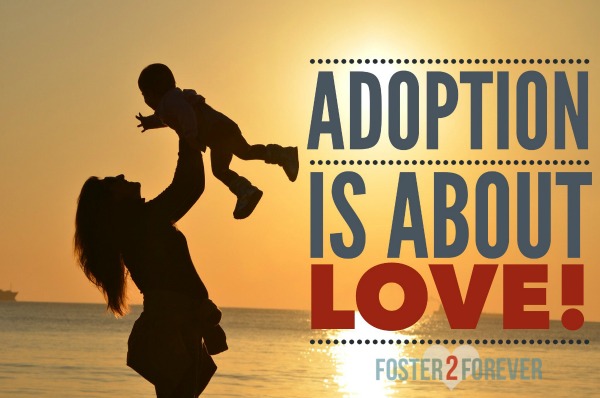
adoption-is-about-love

On this National Adoption Day, I join Similac to support families that have found one another through adoption!

For every want-to-be parent longing to love, there’s a child waiting to be loved. Here’s to the ones who’ve found each other. And the ones who will. #NationalAdoptionDay #SisterhoodUnite

similac-national-adoption-dayPosted by Similac US on Saturday, November 21, 2015

Disclosure: I am honored to partner with Similac and join the #SisterhoodUnite campaign to stop judgement against other moms and show support instead. 
SIMILAC-Sisterhood-of-Motherhood-blogger


9:38 pm by Penelope

Creating Belonging in an Adoptive Family

How do you create belonging in your adoptive family?

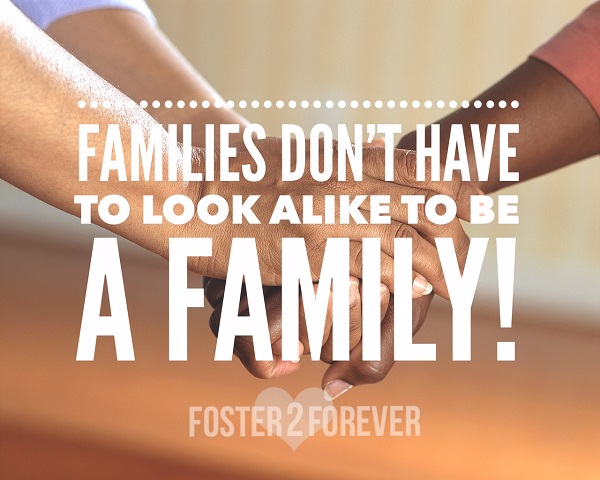
A family created through the miracle of adoption, sometimes, to the outside world, doesn’t look like what they think a family should look like.  How many adoptive families have to hear: “Are they all yours?” Family members don’t have to look the same to belong. but we can create a sense of belonging in our adoptive families by focusing on how much alike we actually are.

transracial-adoptive-families-quote

To ensure that you give your adopted child, and all your children for that fact, a sense of belonging to your family celebrate your sameness. All my sons are adopted and have various ethnicities: Anglo, Hispanic and Cherokee Indian.  Even with our various ethnicities, I tell my sons that they have my unique eye color (green with specks of golden brown), or my sister’s W-sit, or their dad’s face shape.

I tell my children how we do look alike.  And sometimes, I can sense a special feeling from that, even from my oldest, that became my son at 12 years old.

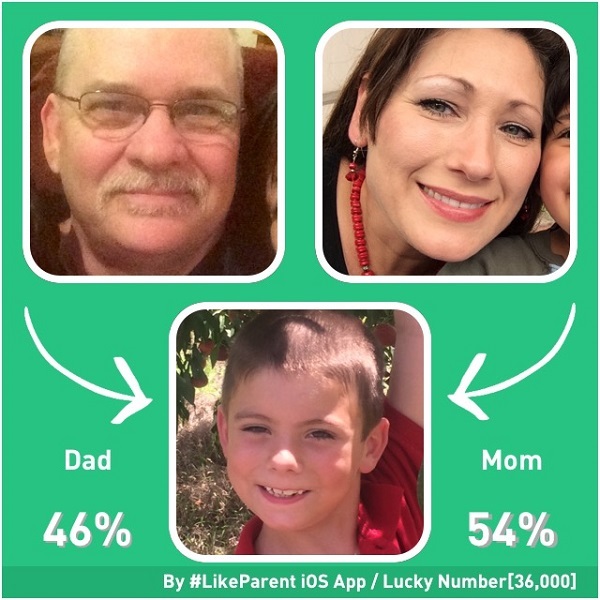
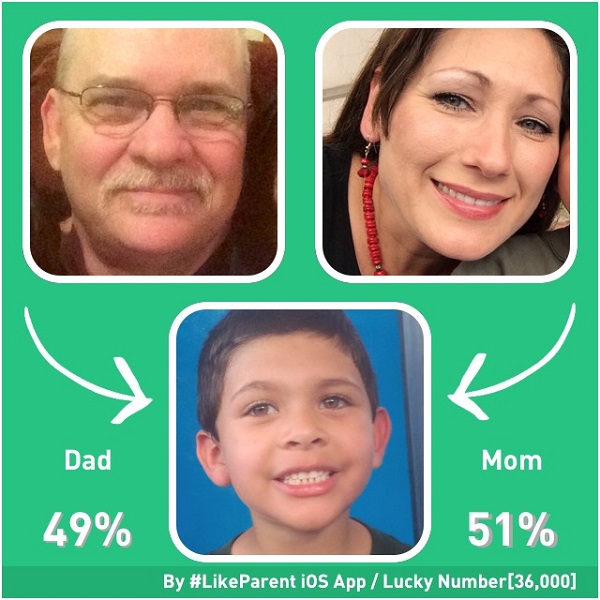
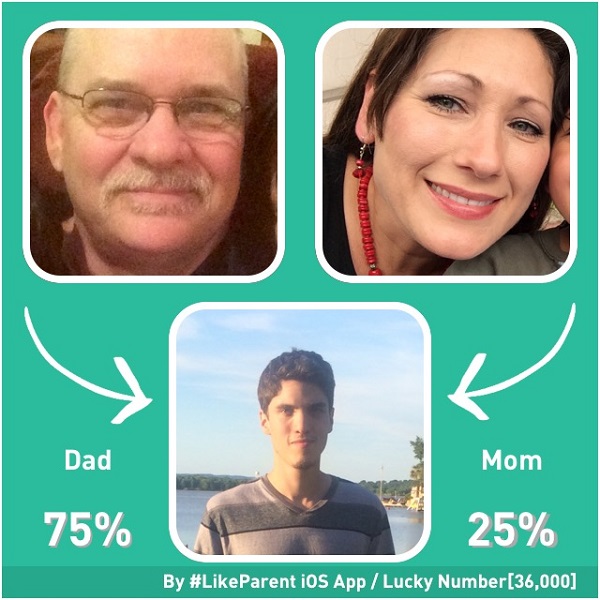
Recently my Facebook feed has been filling up with images from the LikeParent app – an app that calculates what percentage a child resembles each parent. Of course, it’s not scientific or anything, but a fun little thing to do anyway.
So, of course, I had to do an experiment – I wanted to see how much the LikeParent app says my sons look like me and how much they look like their dad.
I was pretty confident going in since all our sons have my exact eye color.
Our middle son looks so much like his dad did as a toddler and young boy. In fact, while looking through some old family photos, I picked up a photo of my husband as a toddler in a high chair. My husband’s reply was: “That looks familiar.” It was if we were looking at a photo of our middle son! (But our son does have my eyes!) So here are the surprising results:

adoptive-families-parents

Our youngest son, Lil Bit, is Hispanic, but definitely has my eyes and my smile. I’m constantly amazed at how much he resembles my sister too, especially with that thick, wavy hair. Of course, I realize our youngest son has his dad’s round face shape, and my husband back in the day did have really dark hair too. So look! Our son is a perfect blend of us.

adoptive-families-transracial

Our oldest son shares my Cherokee Indian heritage. We both have a long narrow face with those Cherokee high cheekbones. And his eye color is a duplicate of mine! Many people are very surprised when they learn that he isn’t my biological son. So these results are completely bogus!

adoptive-families-indian

But finding similarities of our family goes beyond our physical features. I tell my sons how they like bike riding like I did. Two of my sons bite their fingernails like I did. My middle son is a math wiz like me. “I used to do that too.” Our middle son LOVES baseball – just like his dad. Children mirror their parents in so many ways and pick up our sayings, habits, and beliefs.

By pointing out our sameness as a family that it can help minimize those differences to give a more cohesive sense of belonging. Families are alike! So celebrate your child’s sameness to help promote a sense of belonging to your family.

8:51 am by Penelope

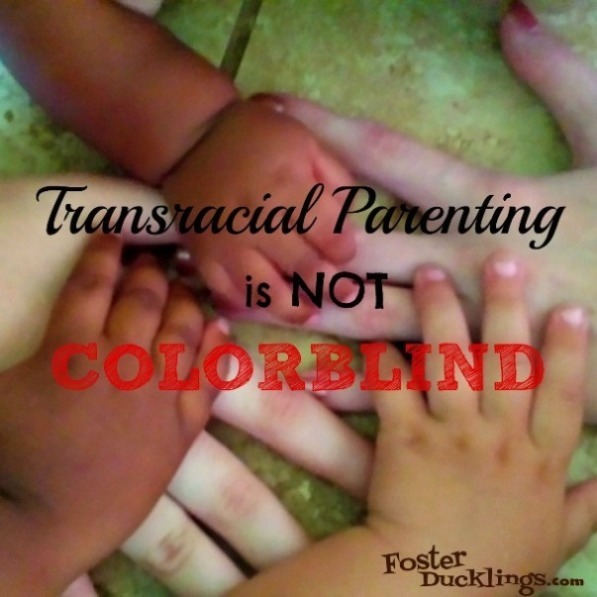
Transracial parenting is not colorblind

“Probably because of how and where I was raised, I have usually approached discussions of race with trepidation – if at all. But since embarking on the adventure of transracial parenting, I’ve begun to realize that I have a duty to my son to have these conversations…”

Learning the Lessons of Transracial Parenting: NOT Colorblind

“Before becoming a transracial parent, I prided myself on being “colorblind”. I truly believed that the best answer was to ignore skin color. And I would get very irritated if anyone else used race as a descriptor. If I was forced to physically describe a person of color, I would mention gender, height, build and then whisper “black”, like I was saying a bad word. I was just so uncomfortable even discussing race that I did my best to ignore it. I steadfastly and earnestly believed this was the best non-racist approach, until I realized I was going to be the forever mommy of a gorgeous little black boy…”

http://www.fosterducklings.com/2014/08/transracial-parenting-not-colorblind.html

transracial-adoption-parenting

foster-ducklingsDuck Mommy is a [mostly] happily-married, Christian foster mom and infertility survivor blogging about life as the head duck-wrangler of a three-ring traveling circus.  In between herding ducks, saving starfish and her full-time adventures with an infant, 2 toddlers, 3 teenagers, 3 dogs, and 3 cats, she shares her experiences, point-of-view and lessons learned at Foster Ducklings.

9:00 am by Penelope

Transracial Adoption Issues of Being Color-Blind

 Transracial Adoption Issues

Did Dr. Martin Luther King ever dream of transracial adoption? I have a dream that one day this nation will rise up and live out the true meaning of its creed: “We hold these truths to be self-evident: that all men are created equal.”  Did he ever dream that all children and families would be equal – members of multi-racial families?

When I was a little girl, my family was part of the “white flight” from integrated schools to a rural all-white town. I grew up around extreme prejudice that I never understood, but I do feel that I’ve overcome the racial prejudice of my past.

But today, our nation is still at war. A Cheerios commercial featuring an interracial marriage still spews hatred. Paula Deen’s past racism causes an uproar from her sponsors.  Duck Dynasty’s Phil Robertson’s remarks about observing that “blacks were happy” caused a knee-jerk reaction from the A&E Network to suspend him from his reality show.

I do wish our nation could be color-blind, but as the Livesay’s Haiti blog points out: “Can we truly be color-blind or is that just a phrase of white privilege?” The sad truth is that race matters, especially in transracial adoption.

Mary’s awareness of multi-racial families acutely changed when a child of another race joined her family.  Mary recommends reading Another Mother: Co-Parenting with the Foster Care System that discusses transracial adoption issues from a white woman raising black children.

Melody has shared her struggles and transracial adoption issues, and offers some tips to coping with the “peanut gallery.”

Transracial Adoption Issues

  • When adopting a child of another race, it is not only the child who is different — your family becomes a “different” family.
  • Your child will need specific coping skills to deal with racial bias which you might face together as a family.
  • A child of color growing up with Caucasian parents should be around adults and children of many ethnic groups, especially, to see adult role models who are of the same race or ethnic group.
  • Adopting more than one child of a different race gives a child a sibling for more cohesive racial identity within a family.

chocolate-vanilla-transracial-adoption-issues

Read more about Transracial Adoption Issues:

Does Anybody Else Look Like Me? outlines for parents how, exactly, to deflect the objectifying attention multiracial children receive, from the books and toys to use in play with young children, to advise on guiding older children toward a strong sense of self.

Brown Babies, Pink Parents: A Practical Guide to Transracial Parenting provides practical, easy-to-read instruction on everything from hair/skin care, to school issues, and even addresses “white privilege.”

Come Rain or Shine: A White Parent’s Guide to Adopting and Parenting Black Children is a conversational and practical guide for those considering transracial adoption how to incorporate a child’s race into your family.

Growing Up Black in White is the poignant memoir of a mixed-race child adopted by a white family sharing his experiences as a biracial transracial adoptee to help other adoptive families with transracial adoption issues.

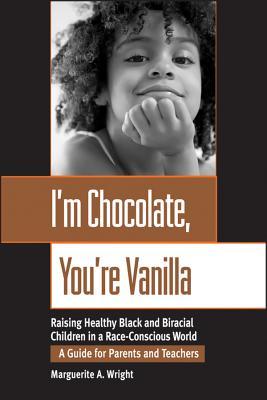
I’m Chocolate, You’re Vanilla is for parents trying to raise children in a racially polarized world — explains how black and biracial children perceive color and race, and that early teaching about race and racism tends to result in black children feeling needlessly powerless and confused. 

FTC Disclosure: The links in this post may be affiliate links to Amazon, which means when you click on a link and purchase, I receive a very small commission (at no additional cost to you). Amazon then gives that commission to me as an Amazon gift card so I can purchase from Amazon. See how nicely that works for Amazon?

8:54 am by Penelope

Racism in Kids and the Cheerios Commercial Controversy

Racial tensions have exploded this month with Paula Deen’s racist remarks, the Travon Martin verdict, and this Cheerios commercial featuring an interracial couple that caused General Mills to disable the comments due to the inflammatory racial remarks made.

This is what Michael Twitty of Afroculinaria has to say about the Cheerios commercial controversy:

“Take for example the completely un-Christian and inhuman rage at Cheerios for their simple and very American ad showing a beautiful biracial girl talking to her white mother and pouring cereal on the chest of her Black father.  That Cheerio’s had to shut down the comments section says that the idea of inter-human relationships outside of one’s color bracket is for many hiding behind a computer screen—a sign of the apocalypse.  So just like those old spaghetti sauce ads, yes, America, racism—“it’s in there” even when we were prefer it not be.”

Check out what kids had to say about the Cheerios commercial controversy.

In this video, I didn’t catch what friend and fellow blogger, Martha Wood of Momsoap, pointed out in her post about the Cheerios commercial controversy:

It’s mostly white kids doing all the talking. There are eight white children. Two black children. One Asian child. And one child who looks biracial. The main child of color who talks is the Asian kid.

Are you telling me that you couldn’t find more black children for this video?

Talk about white privilege! I didn’t catch that this video was mostly white children talking about racism until Martha pointed it out.

What are your thoughts on the kids reaction to the Cheerios commercial?

8:00 am by Penelope

Why Race Matters

Dr. Martin Luther King had a dream. Transracial adoption is truly his dream realized – full integration.  Whites adopting black children to become forever members of their families.  As divided as our nation was at the time, could transracial adoption been fathomed in his dream?

This weekend, we attended a foster parent training entitled “Healthy Racial & Ethnic Identity.”  Race, as our instructor told us, is the white elephant in the room. Her words to us were: “Race matters.”

As an African-American mother of a gifted & talented African-American son, our presenter spoke openly about the reality of how race matters to our children, even today.

Teen filmmaker, Kiri Davis, explores the message that society gives African-American children in her video – A Girl Like Me.

Halfway into the 7 minute film, she shows African-American preschoolers 2 baby dolls, identical except for skin color.  Watch what happens when she asks: “Which is the bad doll?”

I can’t help but tear up when she asks the little girl why. “Because she’s black.”
Julian Abagond writes more about the Brown vs. Board of Education doll experiment.

Another heartbreaking point in the film is the African-American teen who began wearing her hair natural, then her own mother tells her that her hair looks too African. What?

Another good film about the importance of race and ethnicity, produced by the Casey Family Services, is Knowing Who You Are, where former foster children and birthfamilies openly discuss integration.

Skin color may not mean anything to you. You may truly be “color-blind;” however, at some point in our children’s lives, someone will point out their differences to them, as they try to fit in.  Skin color is just one of those external factors. We can’t ignore it.

Honestly, can your African-American son safely go for a walk in your neighborhood at night?  Or could he end up as Trayvon Martin, the African-American teenager shot in Florida last February by a neighborhood watch coordinator?

Our speaker even asked a friend that is an officer with the Austin Police Department about what route her African-American 16-year-old son should drive to school.  His words to her: “Take the interstate – your son will get stopped by the police if he drives through the neighborhood!”

The takeaway of the training was that race matters in society and as parents you have to be aware of that.

  • Realize that, at some point, your child will probably be stereotyped according to their race;
  • Give your child proactive and protective messages about their individual abilities and identity;
  • Help your child identify themselves as something other than race (“I am a girl who enjoys reading vampire novels”)

What issues or controversies have you encountered with transracial adoption?


11:27 am by Penelope

The Color of Their Skin

My dad, born in the 1930’s, grew up during the most racially tense time in the South.  He witnessed the injustice, but still had his own prejudices.  In 1971, due to the physical locations that caused “natural segregation” of white & black neighborhood schools, the courts mandated that school districts in Texas must integrate schools regardless of location.

When my Daddy found out that his little girl was going to be bused across town “to go to school with a bunch of n*****s”, he initiated a “white flight” and quickly moved his family across the street to a white rural school.

I would not see a black person until I was in the seventh grade.

I never understood the prejudice I witnessed around me. I despise the N-word, even among African-Americans.

Today, we celebrate the short life of an incredible man that changed the course of history. His vision is still inspiring! His dream…

And so even though we face the difficulties of today and tomorrow, I still have a dream. It is a dream deeply rooted in the American dream.

I have a dream that one day this nation will rise up and live out the true meaning of its creed: “We hold these truths to be self-evident, that all men are created equal.”

I have a dream that one day on the red hills of Georgia, the sons of former slaves and the sons of former slave owners will be able to sit down together at the table of brotherhood.

I have a dream that one day even the state of Mississippi, a state sweltering with the heat of injustice, sweltering with the heat of oppression, will be transformed into an oasis of freedom and justice.

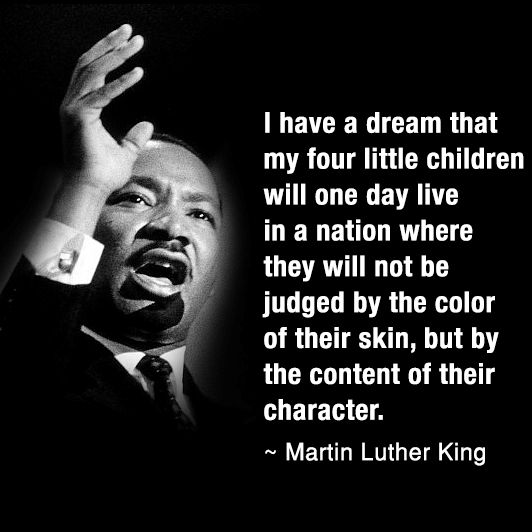
I have a dream that my four little children will one day live in a nation where they will not be judged by the color of their skin but by the content of their character.

I have a dream today!

 Listen to his incredible speech in its entirety.

I live in the rural South, and it saddens me to still see prejudice around me.

My dream is that the “content of character” is the only thing that matters.

My dream is that judgments will not be made based on simply the color pigment of skin.

My dream is that my two little children will one day live in a nation where interracial families are the norm.

My dream is for our nation to become color-blind!

Looking for something?

Facebook

Foster2Forever

Archives

Why Every Foster Parent Needs Sexual Abuse Training

foster care visitation rules guidelines online

10 Tips for Foster Care Visitation Online

foster-income-taxable

Is Foster Income Taxable? What Foster Parents Should Know About Income Tax

Why Every Foster Parent Needs Sexual Abuse Training

I’m Clever

Sway

Pretty Chic Theme By: Pretty Darn Cute Design