Foster2Forever

  • Home
  • Shop
  • Fostering & Adoption
    • Foster Care
      • Being a Foster Home
      • Birthfamilies
      • Case Workers
      • Concerns
      • Court Hearings
    • Adoption
      • Parenting Tips for After Adoption
      • Benefits
      • Costs
      • Infertility
      • Parental Rights
  • Parenting
    • 31 Tips for Parenting After Adoption
    • Behavior Issues
    • Children’s Activities
    • Family Time
    • Motherhood
  • Our Home Life
    • Cancer & Health
    • Recipes
    • Marriage
    • Family Travel
    • Videos
  • Join Our Community
  • Our Family
  • Contact
  • Privacy Policy

9:16 am by Penelope

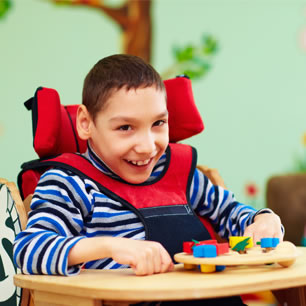
Would You Adopt a Special Needs Child in Foster Care?

We are The Burdick Family. We have fostered 12 years and have adopted six children who would otherwise have gone into foster care or could not reunify, making us a family of twelve. Our kids ages are 27, 25, 23, 21, 15, 14, 12, 5, 3, and 3.

Our fostering journey began 15 years ago. After starting foster care classes and learning just how hard it can be — “we could never fit as foster parents!” We dropped out of the classes; however, in that process, we submitted an application to adopt with a local ministry.

Within a week, the agency called us about adopting a special-needs baby. The mother was in an amazing and supportive foster family but decided that private adoption was best for her child. When she gave her son to our family, she also gave herself to us as a daughter!
special-needs-in-foster-care

Special Needs in Foster Care

A year later, the agency called again about adopting another special-needs baby who would have gone into foster care otherwise.

Three years later, his cousin was in foster care. The agency asked us to become licensed to become foster parents. We completed our licensing requirements and our son’s cousin came live with us at three months old.

Since then, we have fostered many babies — several were able to return home, and those who didn’t, we committed to adopt.

The last three, almost four, years, we had three medically-fragile babies, all needing g-tubes; each kiddo with their own unique journey.

Today, our 5-year-old forever child is g-tube free, and attending kindergarten.
Both our three-year-old sons are, too, off their g-tubes, attending preschool, and as healthy as can be.

The journey has had many ups and downs, but overall and without a doubt, we would do it all again to have the privilege of loving children from hard places.

We had amazing support from other foster families as well as our immediate family and friends. Our older four children have grown in compassion and love all their younger siblings.

12 Tips for Fostering a Special Needs Child

12:45 pm by Penelope

6 Smart Reasons to Homeschool Your Adopted Child

WHY HOMESCHOOL YOUR ADOPTED CHILD?

School can be overwhelmingly stressful for a young child – but add to that a history of trauma, a new language, separation from parents, peer pressure, developmental or social delays – and an adopted child can struggle with big emotions, not only at school, but at home too. After our middle son’s behavior problems at school and taking FMLA family leave to be with him, we have decided to homeschool our youngest this year. Our LilBit’s anxiety at school has begun to effect him even at home.

homeschooling-adopted-child

6 REASONS TO HOMESCHOOL YOUR ADOPTED CHILD

1. BUILD CONNECTION IN YOUR RELATIONSHIP
The #1 priority of an adoptive parent is building a bonded relationship with your adopted child. By not sending your child off to school every day and keeping your child close during the day, you can focus on building your relationship. The one-on-one relational opportunities of homeschooling your adopted child allows you to get to know his individual learning style, his personality, and make memories together as a family. (Read about attachment types here)

2. SPECIALIZED ACADEMICS
While homeschooling, your adopted child can receive the individual academic instruction that he may need to “catch up.” The academic pace can be determined by the child’s rate of learning, especially important if your child was exposed to alcohol in utereo and may suffer the effects of FASD. If a child can quickly grasp a concept, then you can move quicker through a curriculum or unit study; likewise a slower pace will help your child actually master a skill before moving on. In a classroom setting, a teacher has a set pace for all the students, whether they are ready to move on or not — classroom teachers are in a position in which they have to teach to the middle, with bright students being bored, and students with challenges becoming more and more frustrated.

An adopted child may have special needs that are becoming more and more difficult to accommodate within school districts. The process for a child to even qualify for special education services is becoming more and more complicated. However, even if you homeschool, school districts still have to provide certain special services to children who live in their district, whether or not the child is enrolled.

Another academic benefit of homeschooling your adopted child is that whether your child is an auditory learner, visual learner, or kinesthetic (tactile) learner, you can teach in the style that your child best learns. Also, if something in your teaching approach or curriculum isn’t working, you have the flexibility to just change it and specialize it to your child as you wish. While homeschooling my oldest, it took me three tries to finally find a spelling curriculum that actually taught one spelling rule at a time.

Also, due to the likelihood of early neglect, many adopted children have sensory processing disorder and needs that aren’t being met or are disruptive in a classroom. In homeschool, you can incorporate your child’s therapy and sensory needs and focus on your child’s development as a whole. Also, if you adopted internationally, you can immerse your child in learning the English language in your homeschool without the added pressure of “academic performance.”

3. FLEXIBILITY
Homeschooling provides an adoptive family the flexibility to make appointments with the various professionals without dealing with rigid school attendance policies. While homeschooling, you can make appointments with caseworkers, counselors, specialists, therapists at your convenience.

This is what Sharla Kostelyk of Chaos & the Clutter, an adoptive mom of 7, says about the flexibility of homeschool: “We can homeschool when we want to and where we want to. We can move through curriculum as quickly or as slowly as we want to or need to. We can stop in the middle of something and decide that if a program isn’t working for us, we can ditch it and try something else. If the kids decide that they are super interested in something mid-year, we can add in a unit study about it at the time they are actually interested and will better retain what they learn.”

Homeschooling families can even plan vacations at off-peak times that are less crowded and easier on the pocketbook too. Royal Caribbean is currently having a promotion of 30% off plus kids sail free! Of course, the best priced sail dates are when school is in session, perfect for homeschool families. In October a few years ago, our family took a Disney Cruise vacation out of Galveston, and our kids sailed FREE!

4. POSITIVE SOCIALIZATION
Socialization seems to be everyone’s concern when it comes to homeschool. “How will your child get socialized if they just stay home all day?” That’s a common misconception — We don’t stay home every day. Homeschool groups are everywhere with play dates, field trips, and even group classes – so a child doesn’t have to be in a bubble by himself. Add to that any church, sports or other youth activities or clubs, and a child will have numerous opportunities to develop friendships with other children.

Besides, the “socialization” in a school setting is not particularly positive. Bullying is the norm in schools nowadays. And school administrators just can’t make bullying against the rules — “pecking orders” are an instinctive survival skill in groups all across nature. Plus, in what other settings in life (after college) will an adult be surrounded only by people the exact same age? Never. A child learning how to get along in groups of various ages is a more appropriate life skill that can be developed in a homeschool environment.

While homeschooling your adopted child, you have the ability (and time) to devote to developing social skills. You can work on developing coping skills one-on-one as issues arise to give children the social skills they may be lacking before going out into the world as adults. You have the ability

5. REDUCE ANXIETY
School is stressful, not only in regard to academic performance, but, as stated above, peer pressure can be excruciating. An adopted child who is overcoming trauma, may not be at the same emotional maturity as classmates, and risks being ridiculed by classmates for the smallest of things. What homeschooling does is allow a child to be who his is, where he is developmentally without being concerned about what other kids think of him. A child doesn’t have the added pressure of being in a school environment where differences are pointed out and ridiculed by classmates. Homeschooled children have the freedom to be themselves, and have their own unique interests. Our youngest son, LilBit, is extremely shy and feels uncomfortable in large groups. By taking away the stress of school, which is overwhelming to him, he can relax and be the happy child that he is.

6. TALENTS & INTERESTS
When you homeschool, as the curriculum director, you can focus on a child’s strengths, talents, and interests. You have the flexibility (and time) to pursue your child’s interests, whether musical, athletic, or otherwise. In homeschool, your child will have the time to participate in those extracurricular activities that “homework” and bedtimes can get in the way of. And you can even base some of your curriculum on the life and leadership skills that organizations such as 4-H and Boy Scouts develop. Whatever your child’s interests are, your child can participate in martial arts to encourage self-control, robotics or STEM programs for your mechanically-inclined child. The possibilities are endless.

Although homeschooling may not be an option for everyone, the benefits of homeschooling certainly make it worth examining for adoptive families to thrive. I successfully homeschooled our oldest son, Bubba, for two years. We had been doing homework every single night for four hours anyway, and we realized that we were, in all effects essentially homeschooling him anyway. Those two years were the best for him. I taught at his level, for his kinesthetic learning style, exploring his interests, and he flourished. His self-esteem soared. “Wow! I’ve never been this good at math before!”

10:18 am by Penelope

Check Out This Child’s View of His ADHD in the Classroom

Trying to manage ADHD in the classroom can be quite frustrating for teachers. Children with Attention Deficit Hyperactivity Disorder (ADHD) many times don’t understand why they get in trouble so much with teachers for disrupting the classroom. Because concentration and impulse control are required for a child to learn in a classroom setting, children with ADHD are at a disadvantage in this learning environment.

adhd-in-the-classroom-students

ADHD in the Classroom

This narrative of ADHD in the classroom written from the child’s point of view was an eyeopener for me:

Imagine that you’re nine years old. You’re sitting in class. Your teacher just gave you directions for the next assignment, but you missed most of what was said because you were playing with the bead chain of the zipper on your jacket. You look around to figure out what you’re supposed to do and notice that others have their science books out. So you pull yours out, too, but you still don’t know what to do. When you ask the boy sitting next to you, he gives you a dirty look and tells you to stop bothering him. You ask someone else who does the same thing and then tells you to ask the teacher.

“Mrs. Peters,” you blurt out. “I don’t know what to do.” Oops! You disturbed the class. She looks annoyed. “What are you supposed to do when you need my help?” she asks. You remember and raise your hand, and she comes over to help. She repeats her original instructions, then prods you a little to get you started. “You only have ten minutes,” she says. “If you don’t finish on time, you’ll have to take it home as homework.” Finally, you’re focused. You complete the first two items, then become distracted when you hear someone using the pencil sharpener. You look around the room for a while, then refocus and do a few more items…”

excerpted from Setting Limits with Your Strong-Willed Child: Eliminating Conflict by Establishing CLEAR, Firm, and Respectful Boundaries by Robert J. Mackenzie (I highly recommend this book if you have a strong-willed child. I had a total paradigm shift in my thinking.)

How can you help your child with ADHD?

Medication: Some parent choose medication. I was extremely hesitant to medicate my young child, but given his extreme behavior, we felt we had no other choice, but approached it cautiously.  This is how treatment with a stimulant for ADHD helped our son.

Diet: Some parent swear that changing diet helps children with Sensory Processing Disorder and ADHD. Here’s a book on the Feingold Diet: All Natural Mom’s Guide to the Feingold Diet: A Natural Approach to ADHD and Other Related Disorders

Essential Oils: Some people swear by using essential oils. In my honest review of using essential oils, I admit, in our experience, that EOs are not 100%, but we have seen marked improvement a majority of the time.  Jeddy’s Blend Essential Oil is formulated specifically for ADD/ADHD.

using-essential-oils-adhd

FTC Disclosure: Links in this post may be affiliate links, which means when you click on a link and purchase, I receive a very small commission (at no additional cost to you).

10:15 am by Penelope

When Kids Bathtime is a Nightmare

Is kids bathtime a total nightmare in  your home?  Do your children make you feel like taking a bath is some form of punishment for them? Could some sort of trauma be triggered at bathtime?

Check out these tips for kids bathtime for spd and trauma

10 Tips for Kids Bathtime:

  • TRY A SPONGE BATH for while.  Start with just a bucket of water in an empty bathtub and  let her play in the bucket of water.  Then try adding 1/2 inch of water in the bathtub and over time continue to add more water as they get more and more comfortable in the bathtub.
  • USE  BATH CRAYONS! They work WONDERS!  Coloring and painting will take your kids’ mind off of the bath and might turn crying time into laughing and play time.
  •  USE A BUBBLE MACHINE.  A bubble machine will keep kids busy and while they are busy making and popping bubbles, you can be busy bathing their bodies.
  • ADD BATH TOYS into the bathtub, then make a game of having your child get into the bathtub to retrieve them. These bath ABCs and numbers stick on the wall and help kids learn the alphabet.
  • HAVE YOUR CHILD SIT IN THE TUB WITH NO WATER for a while, and then slowly fill the bathtub and bathe them while the water is running. By the time the bathtub is filled, bathtime will be over.
  •  USE A BABY BATHTUB with your frightened toddler. Sometimes a confined space helps. My kids absolutely LOVED this quacking duck inflatable tub.
  • PLAY MUSIC or just sing to your child during bathtime.  Sesame Street’s Rubber Duckie is a classic!
  • COOL THE BATH WATER.  You can use this  turtle bath thermometer that registers the water temp.
  • Put on your bathing suit and hop in. Wash your arms and then wash wash their arms, continue alternating until you have washed their entire body.   Slowly  spend less and less time in the tub with them until you are not having to get into the tub at all.
  • Consider that your child may have sensory processing disorder.

So whether your child is experiencing real trauma or is just stubborn, the key is to make “bathtime” “fun time”  — so the next problem you will have is how to get your child out of the bathtub!

You may want to check out these top toys for active boys (& girls). 

6:30 pm by Penelope

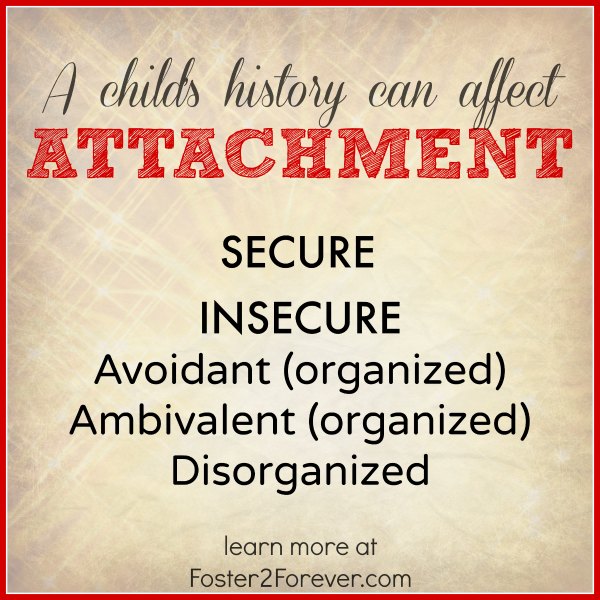
4 Attachment Types To Know Before Becoming a Parent

Attachment can be defined in a number of ways, but can be simply defined as the connection that is developed between a child and caregiver. There are 4 patterns of attachment that a child can develop while being parented, but first…

How is attachment developed?

Attachment is developed through repeated and consistent interactions between a child and caregiver. If this cycle is repeatedly met (doesn’t have to be perfectly met, thank goodness), a child will develop a secure attachment.

 When is attachment formed?

Attachment patterns are developed during the first 12 months of life!

Attachment patterns are usually stable over a person’s lifetime! (The attachment style a person develops as an infant will remain their attachment style as an adult UNLESS the person DELIBERATELY attempts to change that attachment style)

4 ATTACHMENT PARENTING TYPES

  1. Secure
  2. Insecure – Avoidant (Organized)
  3. Insecure – Ambivalent (Organized)
  4. Insecure – Disorganized

A child's behavior can be linked to attachment issues as an infant! #fostercare #adoption

1. SECURE ATTACHMENT TYPE

How is Secure Attachment Developed?

  • Touch, closeness, eye contact – Think of how you hold an infant and look into his face
  • Emotional attunement – Tuning into the internal state of another
  • Secure environment – Feeling safe and cared for
  • Shared pleasure, play, and FUN!

Characteristics of Secure Attachment Type

  • Seeks out caregiver when in need of physical or emotional support or comfort
  • Ability to talk about a wide range of feelings, both positive and negative
  • Feels comfortable exploring new environments while continuing to use their caregiver as a “secure base”
  • Enjoys and is comfortable with physical and emotional closeness
  • Positive beliefs about themselves, others, and the world
  • Emotionally stable (emotional regulation)

2. INSECURE-AVOIDANT ATTACHMENT TYPE

How is Insecure-Avoidant Attachment Developed?

  • The infant is repeatedly NOT soothed
  • The attachment cycle is broken, and the distressed infant stops asking for help
  • The infant is left unattended, in neglectful families or orphanages
  • Sadly, the infant still produces stress hormones, yet doesn’t act stressed
  • The infant learns not to depend on anyone to soothe or meet his needs

Characteristics of Insecure-Avoidant Attachment Type

  • Emotionally distant and aloof
  • Limited tolerance for feelings
  • Inflated self-reliance to minimize need for connection
  • Independent or inappropriately mature
  • Lacks empathy
  • The child’s solution is limited dependence on relationships. Take care of self. Deny or avoid feelings or emotions.

3. INSECURE-AMBIVALENT ATTACHMENT TYPE

How is Insecure-Ambivalent Attachment Developed?

  • The distressed infant sometimes has his needs met
  • The caregiver is inconsistent (due to their own unresolved attachment histories, or could be due to substance abuse or mental illness)
  • Disruptions is care due to inconsistent or chaotic caregiving (also displacements via foster care)

Characteristics of Insecure-Ambivalent Attachment Type

  • Crave attachment yet pushes away (push/pull behaviors)
  • Clinginess (bottomless pit)
  • Unable to self-soothe (as they get older) and need all soothing from an outside source
  • Fear of abandonment
  • The child’s solution is to keep caregivers in constant proximity

4. DISORGANIZED ATTACHMENT TYPE

How is Disorganized Attachment Developed?

  • Caregiver is frightening, dangerous, or causes terror
  • Child needs the caregiver for survival but is terrified of the caregiver
  • Child cannot find a solution which results in disorganized attachment

Characteristics of Disorganized Attachment Type

  • Significant difficulty with behavior, emotions, attention, and relationships
  • Attempts to control their caregiver in order to make them more predictable
  • Prone to dissociation
  • 80% of abused children have disorganized attachment (Siegel)

To learn more about attachment and how your parenting can affect your child’s attachment, you can read Parenting from the Inside Out: How a Deeper Self-Understanding Can Help You Raise Children Who Thrive by Dan Siegel (Amazon affiliate link).

10:36 am by Penelope

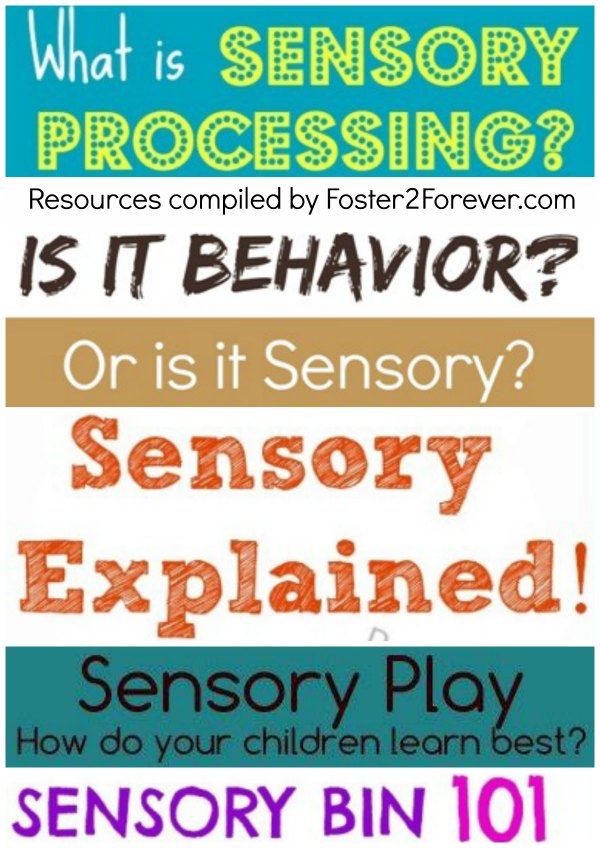
Could Your Child’s Behavior Actually Be Sensory Processing Disorder?

sensory-processing-disorder-integration-bins

What does Sensory Processing Disorder (SPD) look like?

As a parent, I have seen a child who can be so fun and so smart turn into someone I don’t know or understand at the blink of an eye. I have watched as he cries because his socks “don’t like his feet”. I have endured yelling, screaming and fits all because something didn’t go as planned.

Click to read more 1-What-is-Sensory-Processing-lla

Could your child’s behavior issues actually be sensory processing disorder (SPD)?

Have you ever wondered if your child’s behavior is truly a behavior issue or could it really be something else? Many times it is hard to tell if a behavior is truly a behavior or if your child is reacting to sensory problems in their body!

So is your child’s behavior a behavior issue or sensory?  If sensory relates to the sensation or physical senses and a definition of behavior is the way in which a person acts in response to a particular “stimulus” (or sensation), then YES, behaviors can happen because of sensory problems.

Click to read more 2-Behavior-Or-Sensory-Occupational-Therapy-Viewpoint-grb

What is Sensory Integration?

Sensory integration is “the central nervous system translating information into action”. Basically, it means that the behavior we exhibit is linked to neurological processes in our brain.
    • In layman’s terms: Everything we feel or experience, from wind on our face to driving a car is processed in our brain. If a child has an unusual response, then their brain isn’t processing what they feel or experience accurately.
Through meaningful sensory activities and a child’s inherent motivation, the child is able to make adaptive responses. This allows them to have more organized behaviors.
    • In layman’s terms: When a kid wants to participate in sensory play (to them it is just play), they adjust how they are playing based on what they are experiencing/feeling.

Click to read more 3-What-is-Sensory-Integration-ykt

How Can You Have Sensory Integration as Sensory Play?

Whether children are hypersensitive (over sensitive), hyposensitive, or neurotypical children with no sensory issues – sensory play is beneficial to every child to help them to understand the world around them.

Sensory play is often thought of just as messy play, and although lots of sensory play ideas can be messy – it is not just all about messy play but any play involving the senses.

  • Touch which can be exploring textures
  • Taste
  • Sight which could be exploring colors and light
  • Sound
  • Smell

It helps with creativity, problem solving, and supports their brain development!

Click to read more 4-what-is-sensory-play-itp

What Are Sensory Play Activities?

Go on a Sound Walk

Play in the Dirt

Play in the Mud

Create Sensory Bins

Sensory bins are a great way for children to learn using all 5 senses at once. Child development theorist Jean Piaget described the way children learn by calling them “little scientists“. Through sensory play and sensory bins children are using the scientific method and are also building pre-math skills, fine motor skills, language skills, imaginative play, and much much more. Not only that but sensory bins are so visually appealing and fun!

Most sensory bins have a base which is usually made with rice or another sensory material. Next you add other items including scooping materials such as spoons, measuring cups, etc for scooping and pouring. Add other items.

Click to read more
sensory-bins-101-lpal

If you are interested in learning more about sensory processing disorder, I highly recommend reading The Out-of-Sync Child and The Out-of-Sync Child Has Fun: Activities for Kids with Sensory Processing Disorder.

10:00 am by Penelope

12 Tips for Fostering a Special Needs Child

Michelle’s Story of Fostering a Special Needs Child

At my first fostering information session, I was told all foster children have special needs. If you think about it, it makes sense when you consider that a child does not go into foster care if they are living in a nurturing environment with caring parents or guardians.

Down the road and a few fostering placements later, I would learn what special needs really meant. Ryan came into our home at day 2 of his life. He was a drug-exposed newborn experiencing crystal meth withdrawal. My husband and I were not familiar with drug-exposed infants nor were we looking to adopt.

As mother of two and a certified childhood developmental specialist, I have worked with children with special needs, rare medical conditions, etc.  Ryan, on the other hand, was this fragile newborn in our home – struggling just to wake up.  As time passed and Ryan became more aware, red flags started to appear.

Soon after, visits started with medical specialists, including a pediatric cardiologist, pediatric eye doctor, pediatric neurologist and endless appointments with his pediatrician.  It was difficult to manage all of these appointments while maintaining normal schedules for my other children and a relationship with my husband.

Ryan is a now an 18-month old thriving toddler with epilepsy, cerebral palsy, and eye problems.

This past year and a half has not been easy with all of his medical appointments, social worker appointments, dealing with seizures, therapies, etc. but somehow we survived – some days by a miracle, but we did, in fact, make it through.

Our biggest frustration through all this has been social workers who did not understand the issues of our special needs child, or trying to get a court order for medical care, or trying to get alternative care for our son.

fostering-special-needs-child


Here are some tips that helped my husband and I through this journey:

12 Tips for Fostering a Special Needs Child

  1. Document and keep copies of everything!
  2. Find your voice as your child’s foster parent and advocate for your child,
  3. Establish rapport with social workers, doctors, therapists and your child’s attorney,
  4. If your child is receiving therapy, ask for the goals and the steps for achieving them,
  5. Educate social workers if they are unsure about your child’s condition and what it takes to care for your child dealing with these issues,
  6. Find respite care – find out what is available to you through the state and county foster agency or with friends or family that can come help an hour or two a week,
  7. Build your support network,
  8. Consider alternative approaches that might help your child – do not assume the county will say no. (For example, we strongly believed that Ryan needed chiropractic care which is usually not considered for foster children in California.  By getting Ryan’s social worker and lawyer involved and battling for months, we were finally granted an order from the judge to allow this care. The chiropractor was amazed that we had accomplished this.),
  9. Through all the ups and down, enjoy your child in the present. The past in the past, the future is unknown, and all we have is the present.
  10. Get down on your child’s level, play with them, pay attention to them uninterrupted whether it’s 5 minutes a day or more.
  11. Communicate with your partner, stay in touch, communicate your family’s needs, your needs, and find out their needs. Help each other find self-care that works for you,
  12. Research the adoption subsidy for special needs children in your state. A great starting place is the North American Council on Adoptable Children (NACAC.org). You can search by state and they typically have contact information for the state subsidy person information and the NACAC Subsidy representative.


fostering-special-needsMichelle Ludwig is a licensed foster parent, patiently waiting for the adoption of Ryan to be finalized. She holds a master’s degree in Child Life in Family Centered Care from Wheelock College in Boston, MA.

10:00 am by Penelope

Video: Being a Homeschool Stepmom and Finding Child’s Talents

This is my story of becoming a stepmother and how my role quickly changed and expanded. With an ADHD label, public school was torture for my stepson, and our family saw numerous advantages of homeschool. Through our homeschooling, we discovered this boy had an unknown musical talent. Here is a video of my story that shows my stepson playing Beethoven’s Fur Elise on the piano.

You can also watch this video on YouTube.

Do your children have a label to overcome? What are their talents and gifts?

8:00 am by Penelope

When Do-Overs Don’t Work: A Child’s BIG Emotions

I have a defiant child!  His challenging behaviors can be so frustrating as a parent attempting to help him.

Last month, I discussed the “Do-Over” as a technique to teach your child appropriate behavior as an alternative to other forms of discipline.

However, sometimes, such as during this scary blow-up rage at church, DO-OVERS JUST DON’T WORK!

My son, JD, was in full rage mode & nothing we could do was calming him down. We were desperate, and racing to the local hospital for help. In fact, he didn’t calm down until we actually pulled up to the hospital.

A few months ago, I read The Whole-Brain Child along with Lisa Qualls and a few of her readers of One Thankful Mom.

Child-Emotions-Behavior-Problems-Parenting

One of the helpful strategies that I began using during one of JD’s meltdowns is:

Whole Brain Strategy #2: Name It to Tame It: Telling Stories to Calm Big Emotions.

Name It to Tame It helps children not be overwhelmed by their feelings. The authors note that we can: “name and tame the emotions we are experiencing, rather than be{ing} overwhelmed by them.”  This storytelling process can help a child make sense of their experiences.

One thing that we’ve noticed with JD’s rages is that they usually occur when he hasn’t eaten a good meal in a while.  During these rages, I’ve began repeating to him: “oh, you must be hungry…you get really grumpy when you’re hungry…what would you like to eat?”

By adding these narrative details while JD is raging, I’m hoping to help him make sense of what he’s experiencing with these BIG emotions and what he’s feeling in his body.  Then hopefully, one day, he will realize that he’s hungry and just say “I’m hungry!”

That scary blow-up at church was so perplexing to us because he had eaten nearly two grilled cheese sandwiches before church!  That intense rage (the worst in over a year) frightened us more than ever about what could be going on inside our little boy’s brain.  I was in tears holding and praying over my son as we drove that ten minutes to the hospital.toddler-tantrum-foster-child-trauma-bonding-attachment

After that ordeal, when we finally made it home and walked in the door, what do you think Stinkpot said to me? Yes! That’s right!

I’M HUNGRY.

How do you help your child deal with BIG emotions?

You can read The Whole-Brain Child on your Kindle or listen through Audible (how I read it).

  • 1
  • 2
  • Next Page »

Looking for something?

Facebook

Foster2Forever

Archives

Why Every Foster Parent Needs Sexual Abuse Training

foster care visitation rules guidelines online

10 Tips for Foster Care Visitation Online

foster-income-taxable

Is Foster Income Taxable? What Foster Parents Should Know About Income Tax

Why Every Foster Parent Needs Sexual Abuse Training

I’m Clever

Sway

Pretty Chic Theme By: Pretty Darn Cute Design