Foster2Forever

  • Home
  • Shop
  • Fostering & Adoption
    • Foster Care
      • Being a Foster Home
      • Birthfamilies
      • Case Workers
      • Concerns
      • Court Hearings
    • Adoption
      • Parenting Tips for After Adoption
      • Benefits
      • Costs
      • Infertility
      • Parental Rights
  • Parenting
    • 31 Tips for Parenting After Adoption
    • Behavior Issues
    • Children’s Activities
    • Family Time
    • Motherhood
  • Our Home Life
    • Cancer & Health
    • Recipes
    • Marriage
    • Family Travel
    • Videos
  • Join Our Community
  • Our Family
  • Contact
  • Privacy Policy

1:48 pm by Penelope

RAD in Foster Care – How Hard It Can Be!

Reactive Attachment Disorder – RAD – in foster care can happen when children fail to attach to their primary caregiver early in life. Janie was 42 and Joe was 50 when two biological half-sisters, ages 3 and 5, made them foster parents in middle Tennessee. This is the foster to adopt story of their family.

The birth mom had a number of issues and already had two other children that had been adopted out. Eventually, the birth mom voluntarily relinquished her parental rights — she was unable to keep a housing, wouldn’t stay on medication, along with other issues.

5-year-old Hope had been seriously neglected and abused before she was 3-years-old. This sad child had no self-esteem — Hope believed she was not as pretty as her brown-skinned, brown-eyed biracial 3-year-old sister, Alex, with the curly locks. By the time of placement, Hope was 5 and Janie was her third mom in two years time. Trauma counseling began on Day 1 through the agency. Specialists eventually diagnosed Hope with Reactive Attachment Disorder (RAD).

RAD-in-foster-care-stories

Photo by mohamed Abdelgaffar

RAD in Foster Care

Although Janie educated herself with as many resources as she could find, parenting a child with RAD was a very difficult journey. She felt as though her child hated her much of the time and even felt that the child actually enjoyed making her life difficult. Janie struggled emotionally and sought out counseling for herself.

As much as possible, parents should be able to agree on styles. Janie and her husband did not always agree on parenting, which made things even more difficult. When it came to discipline or at least enforcing the rules, through their child’s triangulation, Janie felt like she was set to be the bad parent.

Younger sister, Alex was almost always loving and an over-achiever. Because of that, Janie did not have her in therapy initially. That is until the family hit the worst times: when Hope entered high school. Hope never fit in at school and struggled with her work and friendships. The stress of being more independent in 9th grade was too much for her — she didn’t feel safe on her own. She threatened suicide multiple times. Then she even threatened to kill the family with a knife. Janie and her husband had to take these threats seriously.

Ultimately, Hope ended up in a detention youth home,and then under state’s custody for nearly 2 years. The family felt broken apart.

Through all this, her younger sister, Alex, then went into therapy to deal with her pent-up anger at her sister. Throughout their lives, Alex had kept her anger toward her big sister inside because she felt she had to always keep it together in order to survive in the dysfunction. Alex had felt angry much of her childhood. Therapy helped her tremendously.

Finally, in the middle of her junior year, Hope was able to return to the family and things went pretty well. Hope enrolled in a different school than Alex, for both their well-being, which helped their relationship too.

Through most of the years, the family had a fabulous support service, through Catholic Charities, called the Adoption Support and Preservation Program (ASAP). Through ASAP, the family had access to support groups and special services. The therapist came to the home and worked with Hope, and sometimes with Alex too. These services were free for the family – the Lord blessed them with so many free services; it was amazing.

If you are parenting a traumatized child, look for support services and take advantage of them – they work wonders.

Through intense therapies and the process of healing, the family survived and the girls are doing well — Janie and her husband are so proud of their daughters.

Adopted Adults with Attachment Disorder

Hope graduated high school and has held some good jobs in retail and food service. She is a hard worker and in many ways, a very caring and sweet person. Although Hope has struggled and even gone through gender issues and suicidal thoughts, she has finally settled into her life. At age 25, Hope has a healthy relationship with the father of their one year old daughter.  Hope named her daughter, Jane Nicole, after her grandmothers – Janie and the dad’s mom! What an honor – from the child whom she thought hated her!

The baby girl, Alex, is doing great now too. However, in her sophomore year of college, her issues finally slammed her.  Alex felt she had to be perfect, thinking that was the only way to be loved. Doctors diagnosed Alex with an eating disorder and anxiety. She’s been in therapy for 3 years now and will graduate college in December — as what else? A social worker!!! She grew up in that world and found her place there.

Janie admits that she made mistakes and was not the perfect mother, (Who is?) However, Janie learned just how strong she is! She never gave up on her children, always advocated for them, and worked to get what they needed. Ultimately, her daughters have become beautiful, strong, loving women.

Your job as foster and adoptive parents will not always be easy, but using all the resources you can find, you can do this!

1:43 pm by Penelope

The Connected Child Book Summary and How It Works in Real Life

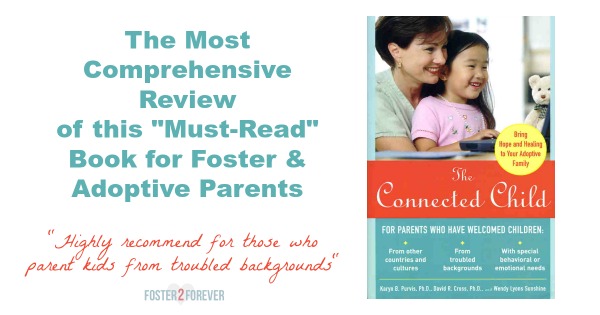
The Connected Child: Bring Hope and Healing to Your Adoptive Family is a book I highly recommend for anyone who parents kids with troubled backgrounds, and should be required reading for all foster and adoptive parents.  This book can be used as a continual parenting resource because it discusses just about any issue that a foster or adoptive parent may encounter. In this in-depth, comprehensive book summary, I outline the variety of topics that this book covers.

While The Connected Child examines behavior with a holistic approach; it discusses in detail how the trauma of your child’s past has affected brain chemistry, fear response, and sensory processing abilities of your child. Although the information in the book is based on research, it is presented in easy-to-understand language.

The Connected Child Book Summary

The Connected Child begins by showing the reader that there can be HOPE and HEALING in your child. By closely observing your child, showing compassion, and eliminating the traditional parenting techniques that can become obstacles to attachment, you can create a connected relationship with your child hurt by trauma. READ HOW HOPELESS I FELT

The Connected Child stresses the importance of a baby’s first years, and how the loss of a nurtured environment can affect a child for a lifetime. This even includes the baby’s environment prenatally, and not just exposure to drugs and alcohol. Even a pregnant mother’s stress can cause an influx of stress hormones into an unborn child that can cause changes in a baby’s brain development. The Connected Child dedicates a chapter on how stress affects the chemistry of the brain and the importance of nutrition. READ HOW EARLY NEGLECT STILL AFFECTS MY CHILD 

The Connected Child includes solid, practical advice for a variety of behaviors that could be attributed to the trauma of a child’s past. The key is to decipher the behavior and the hidden message behind it. FEAR DRIVES A HURT CHILD’S BEHAVIOR. A parent can disarm this fear in order to meet the child’s need. READ HOW TO IDENTIFY YOUR CHILD’S EMOTIONAL TRIGGERS

Although a hurt child maybe safe in your home, due to their past trauma, a child may not FEEL safe. A parent’s duty is to create an environment of “FELT SAFETY” for the child. Building trust and reducing stress are the ways to create an environment of felt safety. READ HOW I DISCOVERED THE CONNECTION BETWEEN TRAUMA AND MISBEHAVIOR

Children from hard places may not have learned appropriate social interactions. Due to their fear and survival instincts, a child may act out, throw tantrums, or try to manipulate or control others around them. The Connected Child discusses ways that a parent can teach life values, such as respect and accepting the word NO. The parent must consistently model these life values by staying calm, actively listening, and offering praise and encouragement. READ ABOUT MY STRUGGLE WITH CONNECTION

The Connected Child emphasizes how the traditional way of parenting with punishment, such as using time-outs, can be counterproductive to attachment by encouraging isolation and shame. This book provides a number of useful parenting strategies that you can put to use immediately, along with examples of dialog and phrases you can use. The emphasis is on providing a respectful environment which begins with the parent’s being mindful in their response to misbehavior. Parents can also build connection by staying close during the child’s tough times. The parenting techniques include offering choices and compromises, allowing re-do’s, and having a unified front with your partner to avoid triangulation. An entire chapter is devoted to dealing with defiance. READ HOW TO USE A TIME-IN FOR DISCIPLINE

The key to parenting children from hard places is to nurture at every opportunity with positive engagement and to be proactive in situations which may be difficult for your child. The Connected Child acknowledges that there will be setbacks, but encourages parents to look at the overall progress your child has made. READ WHAT HAPPENED WHEN I TREATED MY CHILD LIKE A BABY

The Connected Child concludes by discussing the importance of parents to heal their past emotional wounds.

“There are many wonderful, responsible, capable, and self-sacrificing people who carry around unresolved traumas and wounds inside them, and as a result they are unready to give the deep, nurturing care that an at-risk child requires.”

The Connected Child has become a reference book that I pick up and re-read over and over because I will always glean yet another great parenting strategy and understanding as I struggle to navigate through trauma behaviors.

With the large amount of parenting tools and advice given, this book may feel overwhelming for someone just beginning their foster/adoption journey. However, the book has a very thorough index in the back to help you find the topic you are needing help with.

BUY THE CONNECTED CHILD HERE!

Disclosure: This article contains Amazon affiliate links which means I receive an itty bitty commission with no additional cost to you. 

1:08 pm by Penelope

A Trauma Mama’s Prayer

As a trauma mama to a traumatized child, I can sometimes feel so overwhelmed and hopeless when experiencing the secondary trauma from my child’s past. {Have you joined our private Facebook community?}

At our new church home in the Texas Hill Country, I joined a women’s Bible study based on The Warrior Mom Handbook.  For the first time in many years, I experienced something amazing and special – I quickly felt like I belonged with this diverse group of mothers.  The bond created during our weekly time together was due to a true sisterhood in Christ as we are on the same mission field as mothers.

Through this study, coupled with The War Room movie, I learned about prayer, spiritual warfare, and the true enemy.

A Trauma Mama’s Prayer

trauma-mama-prayer-warrior

This is the prayer I wrote to cover my traumatized child:

Oh Heavenly Father,

Please hold me, comfort me, and lift me up!  Our precious child needs your power to overcome the demons he faces each morning and every day. The demons aren’t his to fight alone.  You are God — the demons know this and tremble! (James 2:19)

via patheos.com

Help him see that he can depend on others to love him — that the world, and especially his family, love him and want to protect him and help him heal from his past.

Healing is what you can do.  All powerful healing. You perform miracles. You can heal all, Lord.

I lift up my child to you. Give the specialists wisdom to find an answer to his problems – answers that provide healing.

Your love overflows! Fill me up with your love so that it overflows into my son. Show me that sweet, loving boy again with that perfect little nose you gave him. His is such an amazing gift – and you gave him amazing talents. Please, Lord, don’t let those talents be wasted. Let those talents be a glorifying of your name because those talents are yours and yours alone.  This little boy is your masterpiece (Psalm 139:14), and I give you this amazing little boy who has brought me so much joy.  Flow through him so that he can become joyful again.

Dissipate that anger – anger that he doesn’t remember.  Resolve the anger, calm the anger, destroy the anger. He has a full life ahead that Satan is trying to destroy. Destroy the enemy! You are powerful! (2 Timothy 4:18) You can overcome this trauma for my son.

prayer-warrior-rescue-verse

The earth quakes but my soul is calm. You have the power to calm my fears, to make me a mother that can help guide my son through this darkness.  It won’t be dark here forever. Let your light shine through our lives that lights the path you want us to take. You guide our steps. All these decisions about my son’s care is up to you. Show us the right answers.

Shower us with your hope and blessings for our son. He is your child and I lift him up to you as a gift. Help me appreciate the incredible blessing of that gift. Every perfect gift comes from you.  I prayed for this child before you created this child that you knew would be my son.  Thank you for allowing me to be his mother. AMEN

trauma-mama-prayer-warrior-pin

1:24 pm by Penelope

Join the #RocktoberLove Challenge to Bond with your Child

Five years ago, I was struggling with parenting our demanding, hyperactive toddler we had adopted from foster care. I stumbled upon a blog post that first introduced me to the concept of attachment therapies for adoptive families.

{That blog post, The Rockin’ Mama Challenge, was written by none other than Lisa Qualls of One Thankful Mom.}

The Challenge was to sit and rock your traumatized child 15 minutes each day to promote attachment. The uninterrupted alone time between parent and child was to help give the child a pathway to learn attachment through a simple ritual of physical closeness via rocking.

Five years ago, foster parents in my neck of the woods weren’t trained much on trauma and its effects on a child’s attachment. Not many parenting strategies were doled out either, most parenting tips were “don’t spank” and “just give a time-out.”

Five years ago, I began the Challenge fighting to keep our son still and in my lap for any amount of time. A challenge it was!!!  But after a week, our son began to not resist the rocking time. After two weeks, he even asked to be rocked. As much as he fought it, my traumatized child wanted that attachment.

Five years ago, that Challenge opened my eyes to a whole new world of attachment parenting.

Join the #RocktoberLove Challenge

Rocking your child helps with attachment bond.

Now, five years later, I’d like to challenge other parents to join me in another rocking challenge during the month of October. It’s simple.

  • Join the #RocktoberLove Challenge Facebook group.
  • Rock your child for 10-15 minutes every day in October. If you miss a day, don’t give up! Just rock your child the next day! If you can’t do 10 minutes, do 5 minutes. Just rock!
  • Rock your child alone. No other children. No distractions. No books. No devices. No television. Just you and your child.
  • Keep a journal or share your experience on Instagram, Twitter or Periscope using the #RocktoberLove hashtag. Record how long, what time of day, what you did together, how your child responded, how you felt, etc.
  • Follow me on Instagram, Twitter, and Periscope.  — And others participating in the #RocktoberLove Challenge. Start a dialog. You are not alone in this!!! Here is your village.

I’ll be periscoping my #RocktoberLove Challenge experience everyday.
Will you join me?

6:30 pm by Penelope

4 Attachment Types To Know Before Becoming a Parent

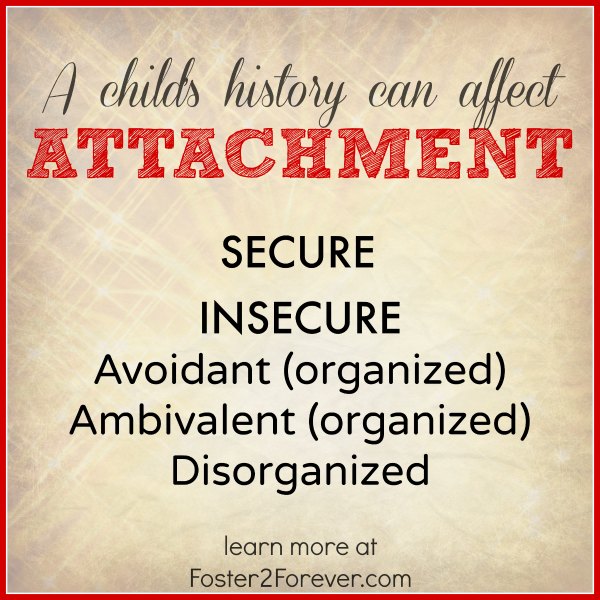
Attachment can be defined in a number of ways, but can be simply defined as the connection that is developed between a child and caregiver. There are 4 patterns of attachment that a child can develop while being parented, but first…

How is attachment developed?

Attachment is developed through repeated and consistent interactions between a child and caregiver. If this cycle is repeatedly met (doesn’t have to be perfectly met, thank goodness), a child will develop a secure attachment.

 When is attachment formed?

Attachment patterns are developed during the first 12 months of life!

Attachment patterns are usually stable over a person’s lifetime! (The attachment style a person develops as an infant will remain their attachment style as an adult UNLESS the person DELIBERATELY attempts to change that attachment style)

4 ATTACHMENT PARENTING TYPES

  1. Secure
  2. Insecure – Avoidant (Organized)
  3. Insecure – Ambivalent (Organized)
  4. Insecure – Disorganized

A child's behavior can be linked to attachment issues as an infant! #fostercare #adoption

1. SECURE ATTACHMENT TYPE

How is Secure Attachment Developed?

  • Touch, closeness, eye contact – Think of how you hold an infant and look into his face
  • Emotional attunement – Tuning into the internal state of another
  • Secure environment – Feeling safe and cared for
  • Shared pleasure, play, and FUN!

Characteristics of Secure Attachment Type

  • Seeks out caregiver when in need of physical or emotional support or comfort
  • Ability to talk about a wide range of feelings, both positive and negative
  • Feels comfortable exploring new environments while continuing to use their caregiver as a “secure base”
  • Enjoys and is comfortable with physical and emotional closeness
  • Positive beliefs about themselves, others, and the world
  • Emotionally stable (emotional regulation)

2. INSECURE-AVOIDANT ATTACHMENT TYPE

How is Insecure-Avoidant Attachment Developed?

  • The infant is repeatedly NOT soothed
  • The attachment cycle is broken, and the distressed infant stops asking for help
  • The infant is left unattended, in neglectful families or orphanages
  • Sadly, the infant still produces stress hormones, yet doesn’t act stressed
  • The infant learns not to depend on anyone to soothe or meet his needs

Characteristics of Insecure-Avoidant Attachment Type

  • Emotionally distant and aloof
  • Limited tolerance for feelings
  • Inflated self-reliance to minimize need for connection
  • Independent or inappropriately mature
  • Lacks empathy
  • The child’s solution is limited dependence on relationships. Take care of self. Deny or avoid feelings or emotions.

3. INSECURE-AMBIVALENT ATTACHMENT TYPE

How is Insecure-Ambivalent Attachment Developed?

  • The distressed infant sometimes has his needs met
  • The caregiver is inconsistent (due to their own unresolved attachment histories, or could be due to substance abuse or mental illness)
  • Disruptions is care due to inconsistent or chaotic caregiving (also displacements via foster care)

Characteristics of Insecure-Ambivalent Attachment Type

  • Crave attachment yet pushes away (push/pull behaviors)
  • Clinginess (bottomless pit)
  • Unable to self-soothe (as they get older) and need all soothing from an outside source
  • Fear of abandonment
  • The child’s solution is to keep caregivers in constant proximity

4. DISORGANIZED ATTACHMENT TYPE

How is Disorganized Attachment Developed?

  • Caregiver is frightening, dangerous, or causes terror
  • Child needs the caregiver for survival but is terrified of the caregiver
  • Child cannot find a solution which results in disorganized attachment

Characteristics of Disorganized Attachment Type

  • Significant difficulty with behavior, emotions, attention, and relationships
  • Attempts to control their caregiver in order to make them more predictable
  • Prone to dissociation
  • 80% of abused children have disorganized attachment (Siegel)

To learn more about attachment and how your parenting can affect your child’s attachment, you can read Parenting from the Inside Out: How a Deeper Self-Understanding Can Help You Raise Children Who Thrive by Dan Siegel (Amazon affiliate link).
8:00 am by Penelope

When Do-Overs Don’t Work: A Child’s BIG Emotions

I have a defiant child!  His challenging behaviors can be so frustrating as a parent attempting to help him.

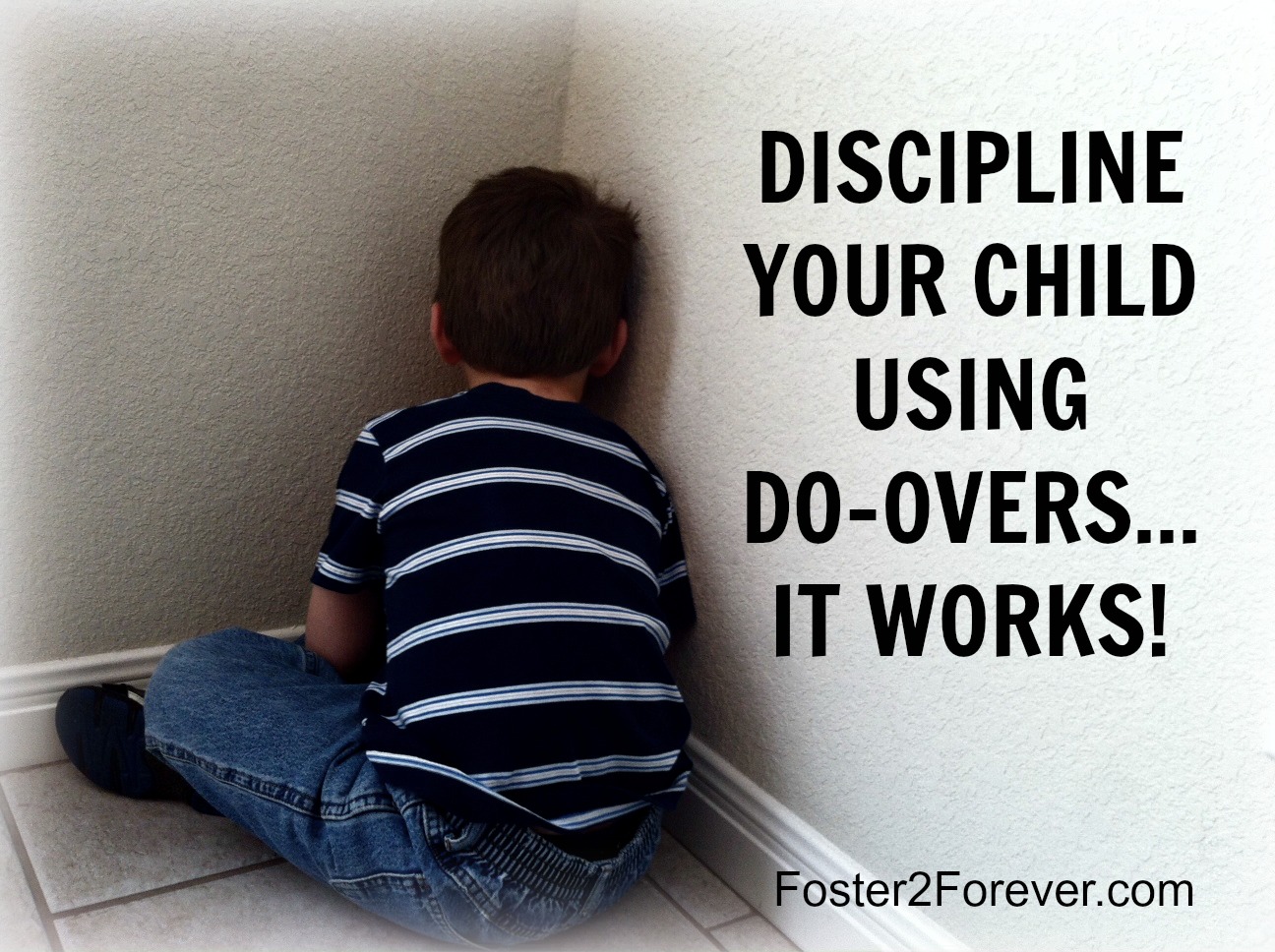
Last month, I discussed the “Do-Over” as a technique to teach your child appropriate behavior as an alternative to other forms of discipline.

However, sometimes, such as during this scary blow-up rage at church, DO-OVERS JUST DON’T WORK!

My son, JD, was in full rage mode & nothing we could do was calming him down. We were desperate, and racing to the local hospital for help. In fact, he didn’t calm down until we actually pulled up to the hospital.

A few months ago, I read The Whole-Brain Child along with Lisa Qualls and a few of her readers of One Thankful Mom.

Child-Emotions-Behavior-Problems-Parenting

One of the helpful strategies that I began using during one of JD’s meltdowns is:

Whole Brain Strategy #2: Name It to Tame It: Telling Stories to Calm Big Emotions.

Name It to Tame It helps children not be overwhelmed by their feelings. The authors note that we can: “name and tame the emotions we are experiencing, rather than be{ing} overwhelmed by them.”  This storytelling process can help a child make sense of their experiences.

One thing that we’ve noticed with JD’s rages is that they usually occur when he hasn’t eaten a good meal in a while.  During these rages, I’ve began repeating to him: “oh, you must be hungry…you get really grumpy when you’re hungry…what would you like to eat?”

By adding these narrative details while JD is raging, I’m hoping to help him make sense of what he’s experiencing with these BIG emotions and what he’s feeling in his body.  Then hopefully, one day, he will realize that he’s hungry and just say “I’m hungry!”

That scary blow-up at church was so perplexing to us because he had eaten nearly two grilled cheese sandwiches before church!  That intense rage (the worst in over a year) frightened us more than ever about what could be going on inside our little boy’s brain.  I was in tears holding and praying over my son as we drove that ten minutes to the hospital.toddler-tantrum-foster-child-trauma-bonding-attachment

After that ordeal, when we finally made it home and walked in the door, what do you think Stinkpot said to me? Yes! That’s right!

I’M HUNGRY.

How do you help your child deal with BIG emotions?

You can read The Whole-Brain Child on your Kindle or listen through Audible (how I read it).

5:00 pm by Penelope

Using Do-Overs as Discipline?

Confession: I am the mother of a defiant, demanding, strong-willed child! I’m starting to believe “Misbehavior” might be his middle name. 🙂

My 5-year-old son, already a know-it-all, is 5 years old going on 15. What an attitude! (One doctor has diagnosed him with Reactive Attachment Disorder) And it’s with this child that I feel the most insecure about my parenting skills.

I certainly don’t want to punish him all the time for his constant misbehavior.  In just a short time, I can quickly take away every single privilege that this stubborn child has – with no real benefit.  His defiant behavior doesn’t change! And through all this misbehavior, I seem to be just punishing myself.


Enter the “Do-Over” – a concept originally introduced to me through his play therapist last year.

However, now that I’m currently reading The Connected Child: Bring hope and healing to your adoptive family by Dr. Karyn Purvis, the “do-over” is emphasized and explained in more detail.

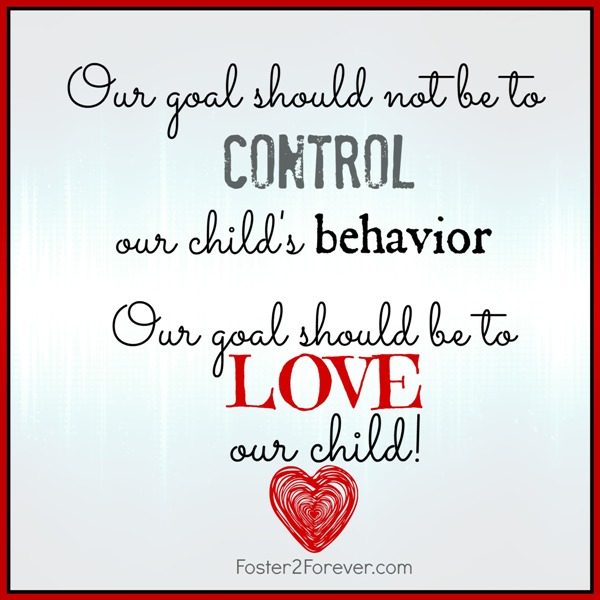
The “IDEAL” Approach to handle misbehavior discussed in the book is:

I – Immediate response;

D – Directly respond to the child, making eye contact;

E – Efficiently use words and firmness;

A – Action-based “do-overs”;

L – Level your response to the behavior, not the child.

When my defiant child demands or says something ugly, a do-over has become such an effective tool to teach him the correct way to act or respond.

“Let’s try that again.” – “What’s another way to say that?” – “How can we do that differently?”

Through this method, my son is actively learning how to act appropriately in the world! A skill that, sadly, many foster children just haven’t learned due to their rough beginnings.

It’s just like learning any other skill – riding a bicycle, playing a musical instrument, making a basketball goal – practice, practice, practice!

Get the CALM-CONNECT-CORRECT PROGRAM: The Step-By-Step Process To Effectively Manage Behavior  –> Click HERE to learn more.


8:47 am by Penelope

Meeting a Child that Changes Your Life: Gabie’s Story

Hi! I am Gabie, a 34-year-old mom who volunteered as part of the Special Learning Program within the regular school. The program was filled with at-risk children; those who are not “regular” in behavior. This is my story of how the Lord brought my attention to foster and adoption:
One child was 8-years-old and lived in the Shelter.  His task was  to draw life under the sea. So, he drew a lonely fish, and quietly began teasing his own little drawing, “Haha, this is a lonely fish. Look! He has no family. He is alone! Silly!” Then he drew another figure, a big fish and said, “He is not alone anymore! Now there is a big fish with him. It is his mom!” He named the small fish *Tommy. (*Made up name to the real child)

The big one? “It’s Gabie”, he said – That’s when I thought to myself, “Wait a  minute. I can be a big fish! Why not?”

Tommy suffered from Reactive Attachment Disorder (RAD), and children with RAD can manipulate people.  But, in that moment, I did not feel manipulated. It felt more like he was desperately trying to find normalcy. I don’t believe he actually saw me as his mom, but I believe he just wanted to feel “normal.”  Any adult would do, to fill in his blank.
Often, when I would greet him as he was playing with his friends, Tommy would say (without anyone really asking), “No! This is not my mom… She is not my mom…”, all the while clinging to me.
It was easy to read what was happening. He was not telling his friends that I wasn’t his mom. He was telling himself!  He missed his mother so desperately that he wanted someone to represent her, and I was there.  At the same time, he had to remind himself and others that I wasn’t the real thing. But since it felt so good, he was holding on to me just in case, because it was irresistible to feel nurtured.
And so, my eyes were opened. I could see behind the RAD, behind the melt-downs and behavioral issues. Oh, Tommy had issues. Plenty! But I could see his heart. And to me, it was beautiful!
For 9 months, we desperately did all we could to become Tommy’s foster parents; however, we were not able to qualify as foster parents for Tommy, mainly because of his very intense therapeutic needs. While it felt as though I had miscarried a child, the call remained in my heart.
The sad reality was clear. There are still many hurting children to help. All the hurting children are in desperate need of comfort and open arms. My heart breaks for the lonely ones, who are filled with shame and deep need for acceptance. No child should have to plead for a mom… They should all have one, rather biological or foster or adoptive. They all need a family!

When did you become aware that you wanted to become a foster parent?

Gabie is a 34-year-old mom in the process of becoming a licensed foster home. A stay-home mom by choice (and by God’s grace). She has been married to her best-friend for 12 years. She has two daughters, age 10 and 7 (almost 8). She lives in a small town in Montana (but it is the second  or third biggest in the state?). Slow paced life-style 🙂 Lots of farms and ranches around, all with a touch of cosmopolitan because of the University of Montana being here. She writes about her foster care journey at One More With. Us.

8:00 am by Penelope

My Kid Beat Up Your Honor Roll Student

I’m proud of our 5-year-old RADish, Stinkpot! He has done such a good job of keeping his temper in check at school. However, last week, I had to travel out-of-town on business for two nights. My absence didn’t go well for him.

On Monday night I wasn’t able to keep in touch, then Tuesday night, I finally figured out how to video chat around 6:30 pm. But it was too late! By that time, Stinkpot had already raged, and fallen asleep!

Aching for my child, I rushed back home Wednesday to pick him up from school, but it was too late!

rad-problem-behavior-issues-in-children


I rushed inside and while I was hugging and holding my stinky boy, his teacher approached, unhappy…

“He punched a friend on the playground! I gave him a warning, and then he went and punched another child. He said he did it just because.“

She was obviously surprised at his behavior. With me being gone, and him having such a bad evening at home, I’m not.

He made it seven weeks!

How long can your child be on best behavior?

  • 1
  • 2
  • Next Page »

Looking for something?

Facebook

Foster2Forever

Archives

Why Every Foster Parent Needs Sexual Abuse Training

foster care visitation rules guidelines online

10 Tips for Foster Care Visitation Online

foster-income-taxable

Is Foster Income Taxable? What Foster Parents Should Know About Income Tax

Why Every Foster Parent Needs Sexual Abuse Training

I’m Clever

Sway

Pretty Chic Theme By: Pretty Darn Cute Design